Owner
- Roofs over expensive equipment stay dry without lifting a panel.
- Curbs and stacks are sealed in the same job as the field.
- A recoat later avoids a disruptive tear-off.
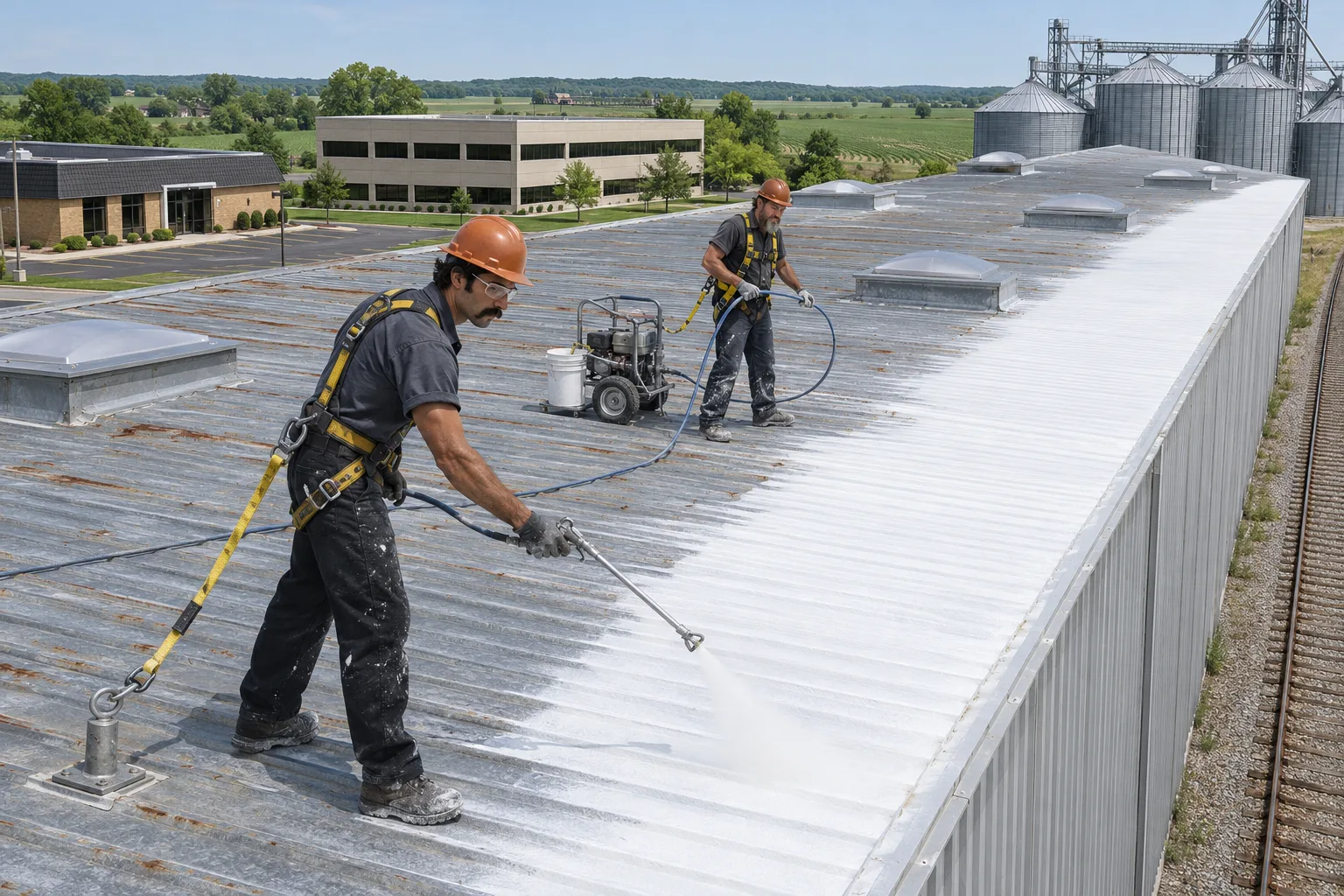
As a West Lafayette metal roof coating contractor, we coat roofs over labs and offices on schedules built around air intakes and building hours.
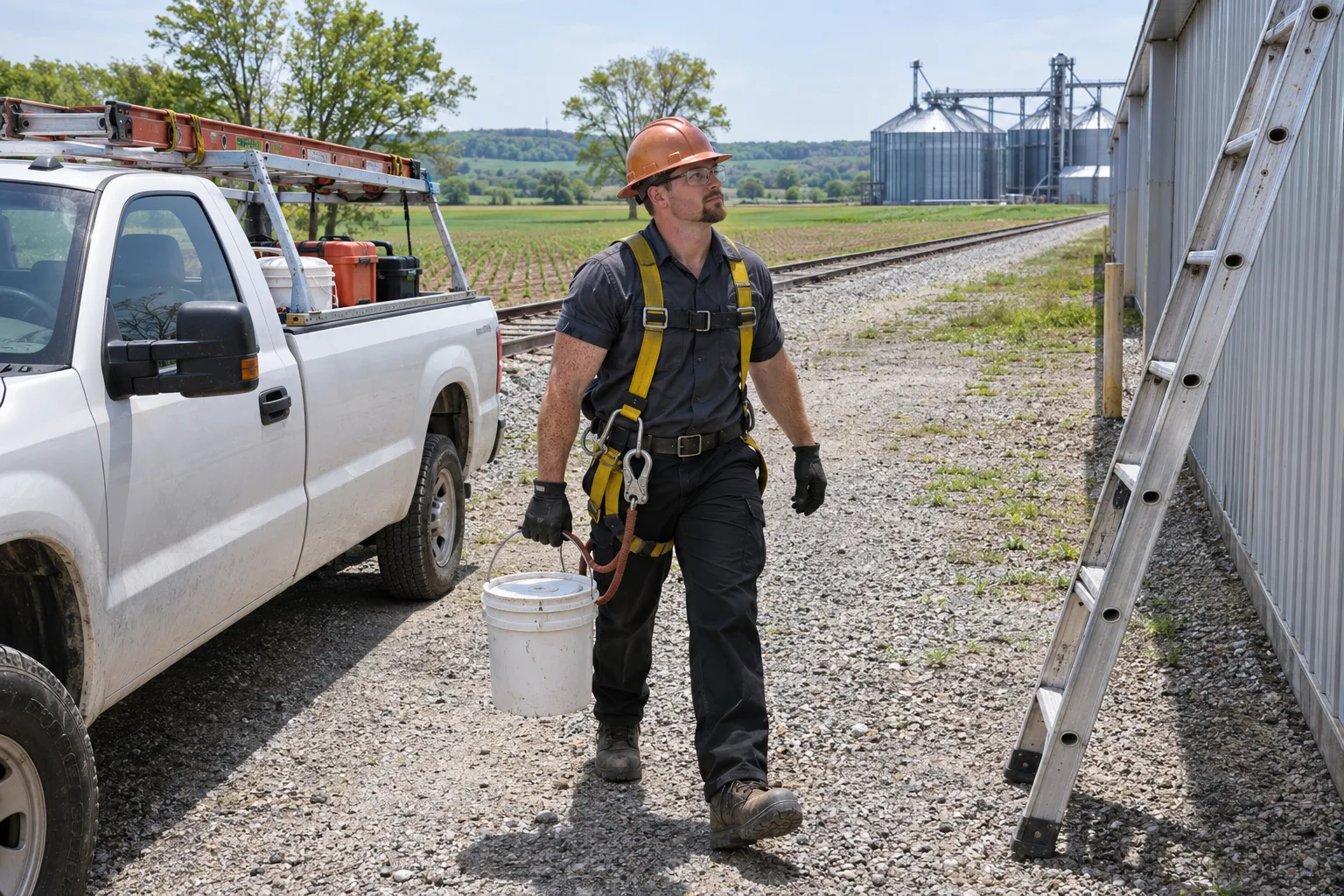
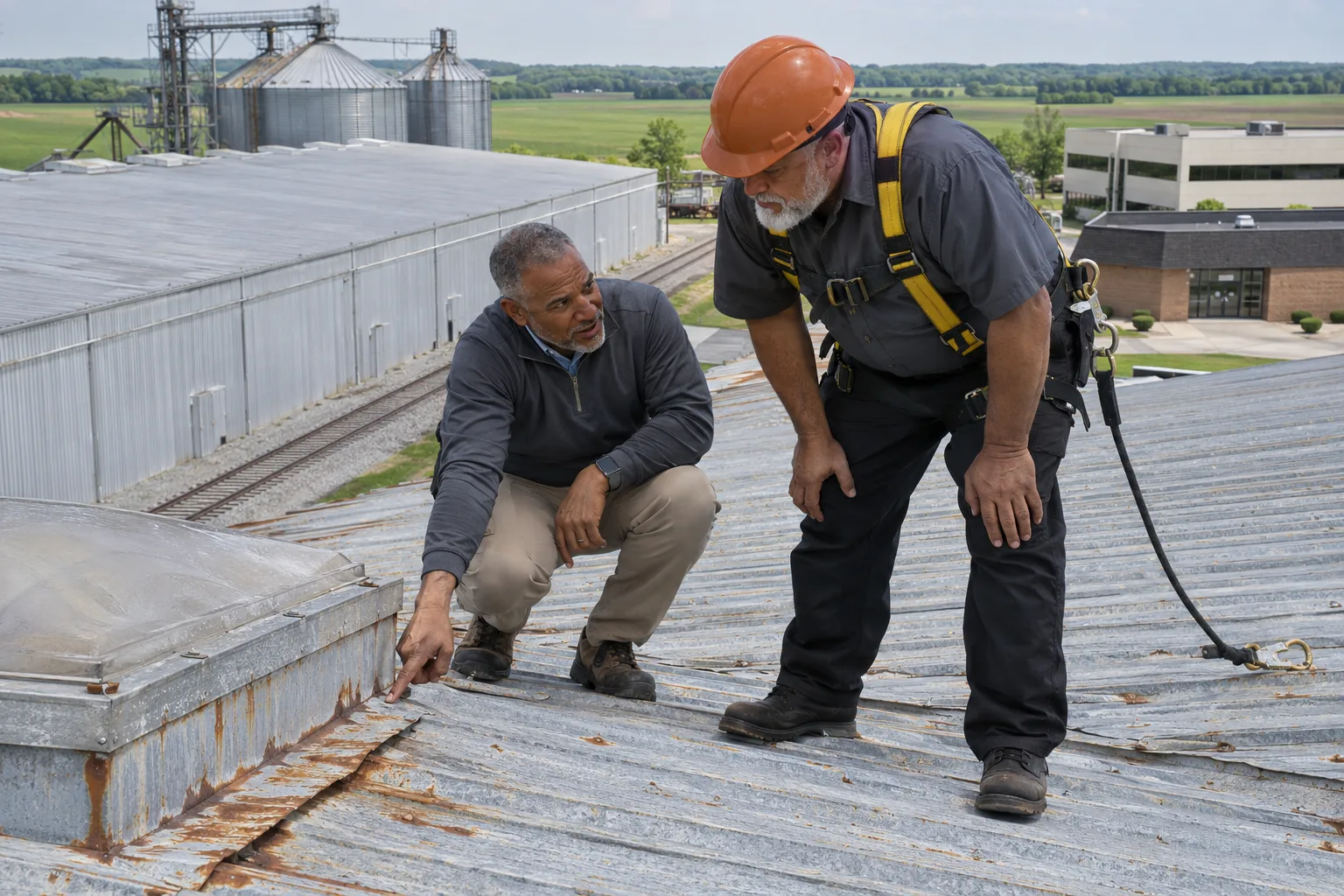
West Lafayette metal roof coating jobs often sit above people at work: research labs, offices, and clinics that stay open the whole time.
The roof work is planned around the air handlers. Intakes are covered while we spray near them, low-odor products go on close to sensitive rooms, and noisy prep runs outside lab hours.
Research and office roofs carry a lot of equipment. These are the spots that leak first.
Lab exhaust stacks pass through the roof on tall curbs. Cracked flashing at the base lets water run down into ceilings.
Curb corners crack as large units vibrate. Each corner gets new flashing and reinforced coating.
Wide buildings have long panels that move with the seasons, opening the end laps over time.
Units on the low side of a roof block runoff. Silicone around them handles the water that sits.
Wood and steel blocks under conduit trap water against panels. Supports are lifted, the steel primed, and new pads set.
A coated roof over occupied research space helps each group in a different way.
Each system has a place on West Lafayette roofs. These are the ones we use there most.
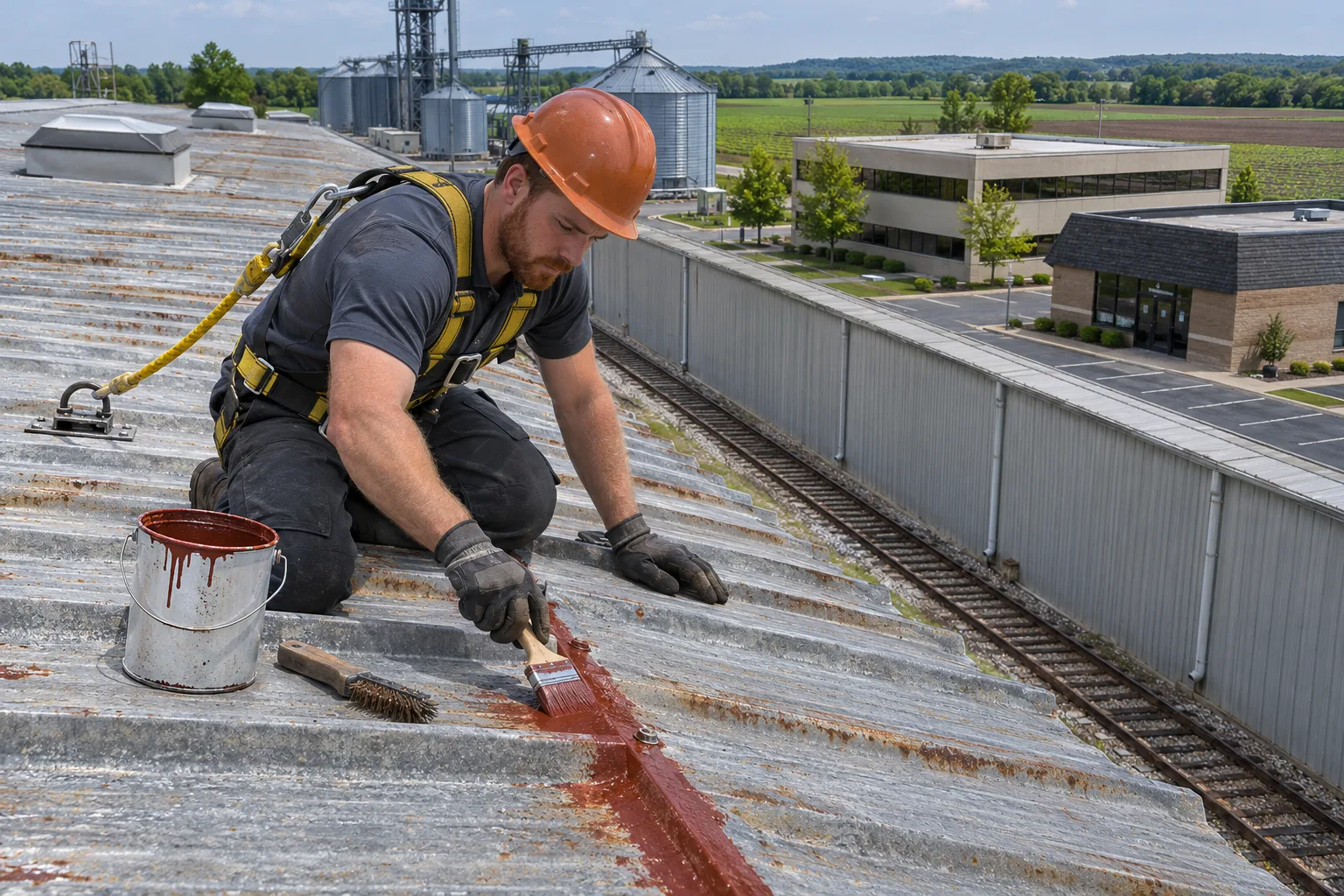
Primed and sealed panels with an acrylic or silicone field coat over office and lab wings. Curbs and stacks get their own flashing work first.
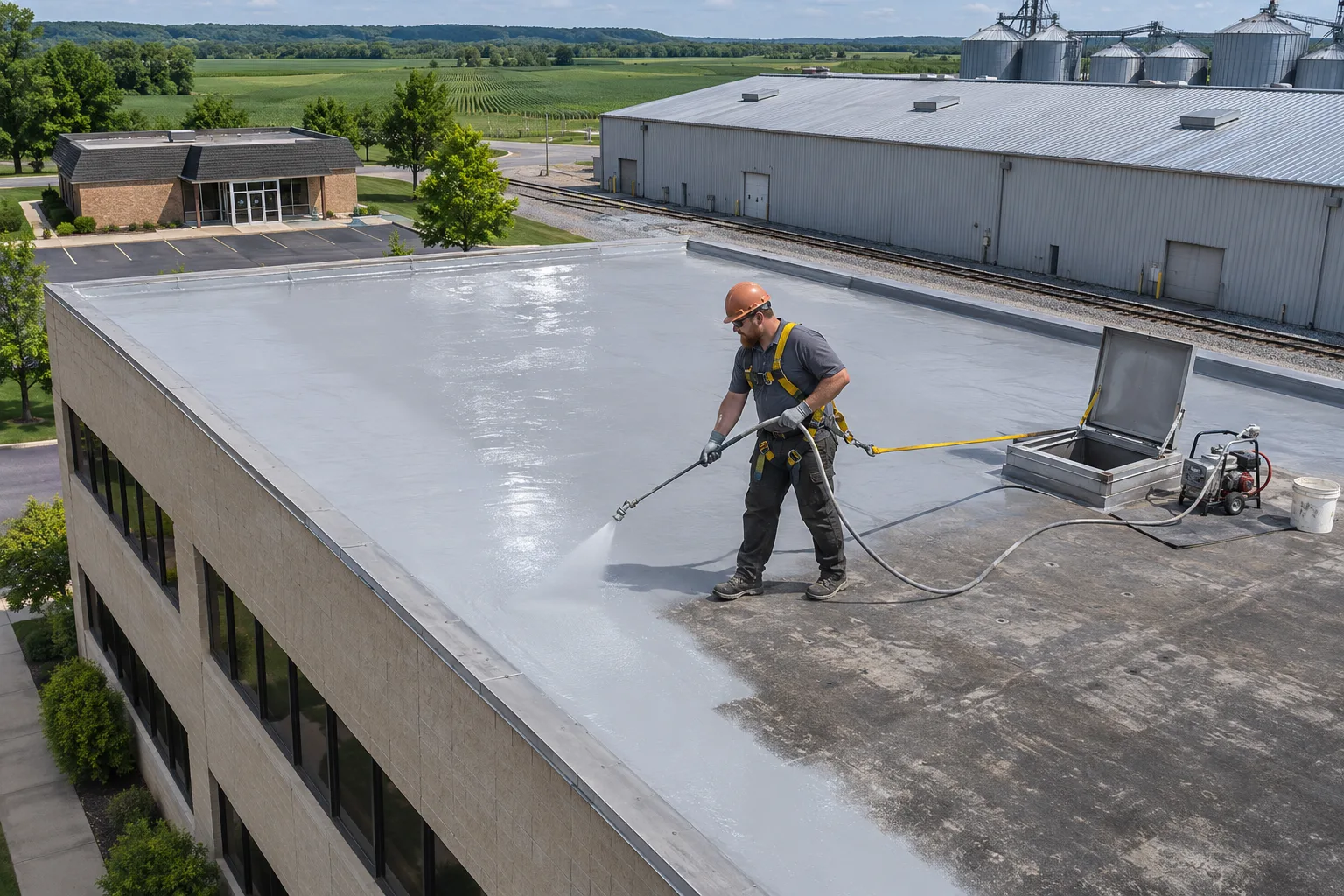
Silicone handles the water that pools behind rooftop units and around drains. It ties into the field coat at a lapped, reinforced edge.
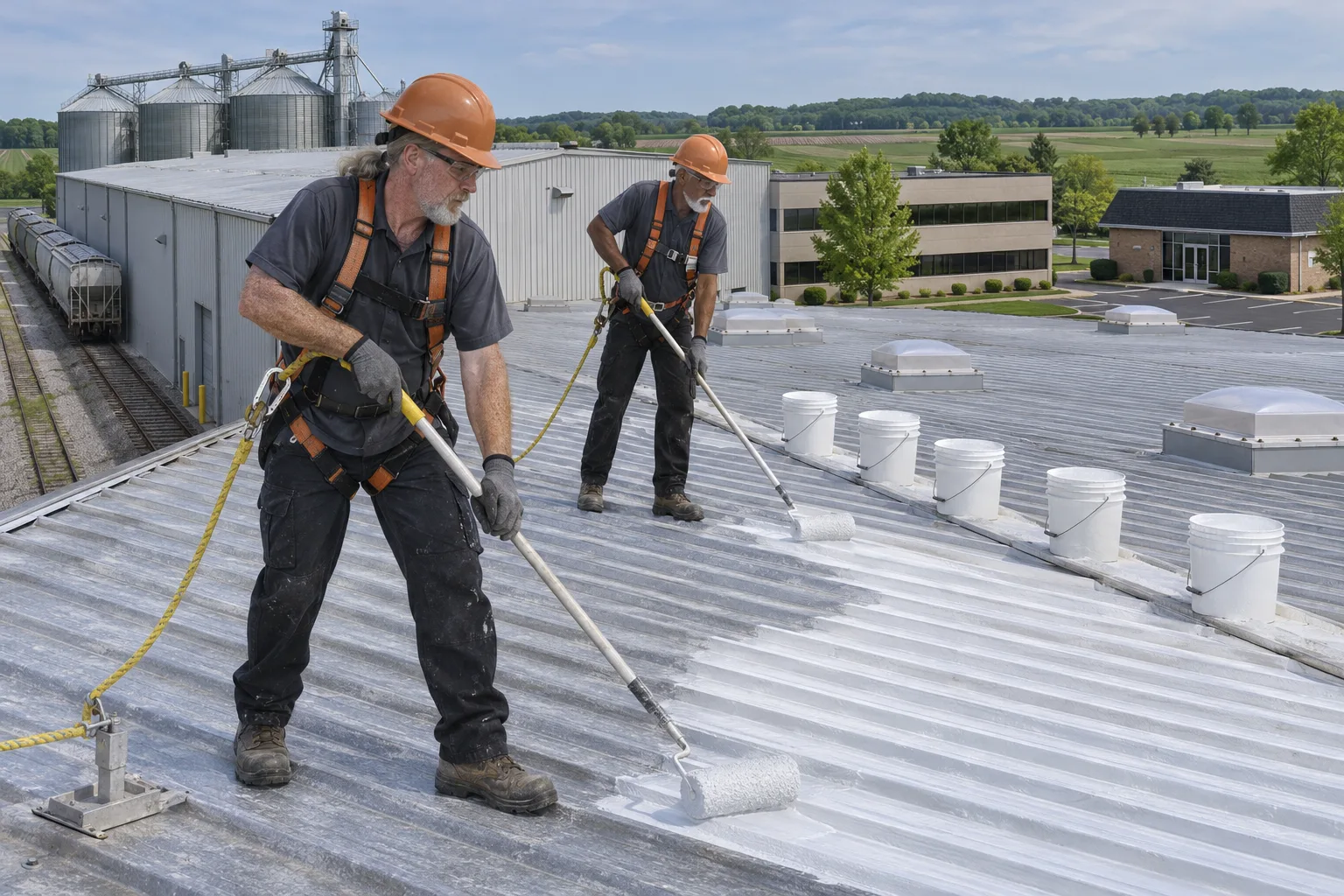
Water-based acrylic goes on near intakes when the roof drains well. Two colors show the crew where coverage is complete.
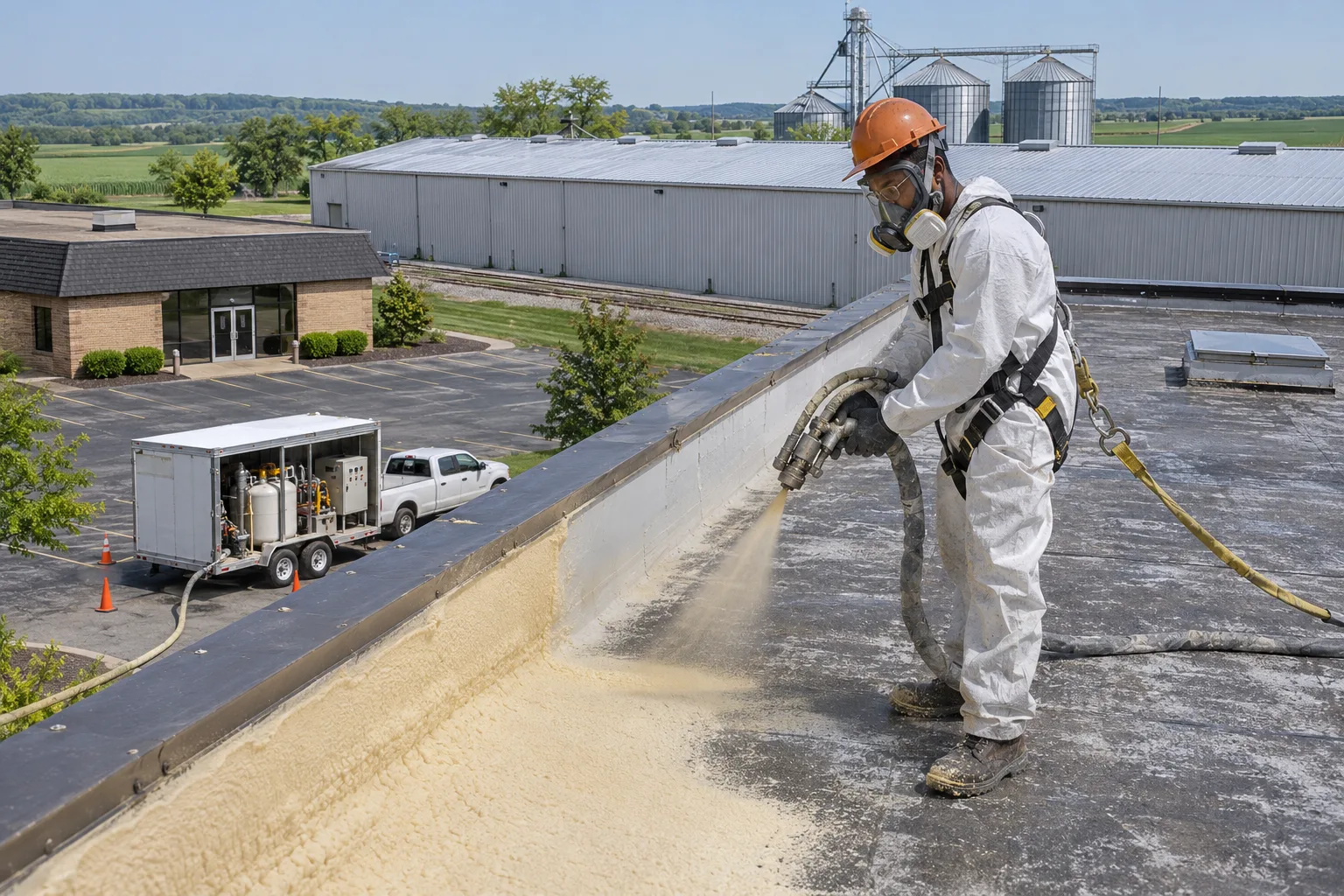
Foam suits open roof sections away from intakes where leaks are widespread. Screens and covers keep overspray off units and vehicles.
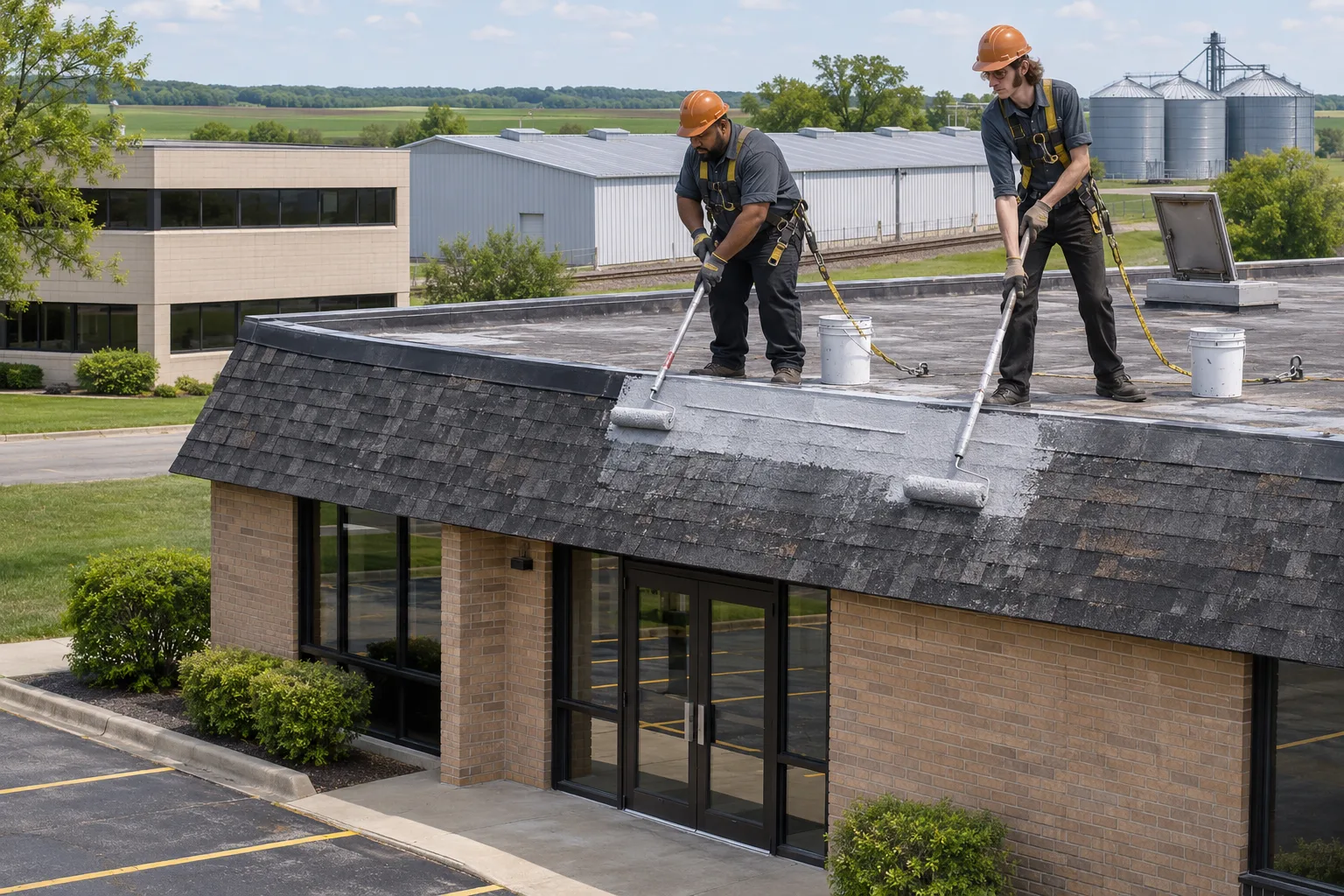
Shingled office fronts and entries get a coating made for asphalt. A test patch confirms the bond before the full slope.
Start with a ballpark range online, then let us trace the leak and plan work around your building hours.
Occupied buildings need a clear plan. The work order below keeps everyone informed.
We walk the roof with your facility contact, mark intakes and stacks, and check curbs, laps, and drains. Moisture readings near ceiling stains tell us where water is getting in.
The plan lists the roof section, the intakes to cover, and quiet hours for prep work. Your facility contact gets it before the crew arrives.
Curb flashing is rebuilt, stacks sealed, laps refastened, and rust primed. Conduit supports are lifted and reset on new pads.
Each section is coated during its planned window, with intakes covered only while needed. Covers come off as soon as the spraying moves on.
Thickness readings and photos go to your facility team for the building file. Any spot that came in thin is recoated before we leave.
Across the river and beyond, we coat roofs in four more towns. Building somewhere else? call us or send us a message.
Plant and warehouse roofs with exhaust fans southeast of Lafayette.
Older steel buildings to the south with rusted laps to prep.
Farm and storage buildings north with long panel runs.
Metal shops where foam covers many leaks at once.
Answers on permits, cost, and working around building hours.
The city requires permits for new construction, structural changes, and electrical work, issued by its Building Department. Cleaning, priming, and coating the existing roof is often outside that, but panel replacement or new equipment could change it, so we confirm with the Building Department before work starts.
Plan on about $2.50 to $4.00 per square foot for coating, against about $5 to $8 for replacement. Curb and stack work, intake protection, roof size, and lift access move a job within that range, and the final price follows a roof walk.
Yes. Offices, clinics, shops, and light industrial buildings across West Lafayette all get the same roof walk and repair-first approach. A clinic might need work before patient hours, while a shop can run all day, so the schedule is set around each building and the people inside it.
Yes. We work across West Lafayette and plan lab roofs around intakes, quiet hours, and the people inside. Call to describe the building and we will set a time to walk the roof.
The old sealant at the base of each stack is cut out, the flashing collar is checked and replaced if it has split, and the joint gets fabric and a reinforced coat. Stacks run hot, so the sealant and coating chosen are rated for the heat at that spot.
Low-odor, water-based acrylic is the usual choice near intakes when the roof drains well. Where water sits near a unit, silicone goes on during hours the intake is off, with covers in place until the surface has skinned over.
It can. Nothing is removed from the roof, sections are coated one at a time, and intakes are covered only while spraying happens near them. Noisy prep such as pressure washing is set for hours your building agrees to, and your facility contact knows each morning which section is in work.
Call, or start with a ballpark estimate, and we will plan the work around your building.