Owner
- Stored product stays dry under fan curbs.
- Rust near vents stops spreading once primed.
- No tear-off over production or stored goods.
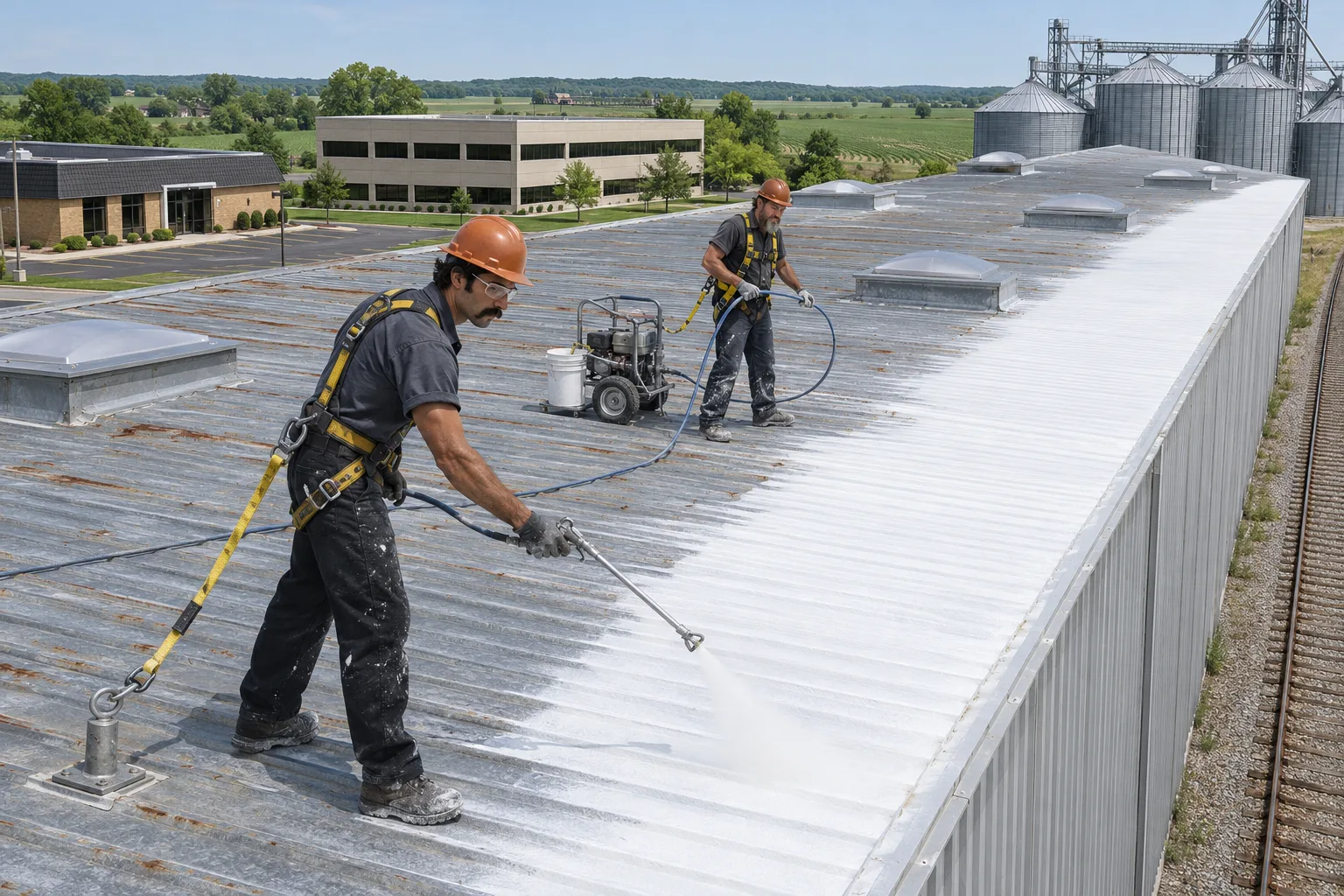
As a Frankfort metal roof coating contractor, we clean residue from plant and warehouse roofs, rebuild fan curbs, and coat the metal panels.
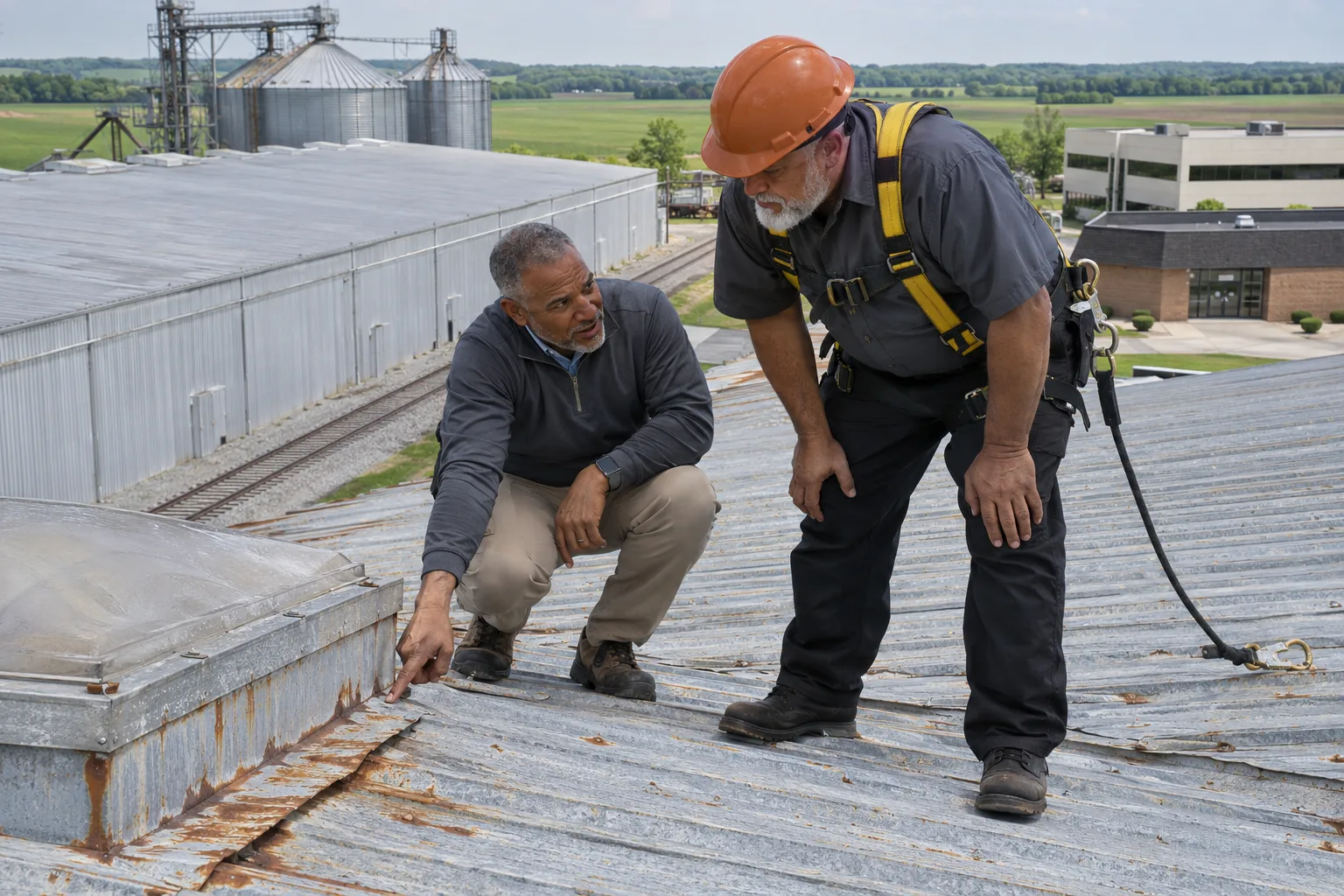
Frankfort metal roof coating work often happens on plant and distribution roofs crowded with exhaust fans and vents.
Those fans leave a film on the panels that coating will never bond to. We wash it off, rebuild the curbs, and plan fan shutdowns with your team before spraying near them.
Fans and vents shape the problems on these roofs. Here is what we see most.
Exhaust leaves a greasy film that keeps primer from bonding. It is degreased and washed until water sheets off cleanly.
Water running inside a fan curb lands on whatever is stored below. The curb gets new flashing first.
Fans vibrate the panels around them and loosen nearby screws. Those rows are tightened and sealed.
Moist exhaust speeds up rust on panels near vents. Primer and extra coating build go on those areas.
Wide warehouses have long panel runs with many end laps, each sealed before coating.
Coating around fans and vents pays off for each group tied to a Frankfort plant.
Fan-heavy roofs in Frankfort use these systems most.
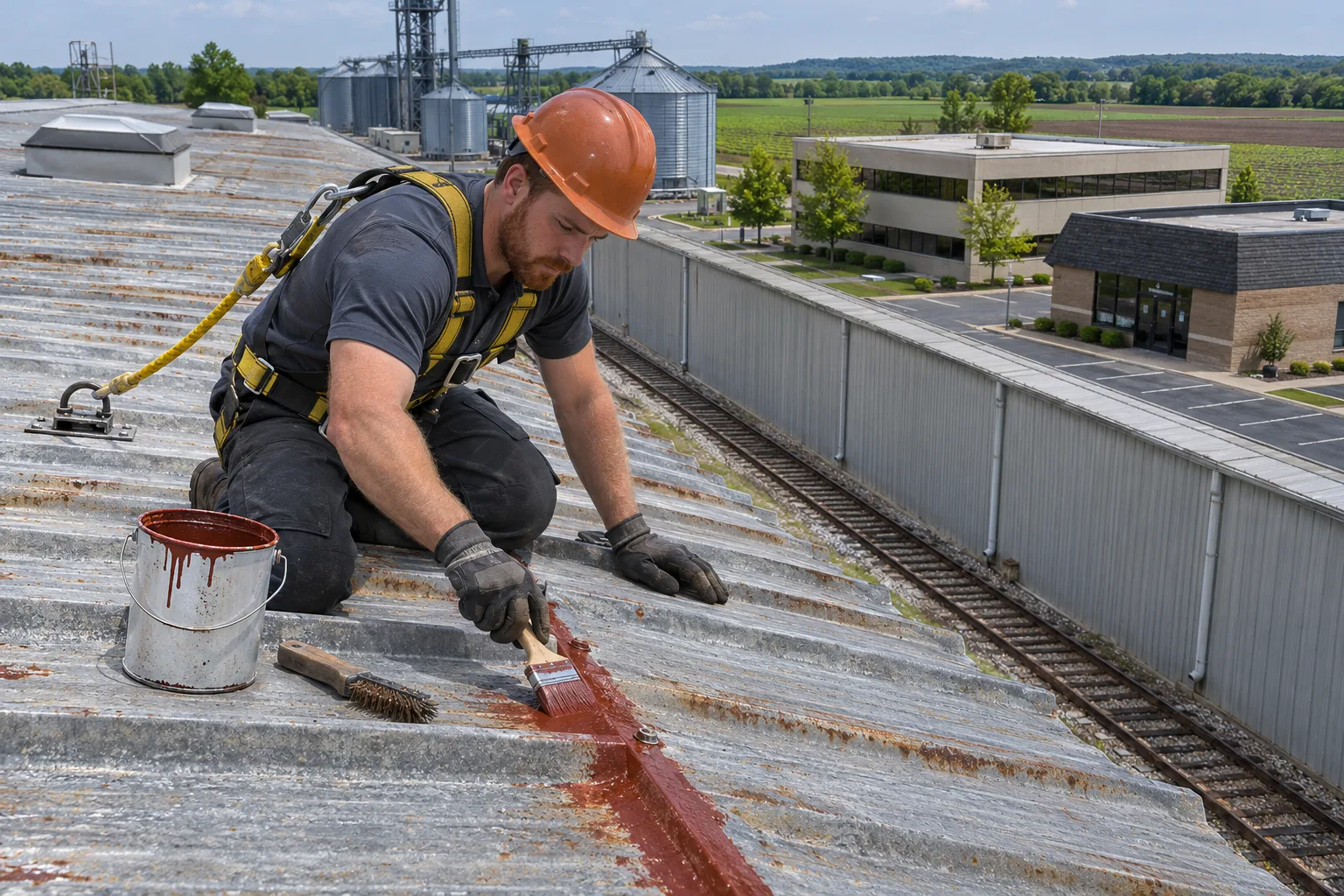
Washed, primed, and sealed panels with a reinforced field coat across the plant roof. Fan areas get extra build where exhaust hits the panels.
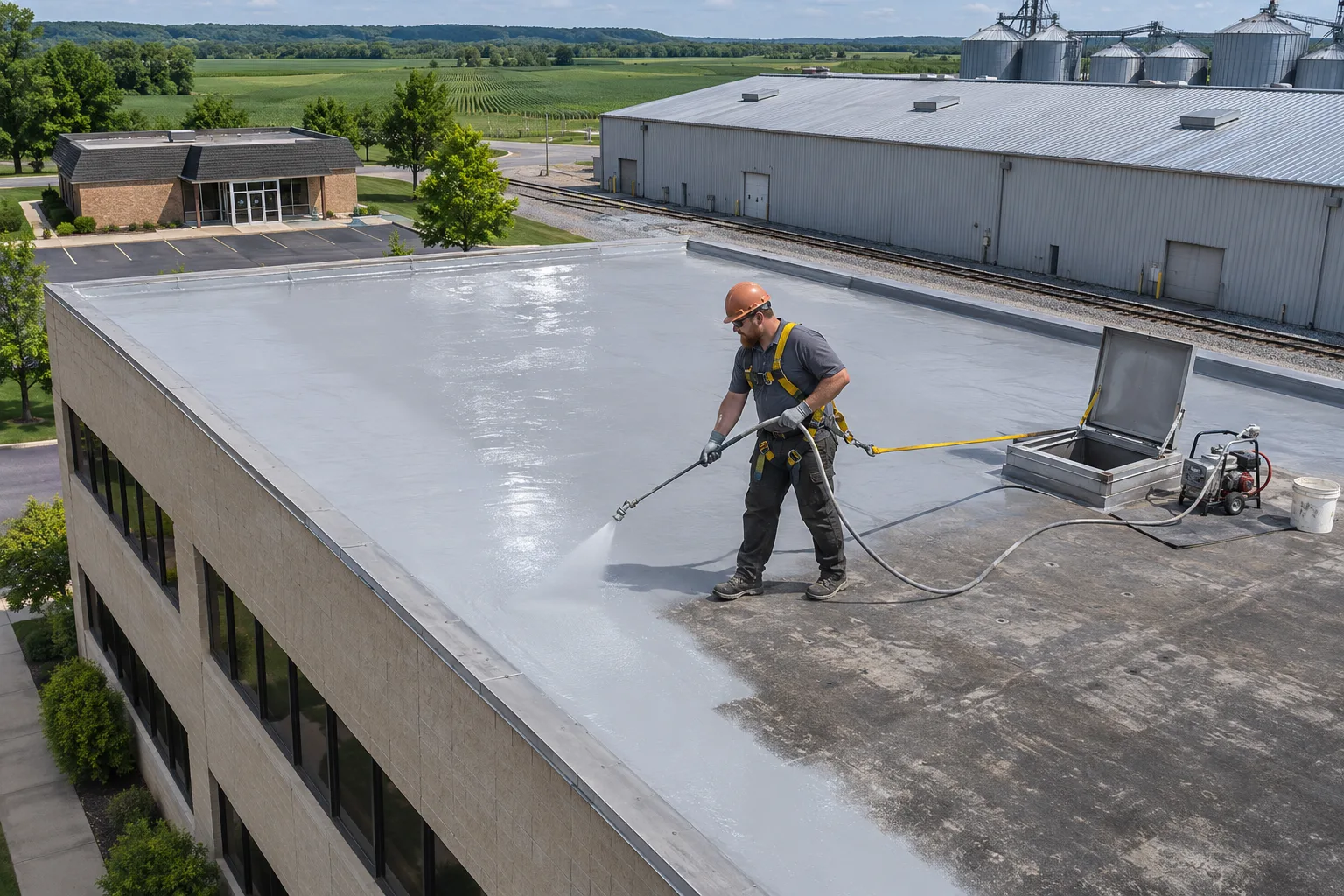
Silicone covers gutter runs and areas where condensate from units collects. Condensate lines are rerouted to drains where they can be.
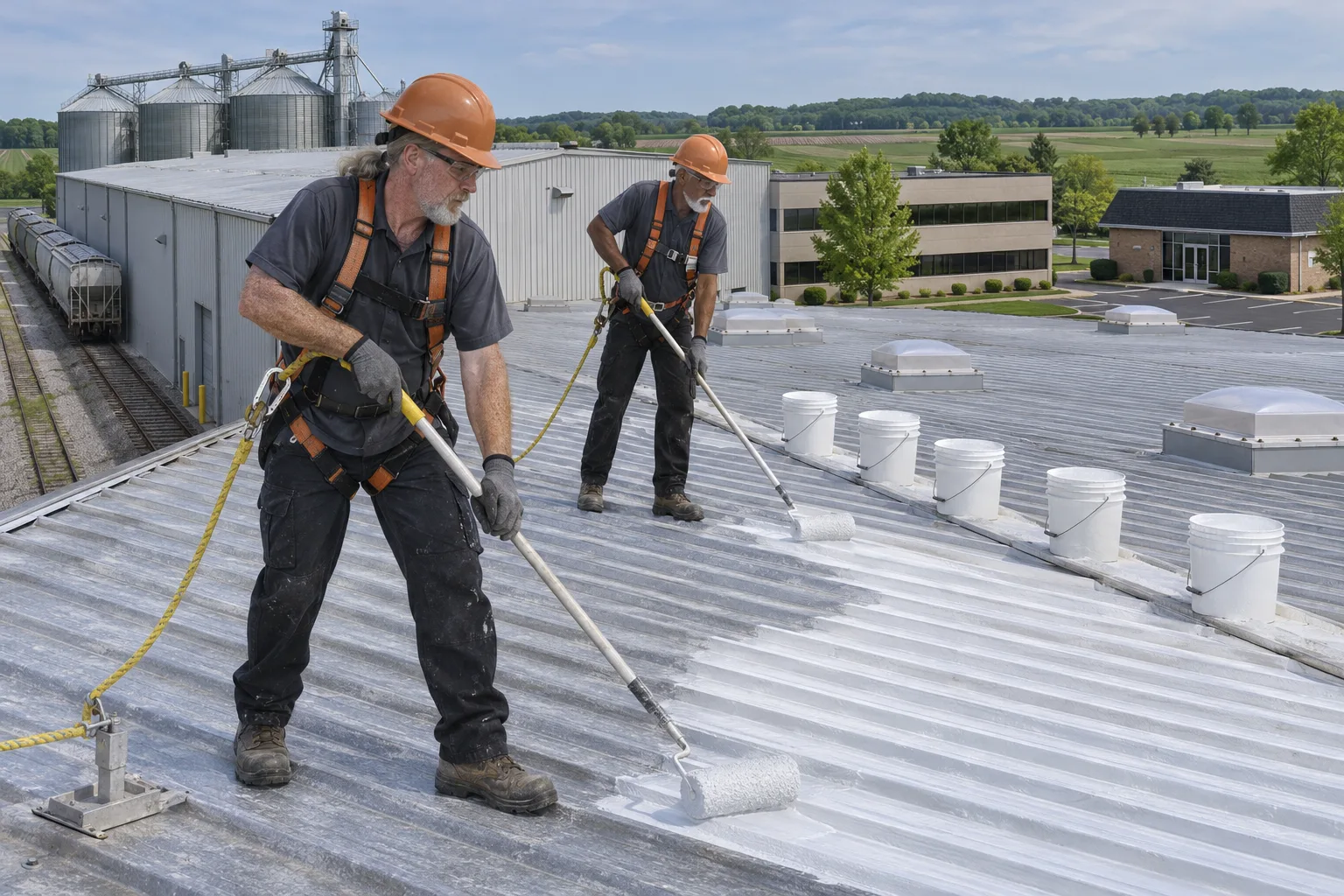
Acrylic suits pitched warehouse roofs that shed water fast. It is applied once residue is gone and the panels are primed.
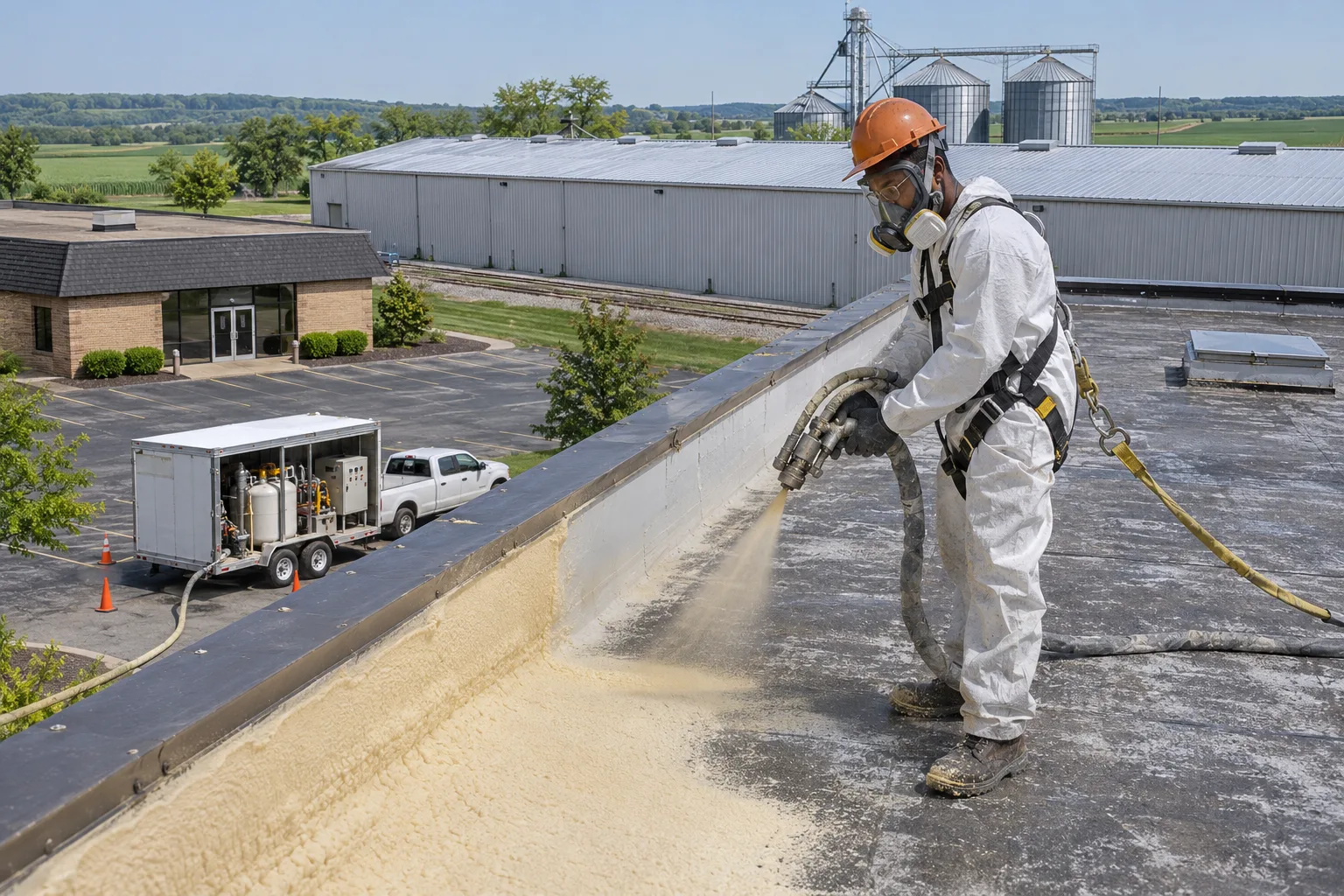
Foam seals warehouse roofs with leaks along most laps. Fans and intakes are masked before any spraying.
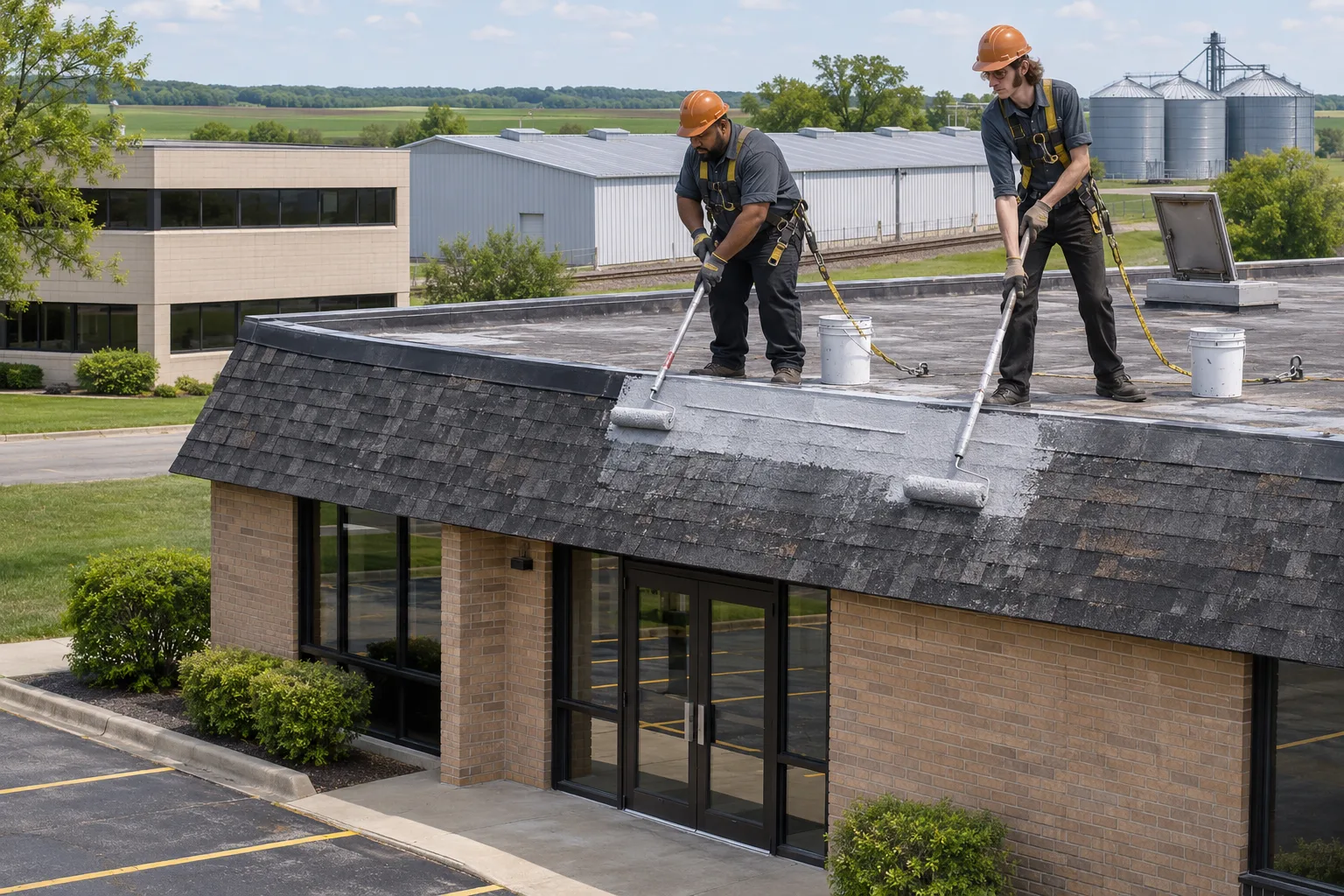
Front offices with shingles get a coating made for asphalt. Vent boots and flashing are renewed first.
Get a ballpark range for coating next to replacement, then let us check the curbs and fan areas in person.
Fan areas need extra steps. They happen in this order.
We map fans, vents, and curbs, check for residue and rust, and take moisture readings near leaks. A water-break test shows where residue will block primer.
Your plant team and our crew set times to turn off fans near each section being primed or coated. Fans come back on as each section sets up.
Residue is degreased and the roof washed until the surface is clean enough for primer. Rinse water is kept out of drains that feed process lines.
Curbs get new flashing, screws are tightened, and rust is primed with extra build near vents. Fabric goes into every curb corner.
The field coat goes on section by section, with readings and photos sent to you at the end. Fan areas are checked twice for thickness.
Frankfort is one of six towns we cover. Building farther out? call us or send us a message.
Labs and offices where rooftop intakes set the work hours.
Older steel buildings with chalky panels and dry washers.
Equipment and storage roofs on open farm ground.
Metal shop roofs that suit spray foam.
Answers on plant roofs, cost, and contractors near Frankfort.
Yes, when the panels and framing are solid. These roofs usually carry exhaust fans that leave residue, so cleaning is thorough and fan curbs get careful detail work. Low-odor products and fan shutdowns keep the work from affecting the spaces below.
Only once it is shut off. Fans near the work are switched off during priming and coating, then restarted once the coat has set enough to handle airflow and exhaust. We agree on those shutdown windows with your plant team so production planning knows exactly when each fan goes down.
We do. Plants, distribution centers, shops, and offices in Frankfort get the same roof walk, written repair list, and section-by-section coating. A food plant and a small office see very different rooftops, so the repair list and the coating build are written for the roof in front of us.
Our work covers Frankfort from Lafayette, and each roof gets walked before we name a system or a price. Call with the building address and a short description of where water shows up inside, and we will set a time to look at the fans, curbs, and laps with you.
A degreaser made for roof surfaces is applied around each fan, scrubbed, and rinsed, then the area is washed again with the rest of the roof. We test by spraying water on the cleaned panel: if it beads, the cleaning repeats until it sheets off evenly.
Moist exhaust speeds rust, so panels near vents are brushed to firm steel, primed, and given extra coating thickness. Badly thinned panels near a vent are replaced before coating.
It is. Small shops and storage buildings get the same inspection and repair-first approach as large plants. A smaller roof often has fewer fans but the same tired washers and open end laps, and those get fixed before any coating. Call with the address to set up a roof walk.
Book a roof walk and we will map the fans and curbs before naming a price.