Owner
- Equipment and grain stay dry without tearing off panels.
- Rust is stopped on the eaves and lower panels.
- A recoat later costs less than new steel.
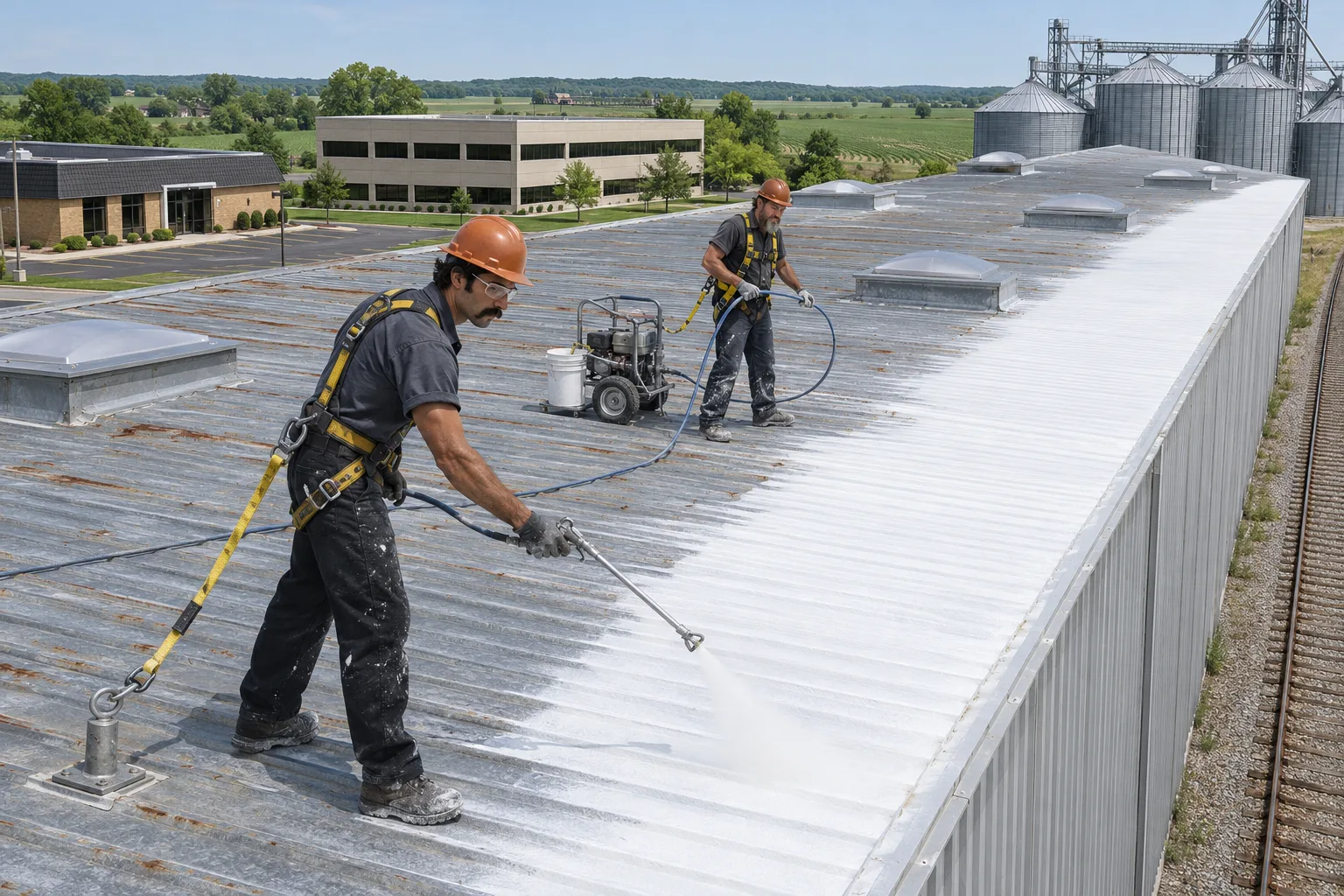
As a Rensselaer metal roof coating contractor, we coat equipment buildings, farm shops, and storage roofs on calm days that fit around harvest.
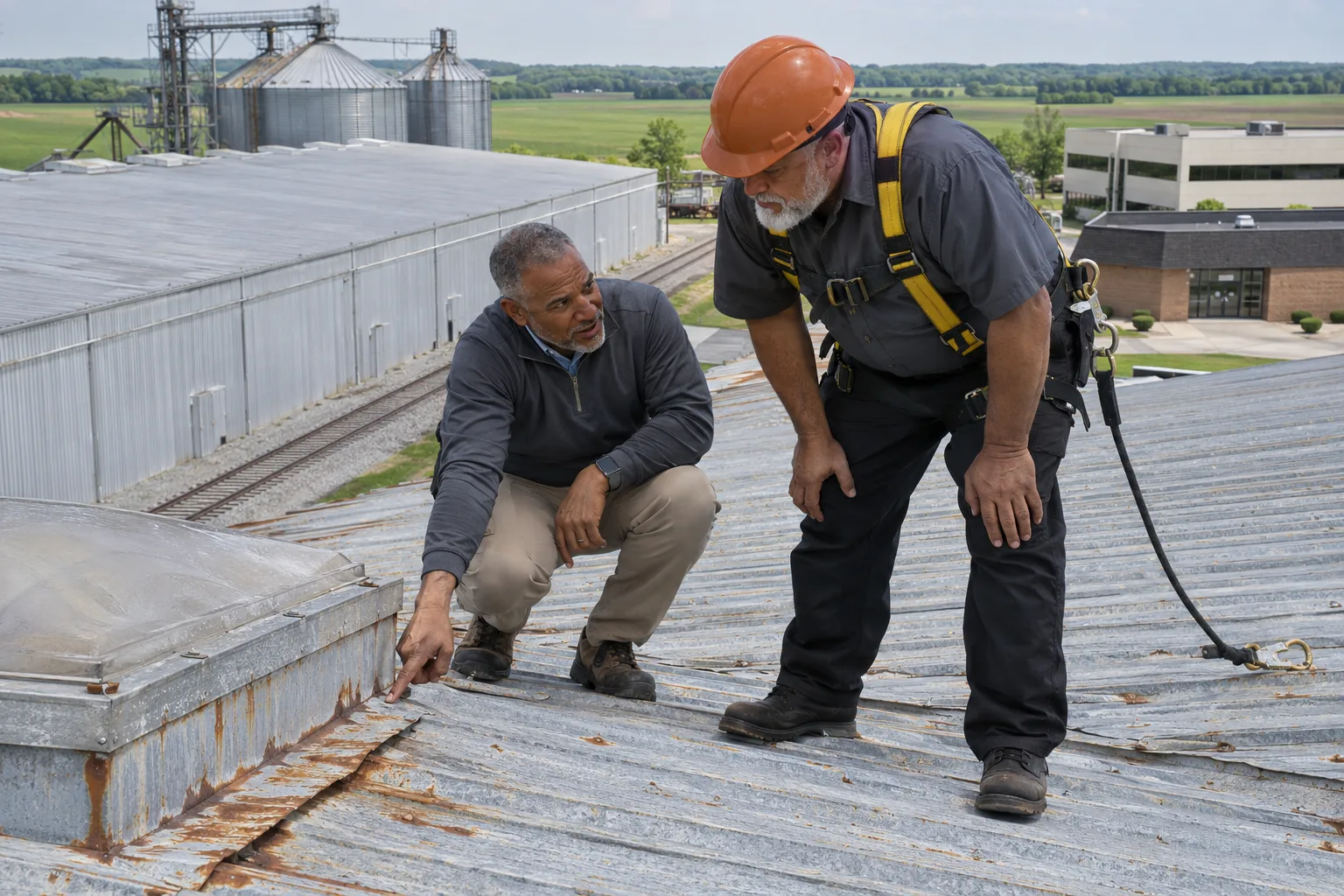
Rensselaer metal roof coating jobs are often on farm shops, equipment buildings, and storage roofs standing in open fields.
Wind and harvest set the schedule there. Spray work waits for calm mornings, screens go up near equipment, and dates move around planting and harvest. A roof over stored grain or machinery stays in place the whole time, with nothing lifted off.
Farm and equipment buildings show their own set of problems.
Long, open spans flex in every storm and loosen screws along the purlins. Each row is checked, and stripped holes get larger screws with new washers.
Drips on frosty days with no rain often come from condensation on bare panels. We check vents and eave openings before calling it a roof leak.
Snow drifts against eaves keep the lowest panels wet for weeks. Rust there is brushed back to firm steel and primed before coating.
A lifted panel lets rain blow in sideways onto stored equipment. It is refastened into solid purlins or replaced before anything else.
Dust from dryers and augers settles on the roof and holds moisture. Washing shows whether rust has started underneath the paint.
A coated farm roof brings different gains to each person who uses the building.
Farm and equipment roofs around Rensselaer use these systems most.
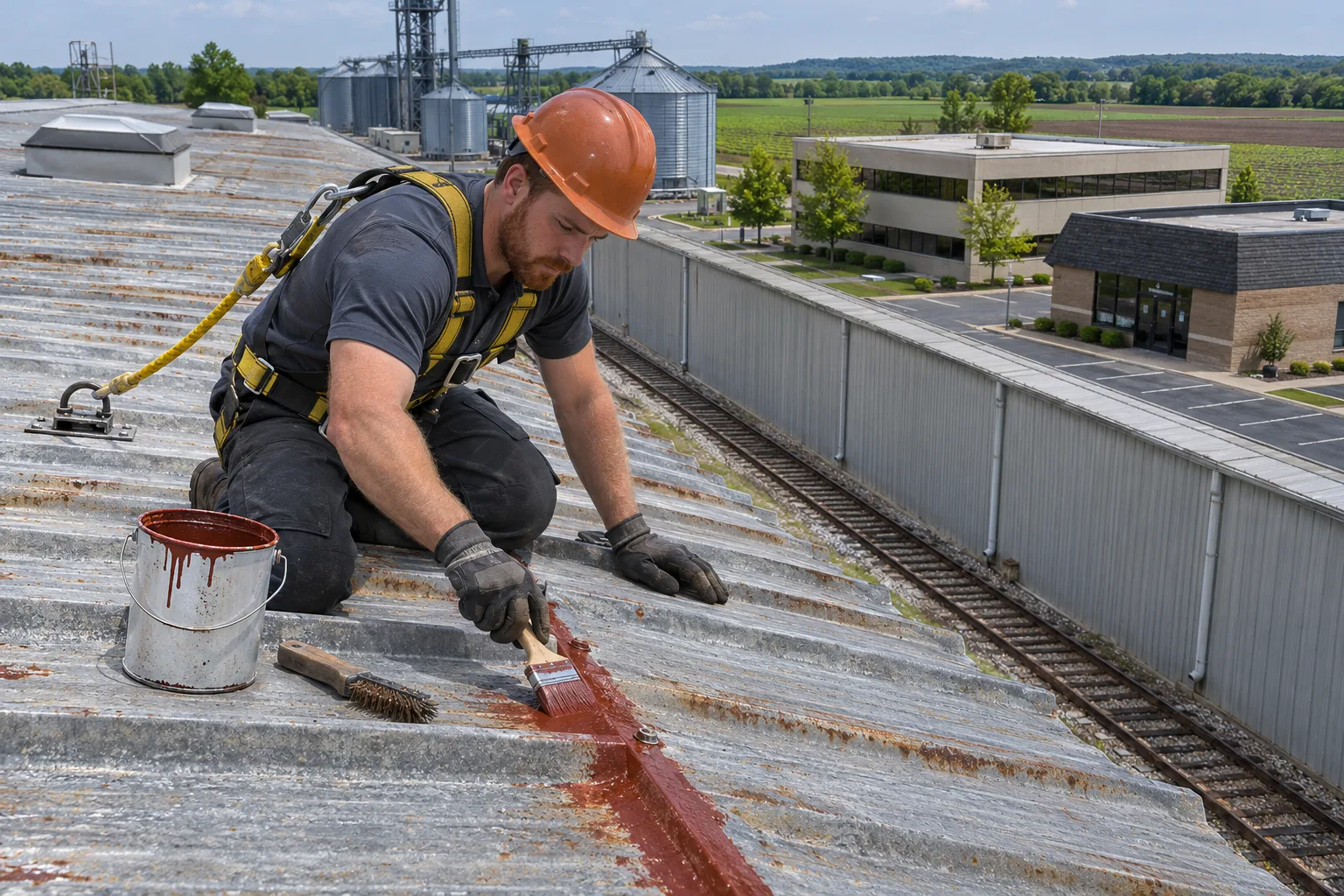
Primed rust, tightened screws, and a field coat over the shop or storage roof. Lifted panels are refastened first.
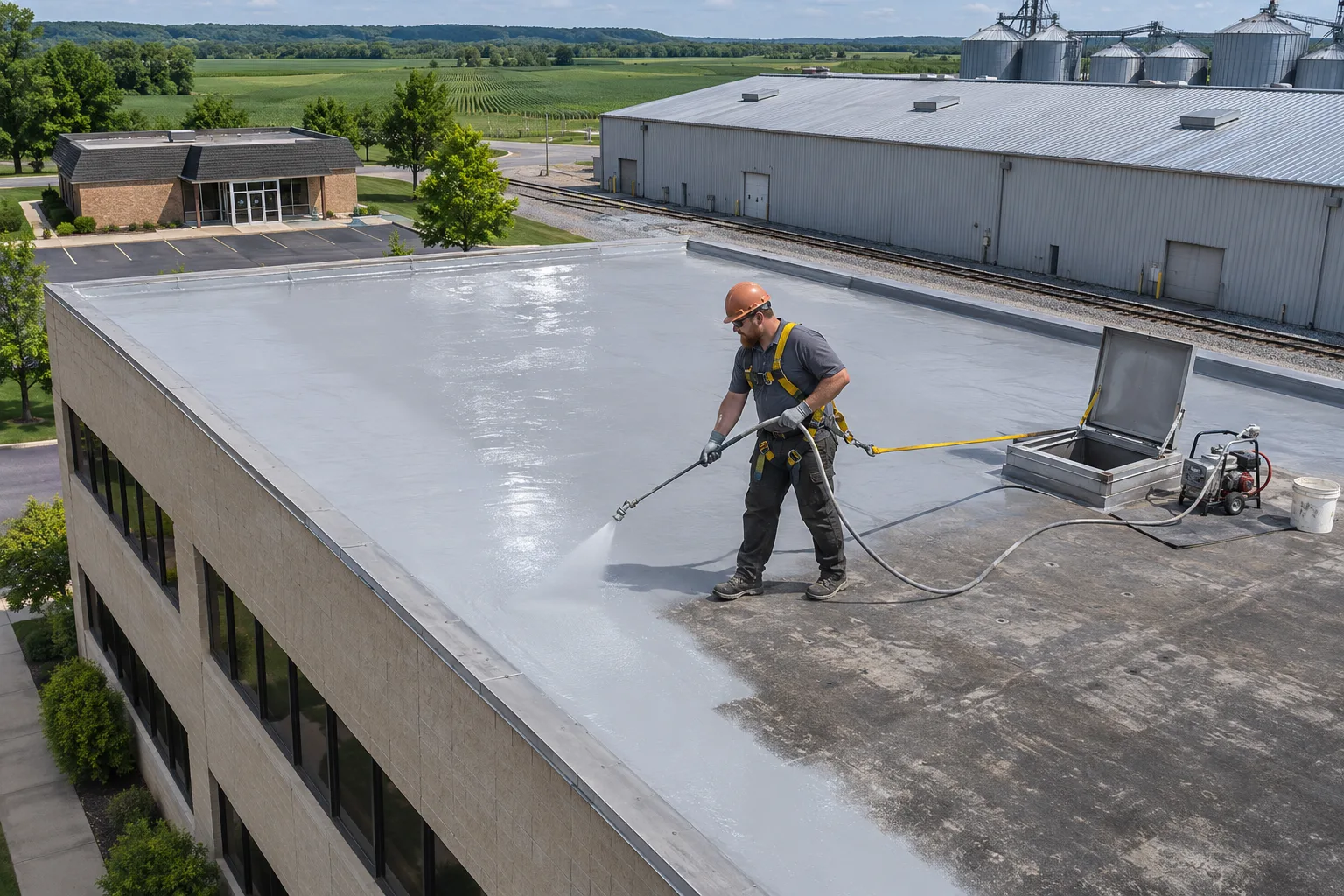
Silicone covers eaves and gutters where snow and meltwater sit. It joins the field coat above the eave trim.
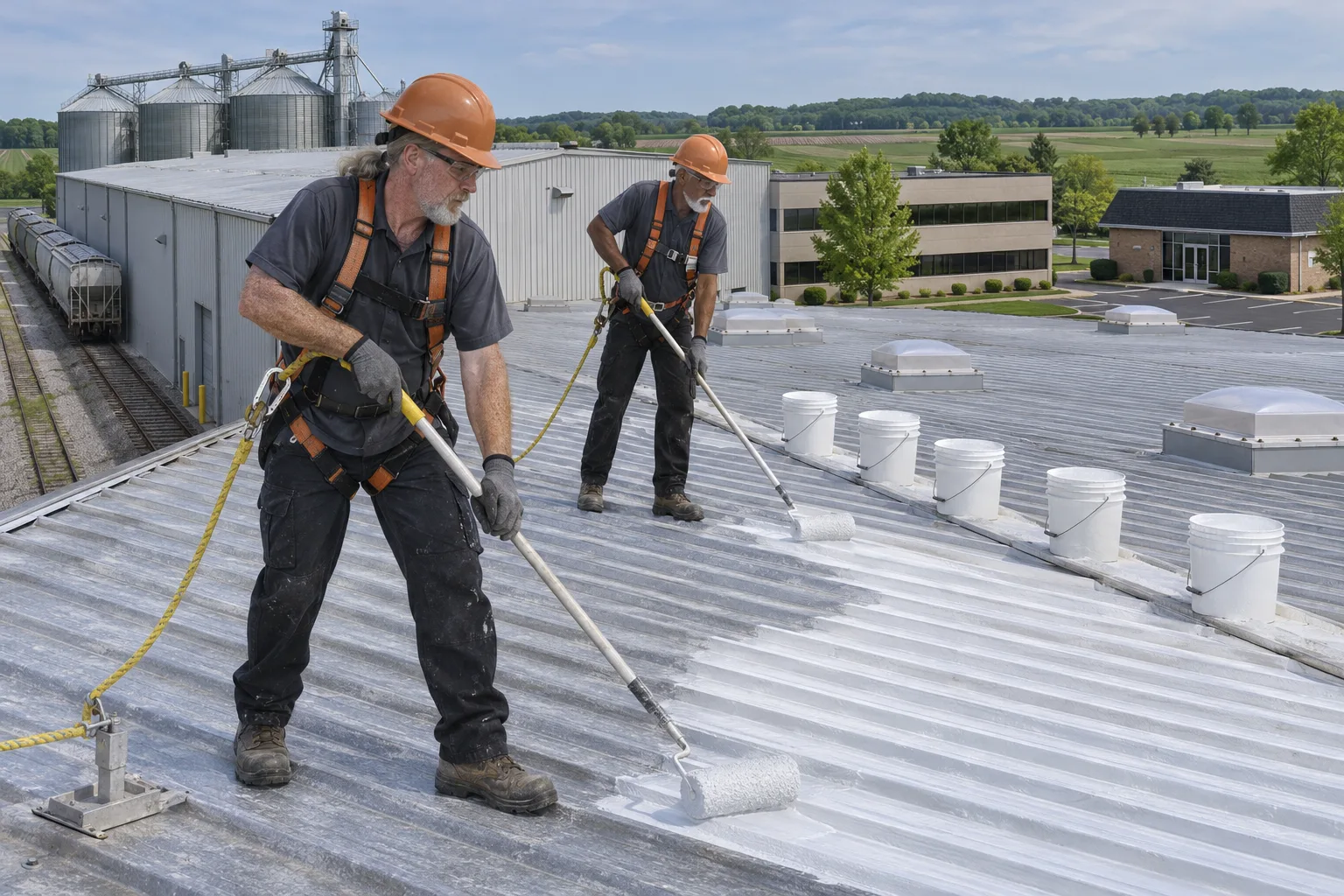
Acrylic suits steep panels that shed rain and snow fast. It goes on during warm, dry stretches.
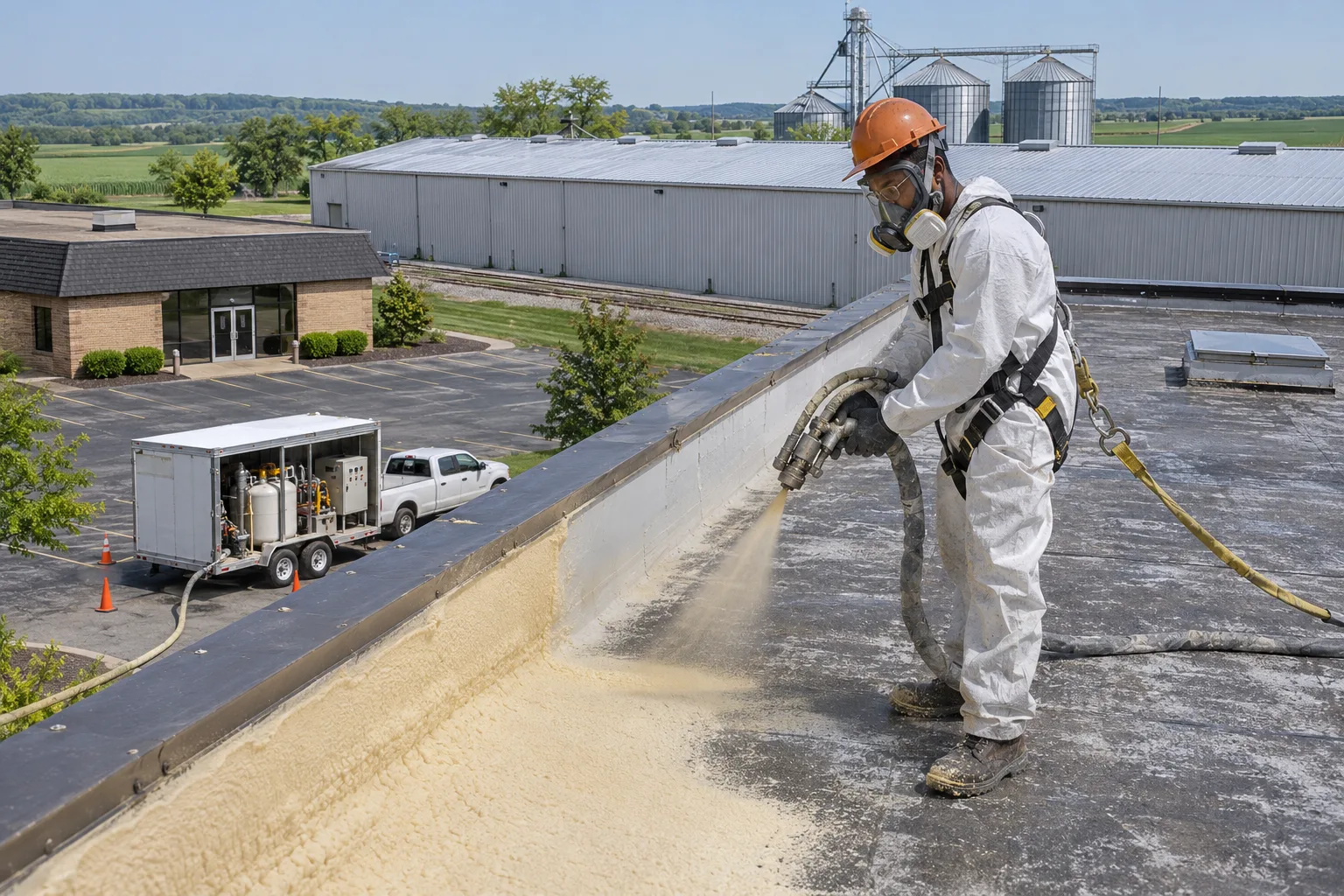
Foam seals leaks and adds insulation over heated shops. Vehicles and equipment are moved or covered first.
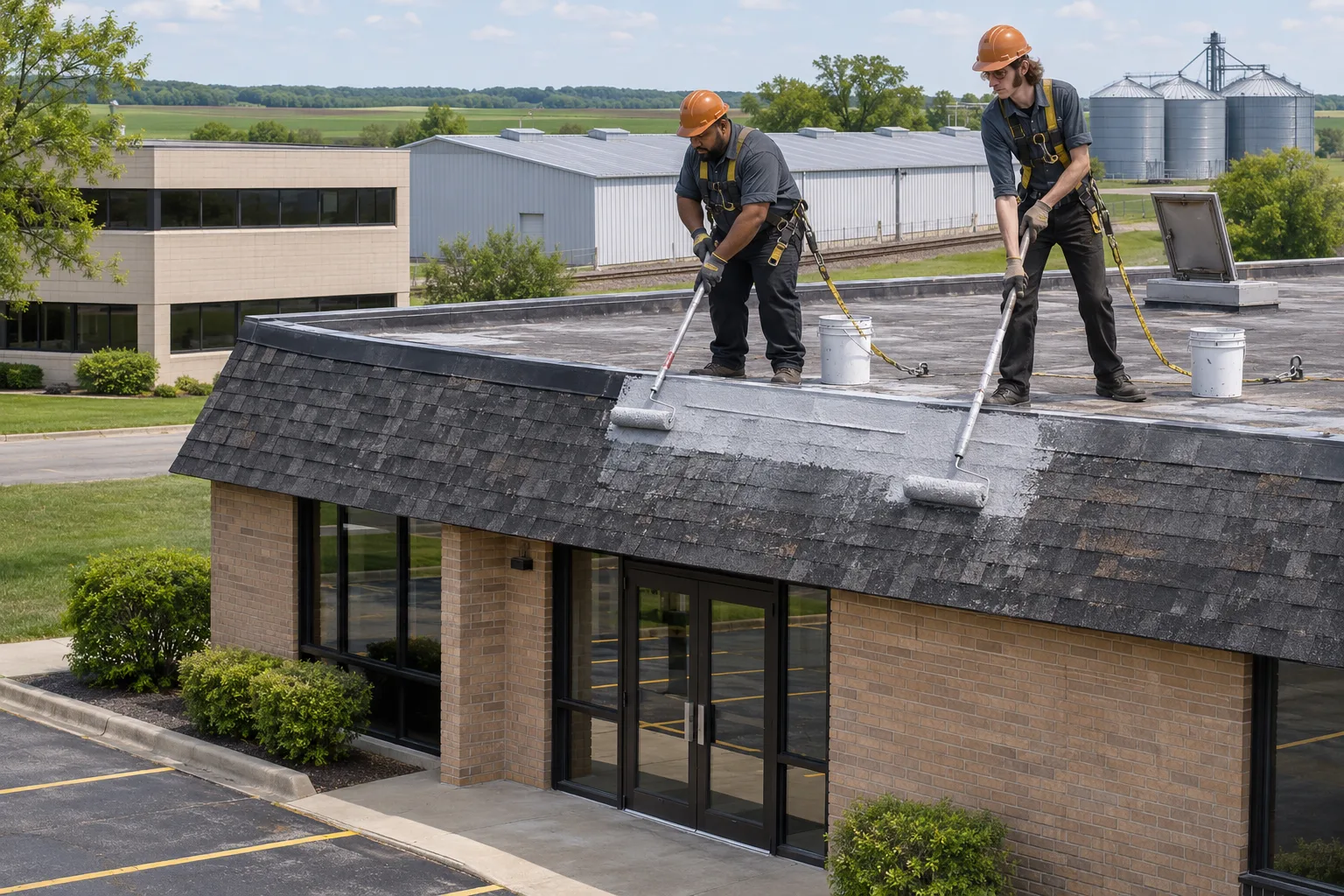
Shingled farm offices get a coating made for asphalt. Tabs lifted by wind are resealed first.
Get a ballpark range for coating next to replacement, then let us walk the roof on a calm day.
Farm sites need a few extra steps. Here is the order.
We check screws, panels, eaves, and vents, and sort condensation from leaks. Moisture readings show whether insulation is wet.
Roof work is scheduled around planting, harvest, and the wind forecast. Dates are set with whoever runs the farm.
Vehicles and equipment are moved or covered and screens set up for roof overspray. Grain bins and open doors are covered too.
Screws are tightened, lifted panels refastened, the roof washed, and rust primed. Eaves get extra attention where snow drifts.
The field coat goes on during calm weather, with thickness readings recorded. Work stops if the wind picks up.
From Rensselaer, these are the other towns on our list. Somewhere else? call us or send us a message.
Lab and office roofs set around intakes.
Plant roofs with fans and curbs.
Older steel buildings with rusted panels to prep.
Metal shops where foam fits.
Answers on farm buildings, cost, and finding a contractor nearby.
Often. Equipment buildings, storage buildings, and farm shops are good candidates when the steel is still firm. Coating seals leaking screws and laps and slows rust without removing panels over stored equipment or grain.
Yes. Shops, offices, and light industrial buildings in town get the same roof walk and repair-first approach as farm buildings. Buildings in town usually sit closer to parked cars and neighbors, so overspray screens and rolled coating near the edges matter even more there.
Plan on about $2.50 to $4.00 per square foot for coating, against about $5 to $8 for replacement. Roof size, the number of lifted or rusted panels, eave repairs, and the overspray protection a site needs move the number. Long, simple farm roofs tend to price toward the low end.
Rensselaer is part of our area, and we schedule farm work around the season. Call with the farm address and the best months for you, and we will walk the roof, sort leaks from condensation, and set coating dates that stay clear of planting and harvest.
Wind carries overspray and dries coatings too fast at the edges. We check the forecast each morning, spray only in calm conditions, set screens on the downwind side, and roll instead of spray near equipment when the air will not settle.
Moist, corrosive air inside those buildings rusts panels from the underside, which a top coating cannot reach. We check the underside from inside the building, and when the panels are thinning from below, we talk about replacing those bays instead of coating over them.
Lifted panels are refastened or replaced first, with new screws into solid purlins. Once the panels sit flat and tight, the roof can be primed and coated like any other.
Those drips are often condensation, and a roof coating leaves that problem in place. Warm, moist air inside meets cold panels and drips back down. We check vents, eave openings, and any insulation, then tell you plainly what will help, whether that is ventilation, foam, or both.
Call and we will set a roof walk on a day that fits your season.