Owner
- Leaks at laps sealed without removing panels.
- Insulation added in the same job.
- Recoats later instead of a new roof.
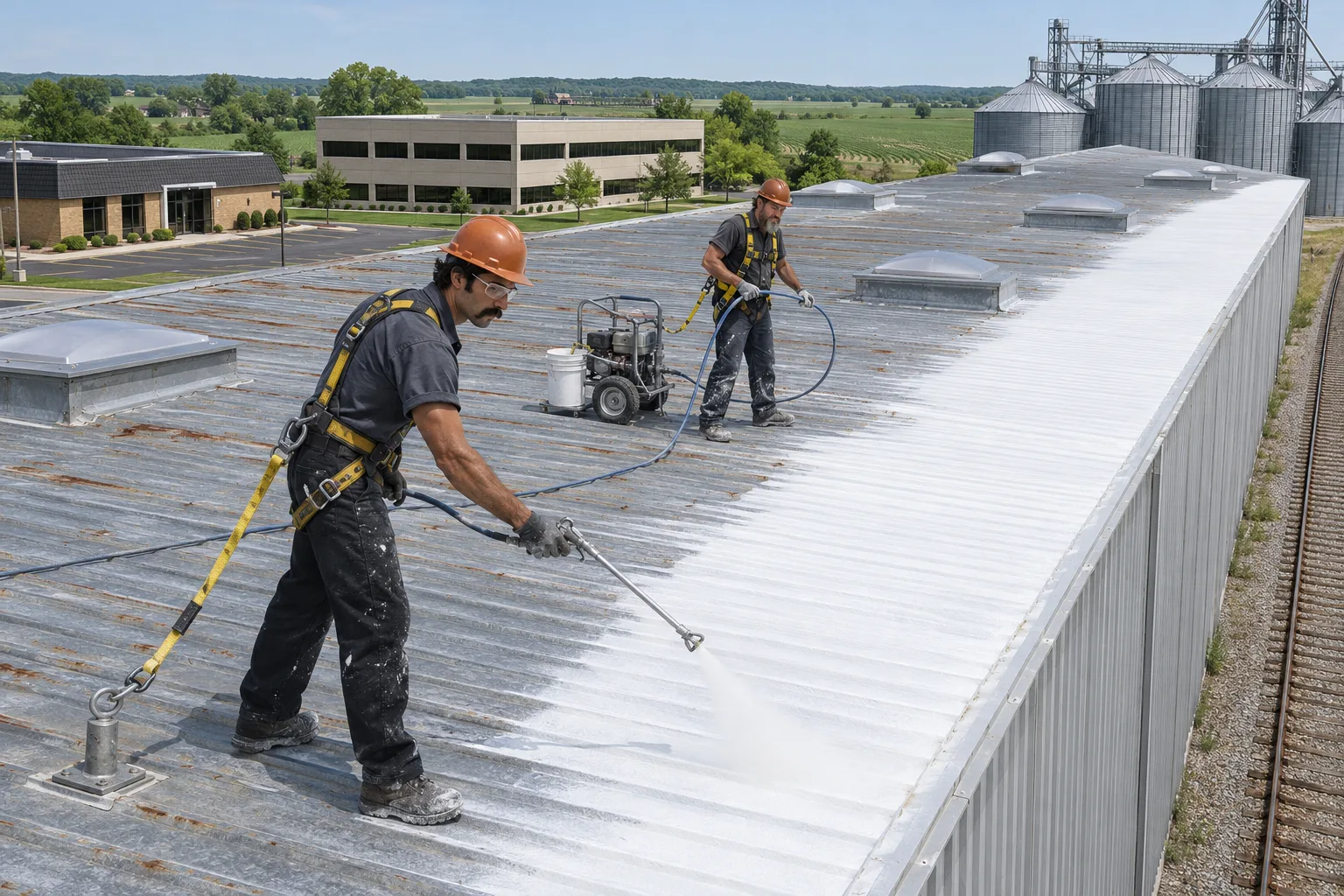
As a Monticello metal roof coating contractor, we seal metal shops and storage roofs with coatings or spray foam, planned for dry, warm, calm weather.
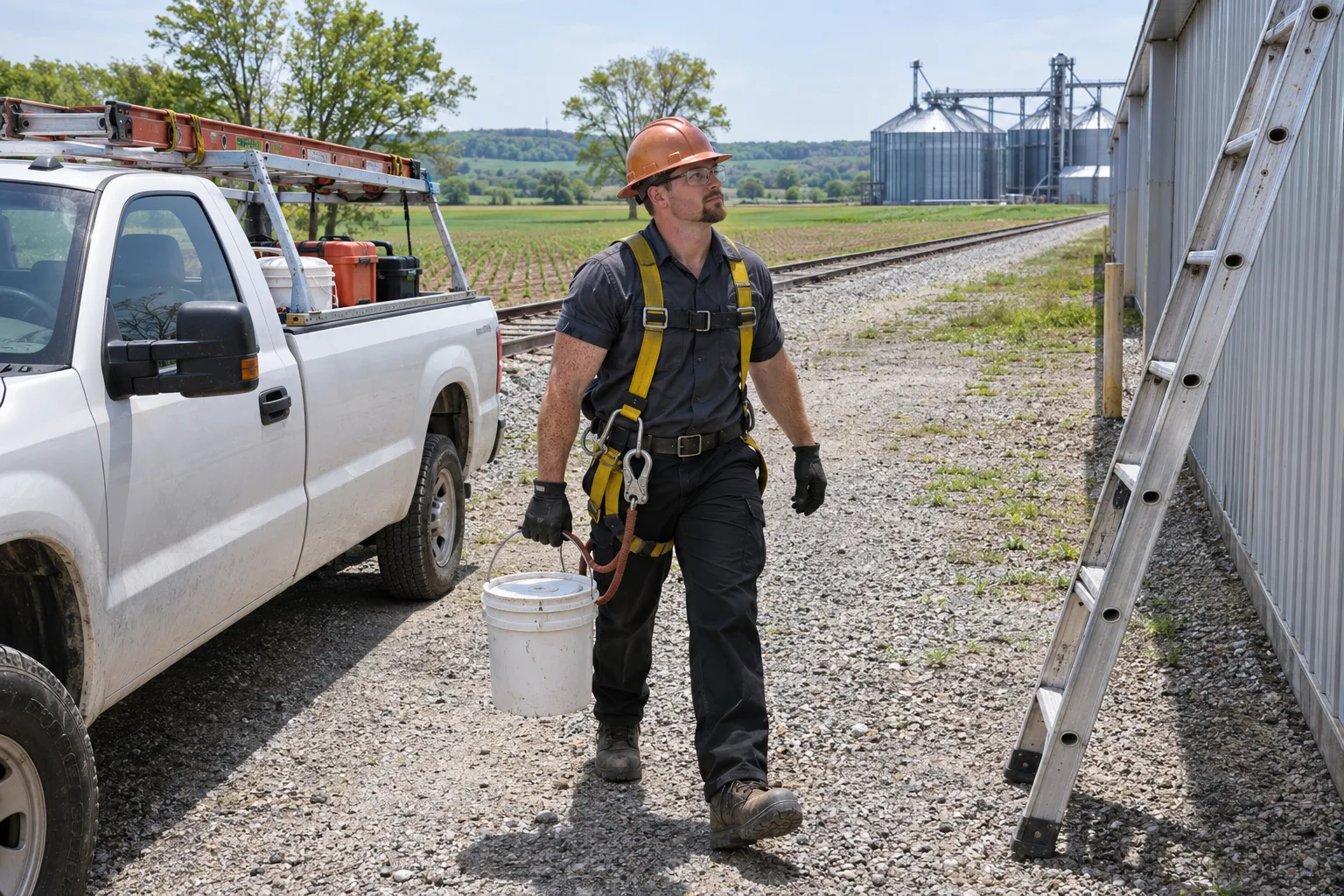
Monticello metal roof coating jobs often lead to spray foam, since many shop roofs leak at most of their laps at once.
Foam and coatings both need the right weather. Panels must be dry, temperatures mild, and wind low, so we plan these jobs for the warmer months and hold backup dates in case a front moves through.
Shop and storage roofs show these problems most.
When most laps leak, foam covers the whole field in one layer instead of sealing each one by hand.
Uninsulated metal loses heat all winter and drips condensation on cold mornings. Foam adds insulation as it seals the panels.
Rows of screws back out as panels grow and shrink with the seasons. They are tightened or upsized before coating or foam goes on.
Hail chips old coating and exposes steel along the ribs. Bare spots are primed quickly so rust never gets started.
Shallow shop roofs hold water near the eaves after a thaw. Foam can be built thicker to slope that water toward the gutters.
Foam or a coating on a Monticello shop roof pays off in different ways.
Metal shops and storage buildings around Monticello use these systems most.
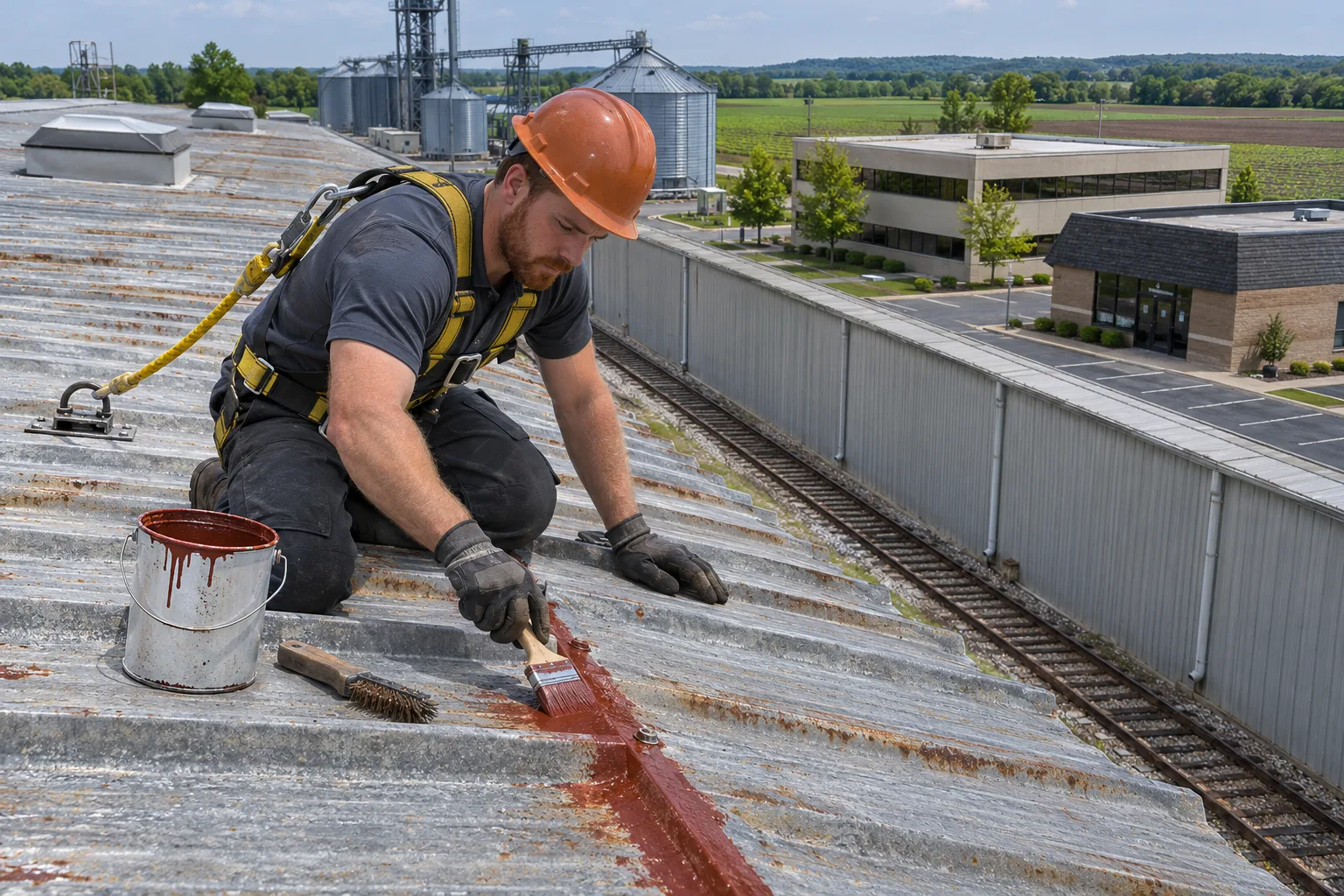
Primed rust, sealed laps, and a field coat on roofs with fewer leaks. It suits shops that leak in a few spots.
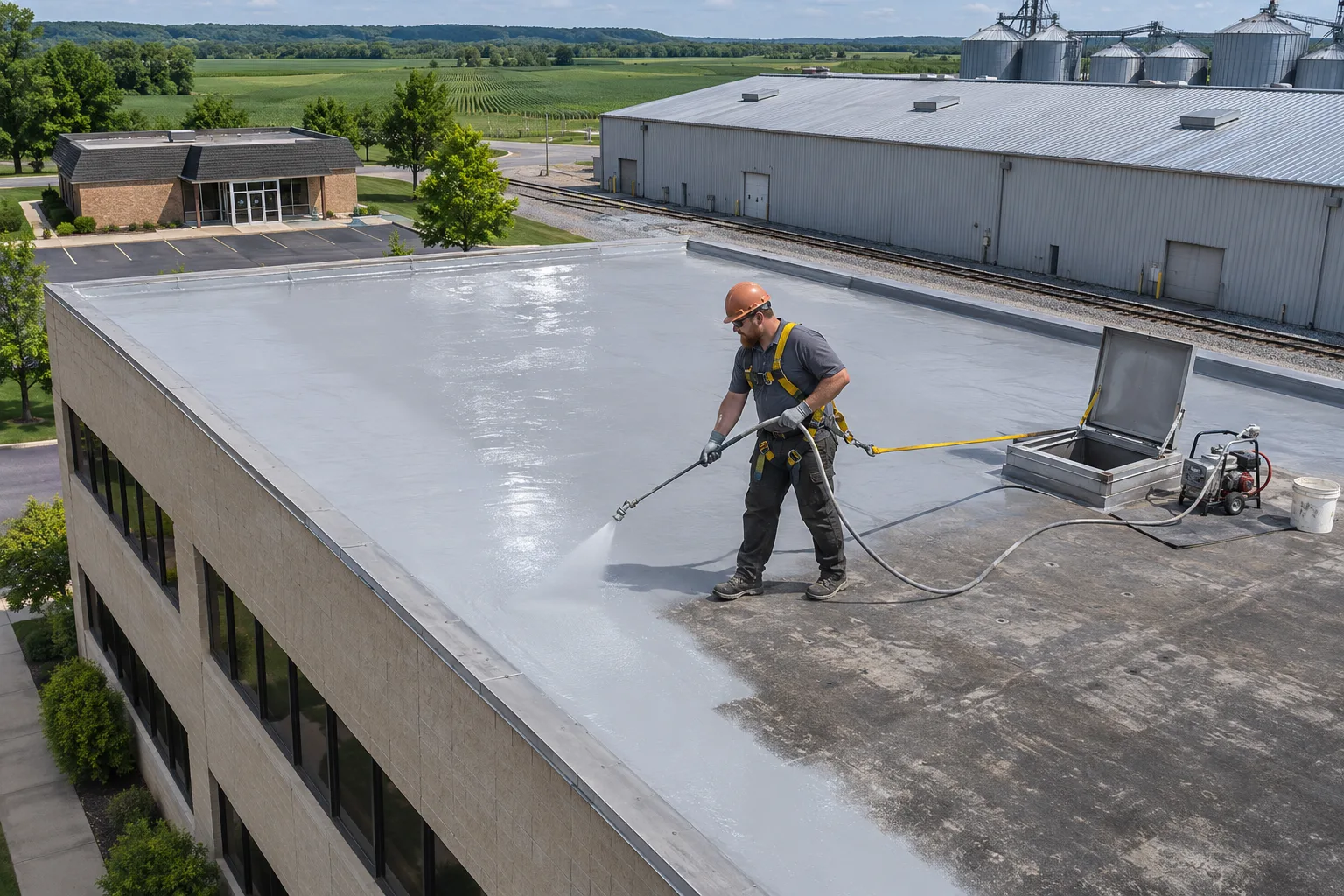
Silicone protects foam and covers low spots that hold water. It is a common topcoat over foam here.
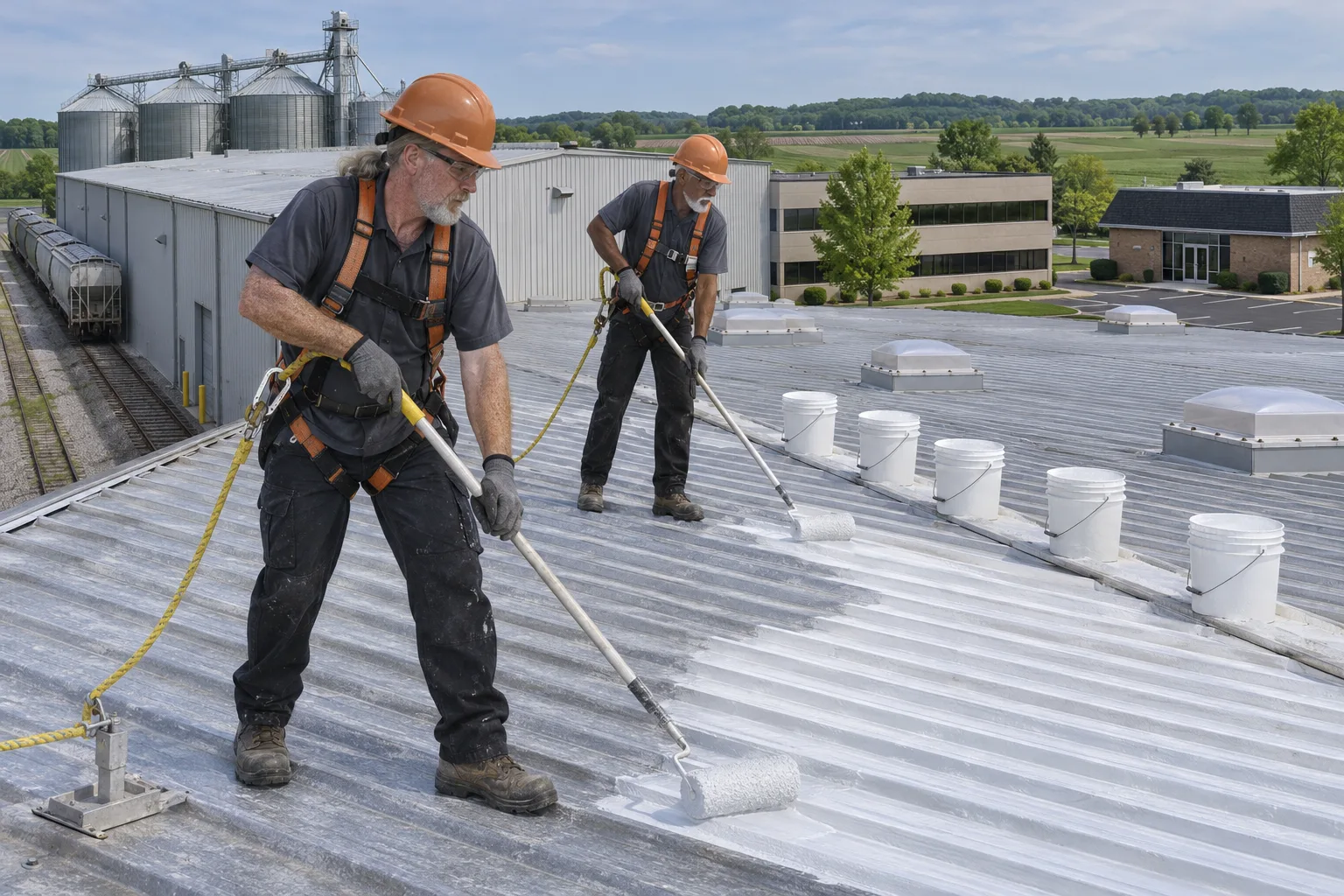
Acrylic is the topcoat for well-drained foam and metal roofs. It goes on in warm, dry weather.
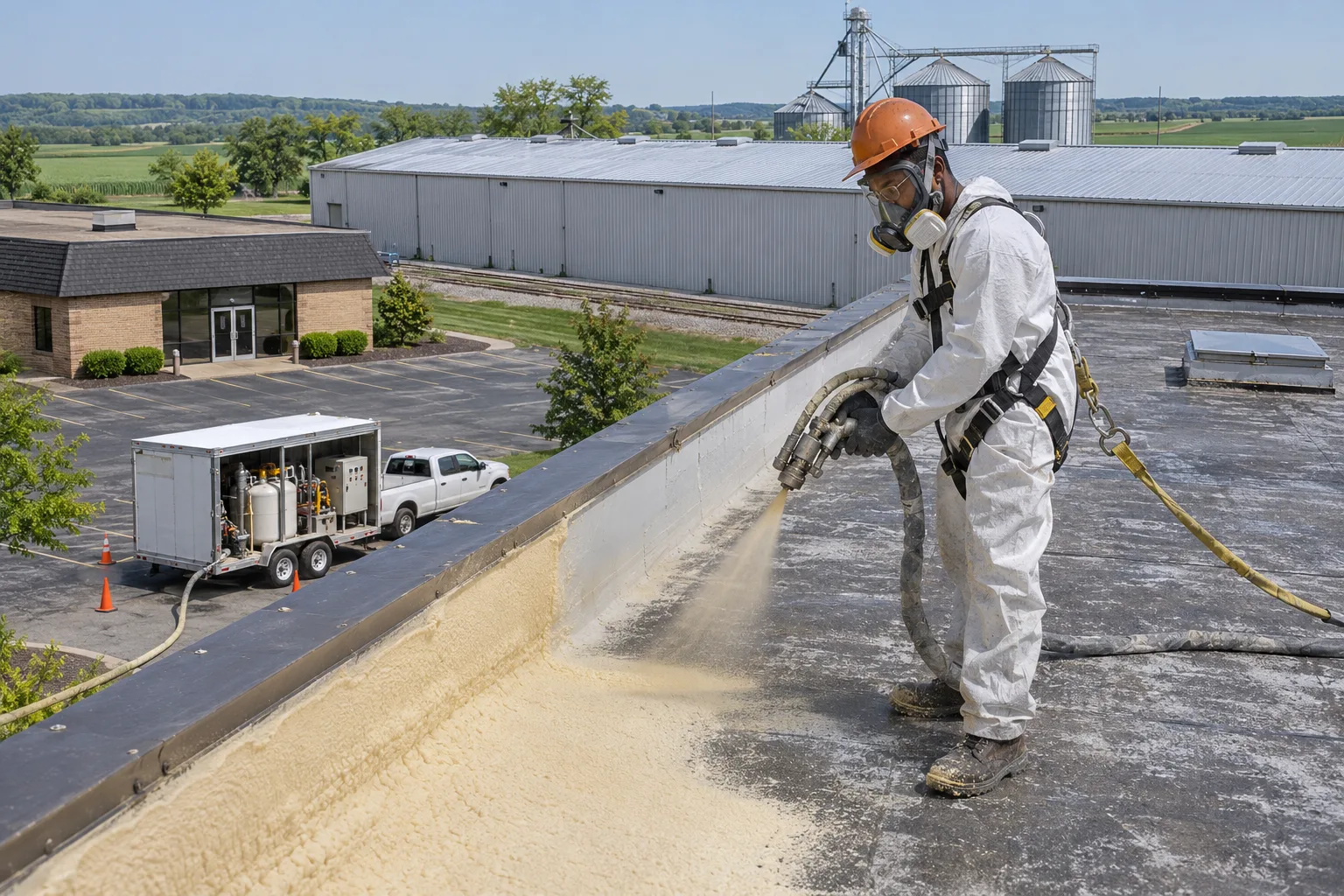
Foam fills the ribs and seals every lap on leaking shop roofs. Depth is probed across the roof.
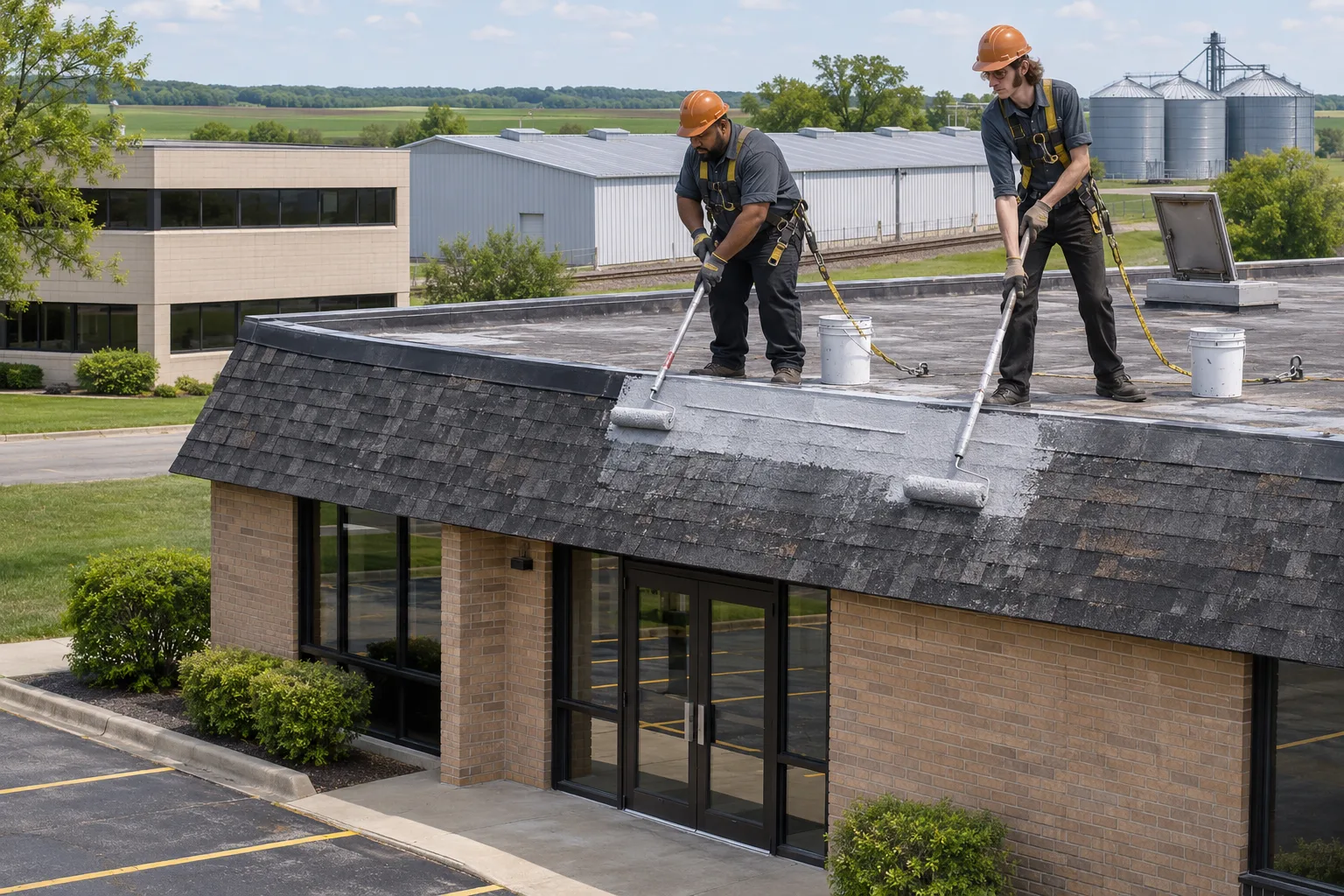
Shingled offices beside the shop get an asphalt coating. Shingles are bend-tested first.
See a ballpark range for coating next to replacement, then let us check whether foam fits.
Weather planning comes first on foam jobs. Here is the order.
We check laps, screws, moisture, and equipment layout to decide between coating and foam. You get the reasons for the choice in writing.
Dates are chosen with dry panels, mild temperatures, and low wind in the forecast. Backup dates are set in case the weather turns.
Vehicles are moved, screens set up, and roof intakes covered. Doors near the work are kept closed while spraying.
Screws are tightened, rust primed, and foam or coating applied and checked for depth. Thin spots get another pass.
Foam gets its topcoat, and readings and photos go to you. The foam is never left bare overnight in sun.
Monticello sits at the north end of our area, with four more towns below. Not on the list? call us or send us a message.
Lab and office roofs planned around intakes.
Plant roofs with fans and curbs.
Older steel roofs that need heavy prep.
Farm and equipment roofs on open ground.
Answers on spray foam, cost, and finding a contractor nearby.
On many of them, yes. Foam covers the roof in one continuous layer that seals screws and laps and adds insulation, then a coating protects it from sun. It needs dry panels, mild temperatures, and calm wind, so we plan it for warmer months.
Each foam and coating product lists its own minimum temperatures for the air and the panel surface. We measure the panels with a thermometer each morning, and work waits when they are too cold, wet with dew, or frosted.
Yes. Foam is built up to the skylight curbs and sealed against them, and brittle plastic panels are swapped first. Clear skylight surfaces are masked so they stay clear, and the foam edge around each one gets topcoat like the rest of the roof.
It adds insulation over bare panels, which cuts heat loss through the roof. How much warmer the shop feels depends on the walls, doors, and heating, but the roof stops being the coldest surface.
Roofs crowded with units and ducts are harder to foam evenly, since the foam has to wrap every curb and support. A coating system often fits them better, with silicone around the equipment and acrylic or metal coating on the open panels. We show you the tradeoff on the roof walk.
Plan on about $2.50 to $4.00 per square foot for coating, against about $5 to $8 for replacement. Foam depth, the topcoat chosen, the number of leaking laps, and access for the rig all move the price. The roof walk sets the final number.
Yes. We cover Monticello from Lafayette. Call with the address and a short description of the leaks, and we will set a roof walk. For foam jobs we also look at where the rig can park and which doors and vehicles need covering.
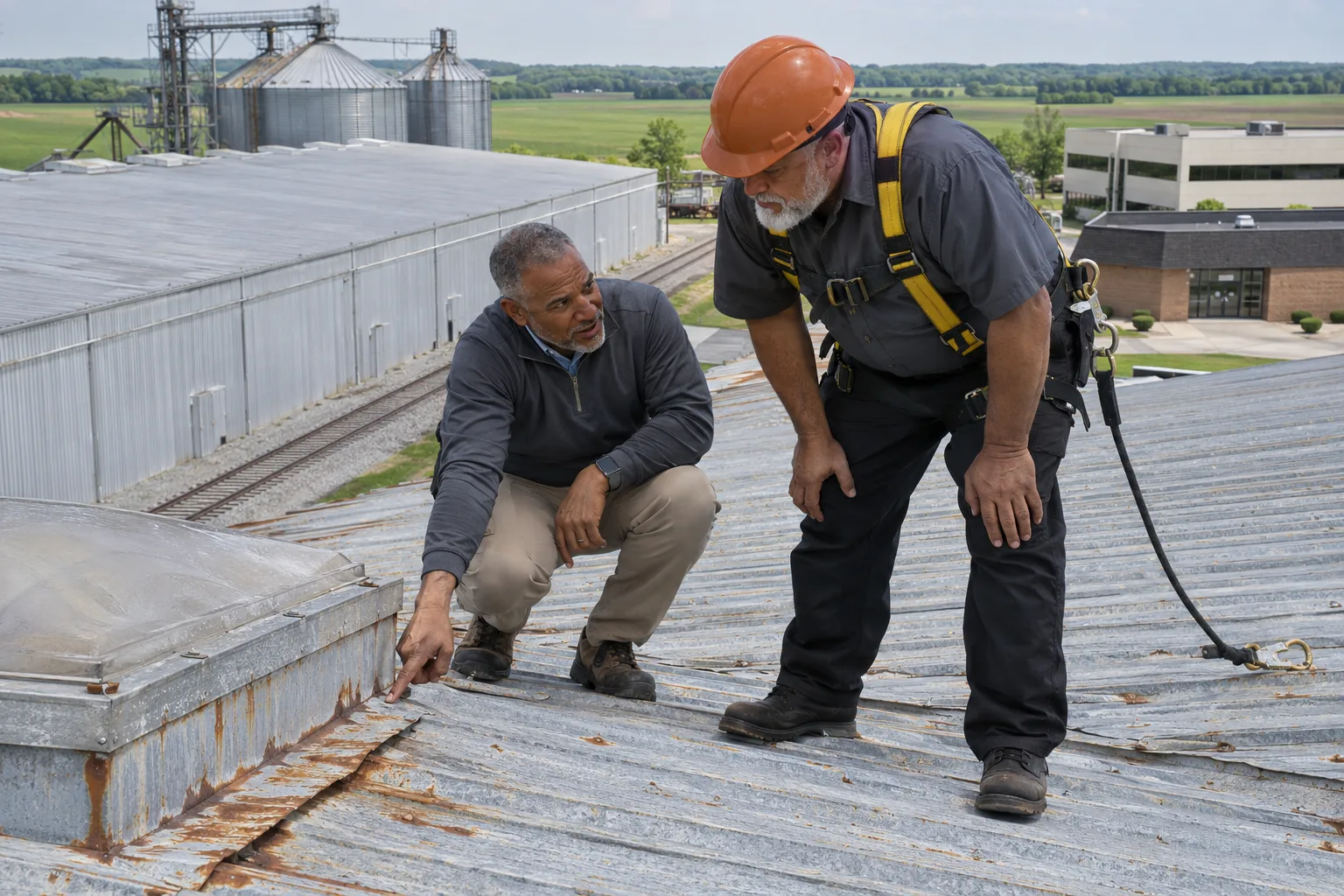
We take storage buildings and shops around Monticello, starting with a roof walk before naming foam or a coating. The choice turns on how many laps leak, whether the shop is heated, and how much equipment sits on the roof, and we explain each of those in writing.
Book a roof walk and we will tell you whether foam or a coating fits your shop.