If Your Roof
Holds water near drains for a day or two
Dirt rings mark the ponds after each storm, yet the deck below is dry.
Start WithSilicone Roof Coating
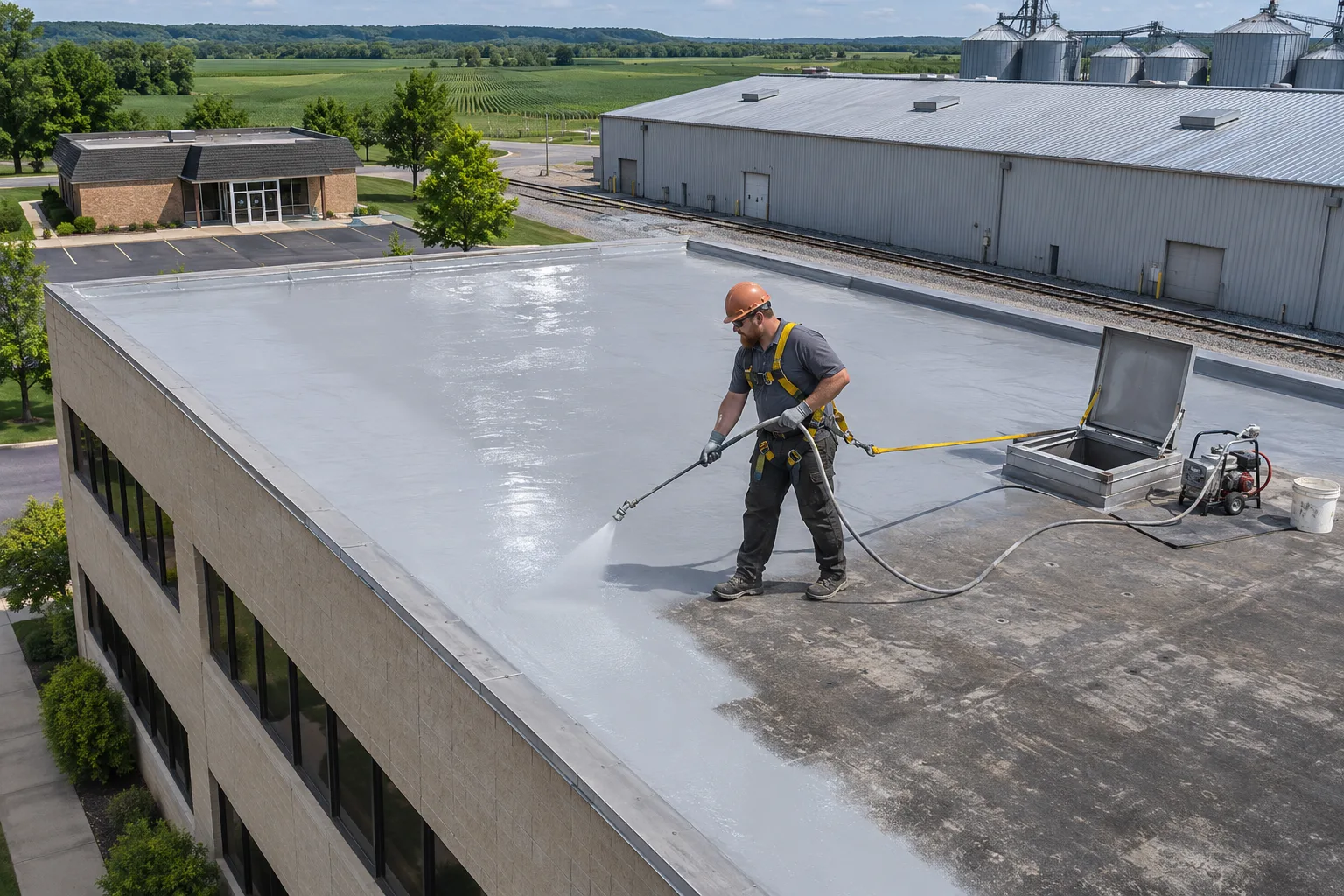
As a Lafayette silicone roof coating contractor, we coat low-slope metal and flat roofs where water stands after storms, thaws, and blocked drains.
Lafayette silicone roof coating suits roofs that stay wet in places. Find the description that matches yours.
Dirt rings mark the ponds after each storm, yet the deck below is dry.
The surface is chalky and dirty but still bonded to the roof.
Seams have opened in a few places on a membrane that is otherwise intact.
Moisture readings show wet insulation below the surface.
Silicone goes where water lingers. These are the spots we look at first.
A drain bowl set a little high leaves a ring of water around it. The bowl is cleared and reset, and silicone covers the low area.
Ice in a gutter holds water against the lowest panel ends through February. Silicone in the gutter run handles that water.
Flat office roofs with tired seams get each seam cleaned and reinforced before the silicone coat ties the field together.
A spongy patch near a curb means water is already inside. That section is cut out and replaced before any coating.
Dust collects where water sits and dulls the surface. Regular washing keeps a silicone roof bright and working.
Silicone goes onto several roof types. These are the setups we see most around Lafayette.
Older single-ply on office and clinic roofs is cleaned, seam-repaired, primed, and coated with silicone.
Shallow metal roofs that pond at the eaves get rust primer, sealed laps, and a silicone field coat.
An aging silicone roof is washed and recoated with silicone, since few other coatings bond to it.
Silicone in gutters and around drains pairs with acrylic on the steeper panels after adhesion tests.
A silicone coat on the wet parts of a roof helps people in different ways.
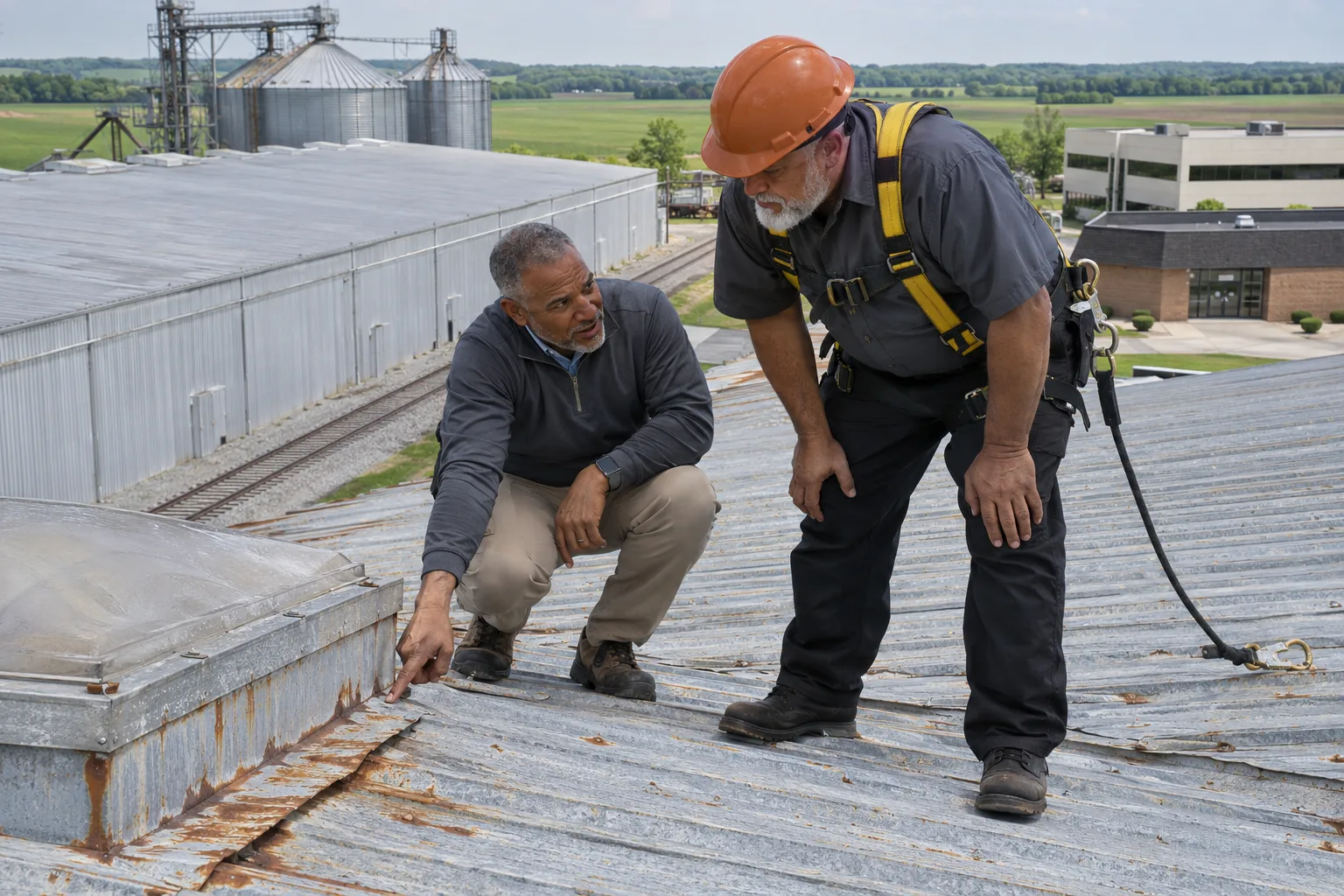
See a ballpark range for coating next to replacement, then let us check the low spots in person.
Silicone needs a dry, clean roof. Most of the work happens before the first coat.
We map where water stands, take moisture readings across the low areas, and check drains, seams, and curbs before choosing the build.
Any soaked insulation found by the readings is removed and replaced so the coating sits over a dry roof.
Drain bowls are cleared and reset, opened seams cleaned and reinforced, and laps and screws sealed on metal sections.
A bleed-blocking or rust primer goes down where adhesion tests call for it, then the silicone is sprayed or rolled.
Wet-film readings across the roof confirm the thickness on the spec, and the photos and readings go to you.
Silicone often handles only part of a roof. These systems cover the rest.
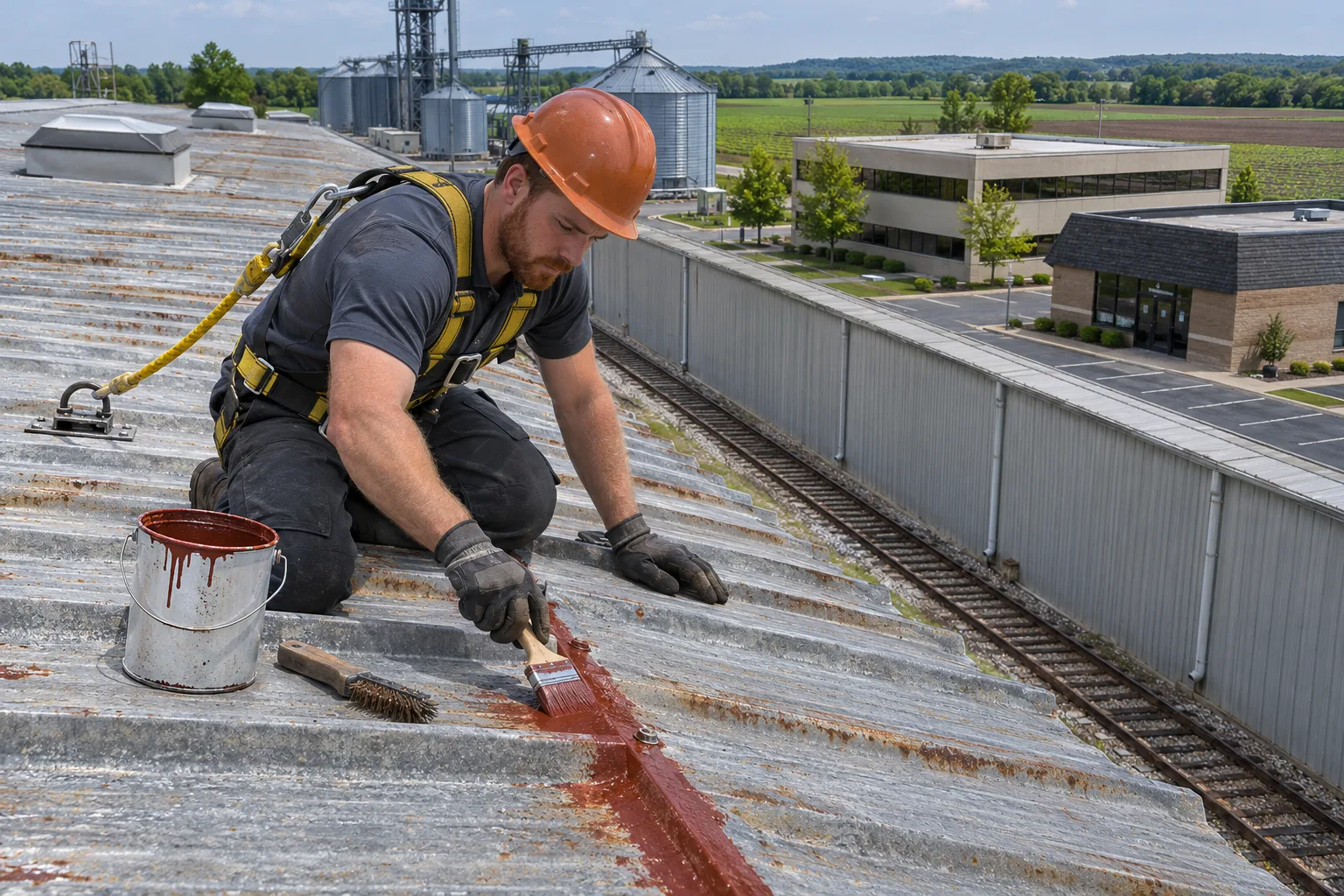
Metal roof coating covers the sloped panels while silicone handles the gutters and low bays on the same building.
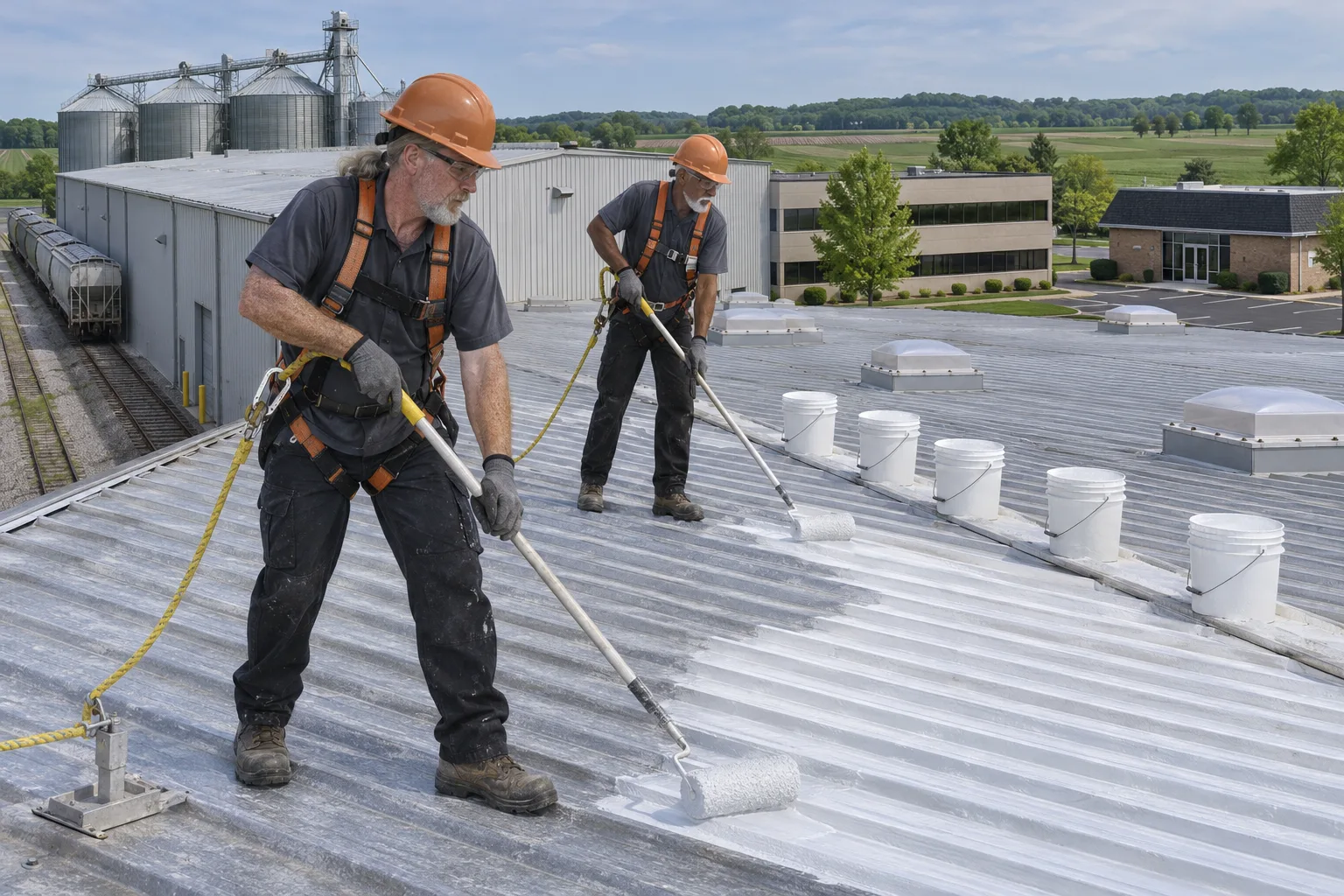
Acrylic suits the steep, fast-draining panels next to a silicone low area once adhesion tests confirm the pairing.
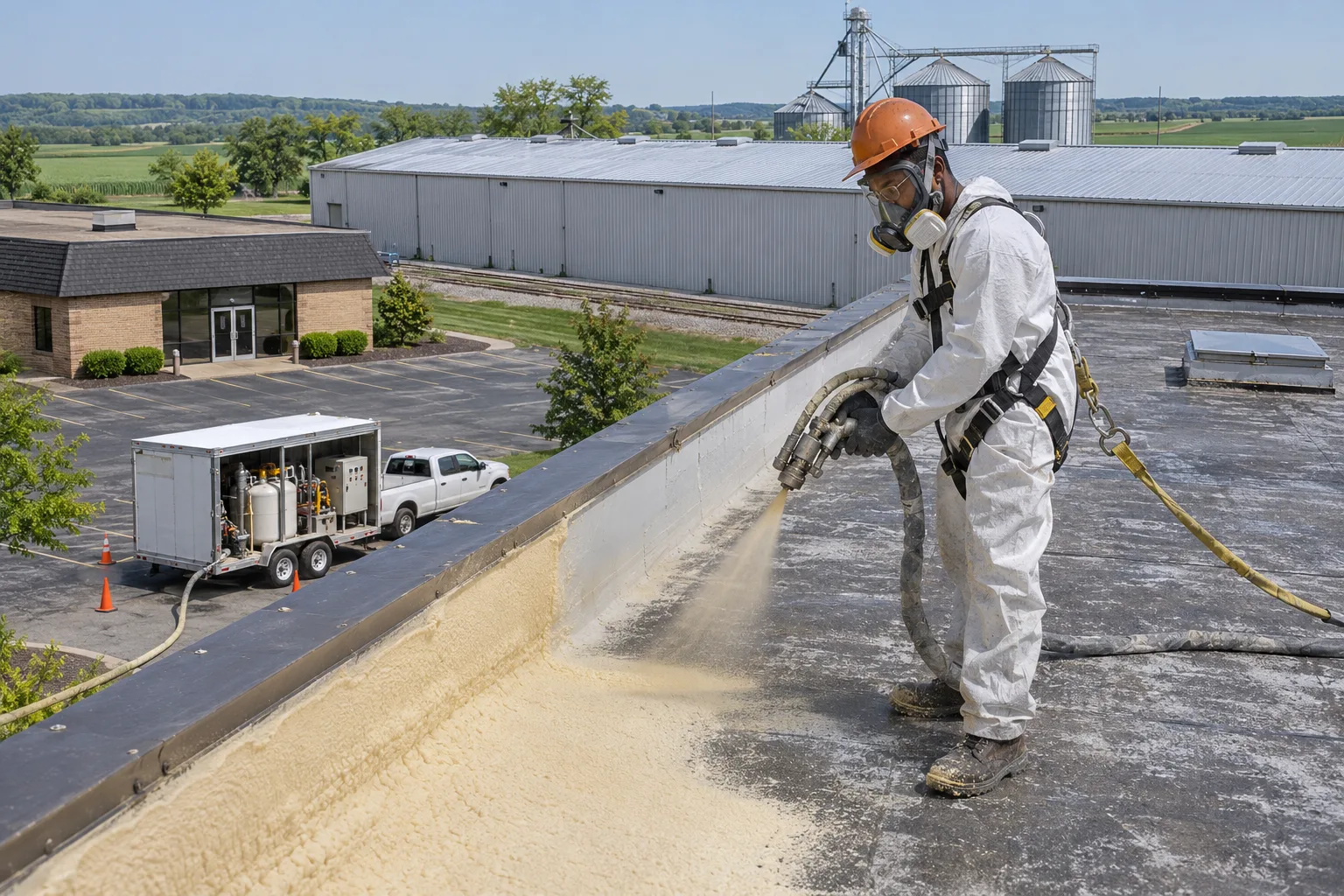
Spray foam can build slope toward drains first, then take a silicone topcoat over the whole field.
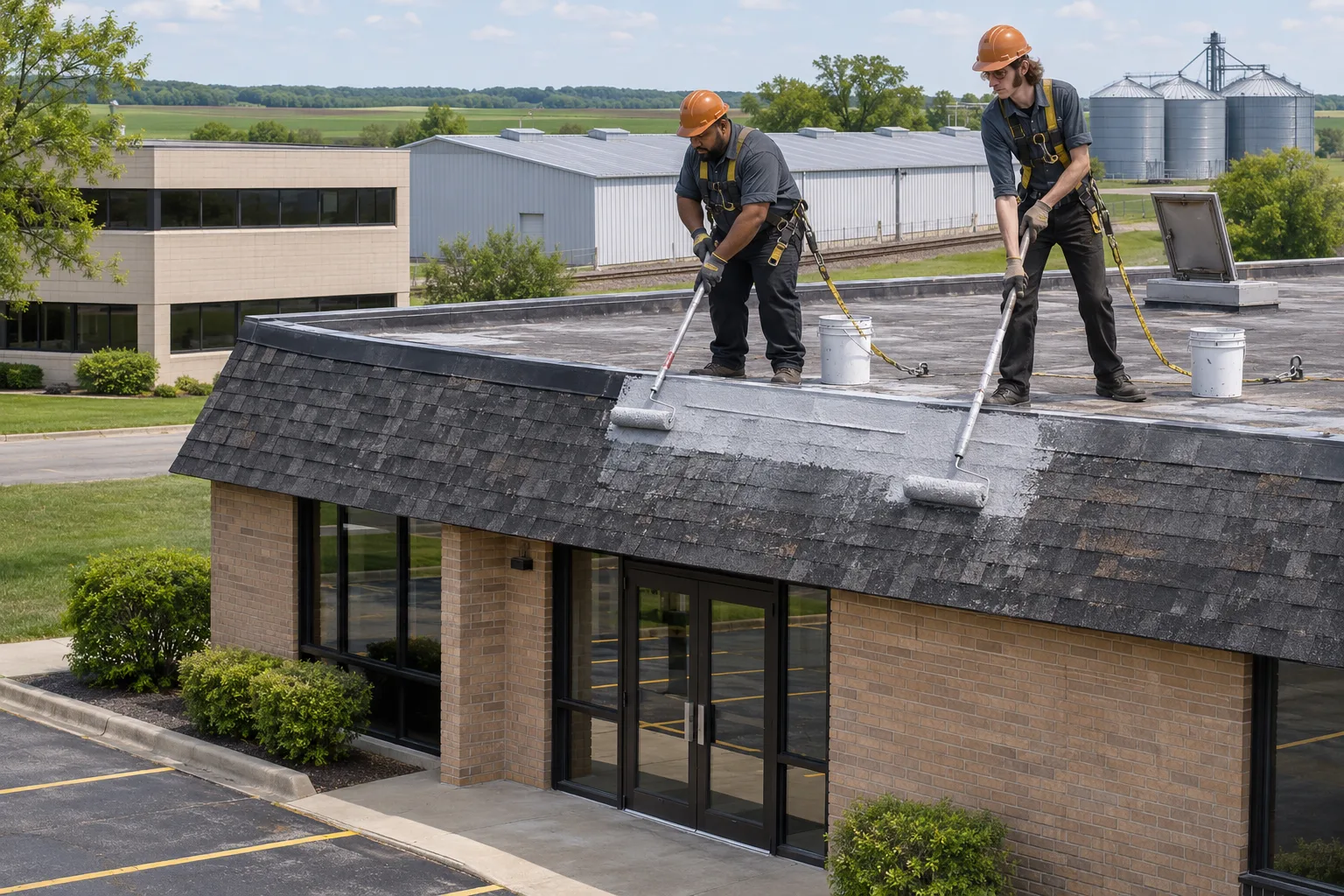
Shingle coating covers a sloped shingle wing when the flat office roof beside it gets silicone.
What owners ask most about coats, lifespan, and standing water.
Usually one or two, though the spec is set as a dry film thickness rather than a coat count. Laps, screws, and penetrations get a reinforced detail coat first. Weathered panels soak up more material, so we measure wet thickness as we go until the whole roof meets the spec.
Ten to 20 years is common, and thickness is the biggest factor. Grain dust holds moisture and dulls the surface, so washing a few times a year helps. Foot traffic around equipment and ponding at gutters also add wear, and at the end the roof is washed and recoated with silicone.
Low spots, valleys, and gutters suit silicone wherever water stands after rain or snowmelt. Acrylic fits well-sloped panels that drain fast, costs less per gallon, and recoats easily. Plenty of roofs here get both, silicone in the wet areas and acrylic on the slopes, after adhesion tests.
Yes. Silicone resists standing water and stays intact where acrylic would soften. It still needs a clean, dry, primed surface and sealed seams, and it leaves the cause of ponding in place, so blocked drains and sagging areas are fixed as part of the job.
Cooler days are easier on silicone than on acrylic, but the roof still has to be dry, free of frost and dew, and above the minimum temperature on the product sheet. We check the surface and the forecast each morning before spraying.
Ice in gutters, valleys, and drains traps meltwater against laps and screw rows built to shed moving water. It seeps under laps and around worn washers, and freeze-thaw widens the gaps. Sealed laps and screws, silicone in the low areas, and clear drains cut those winter leaks.
Let us map the wet areas on your roof and show you where silicone belongs.