If Your Roof
Has orange rings around most screw heads
Washers have dried out and water is starting to rust the holes.
Start WithFastener Sealing And Coating
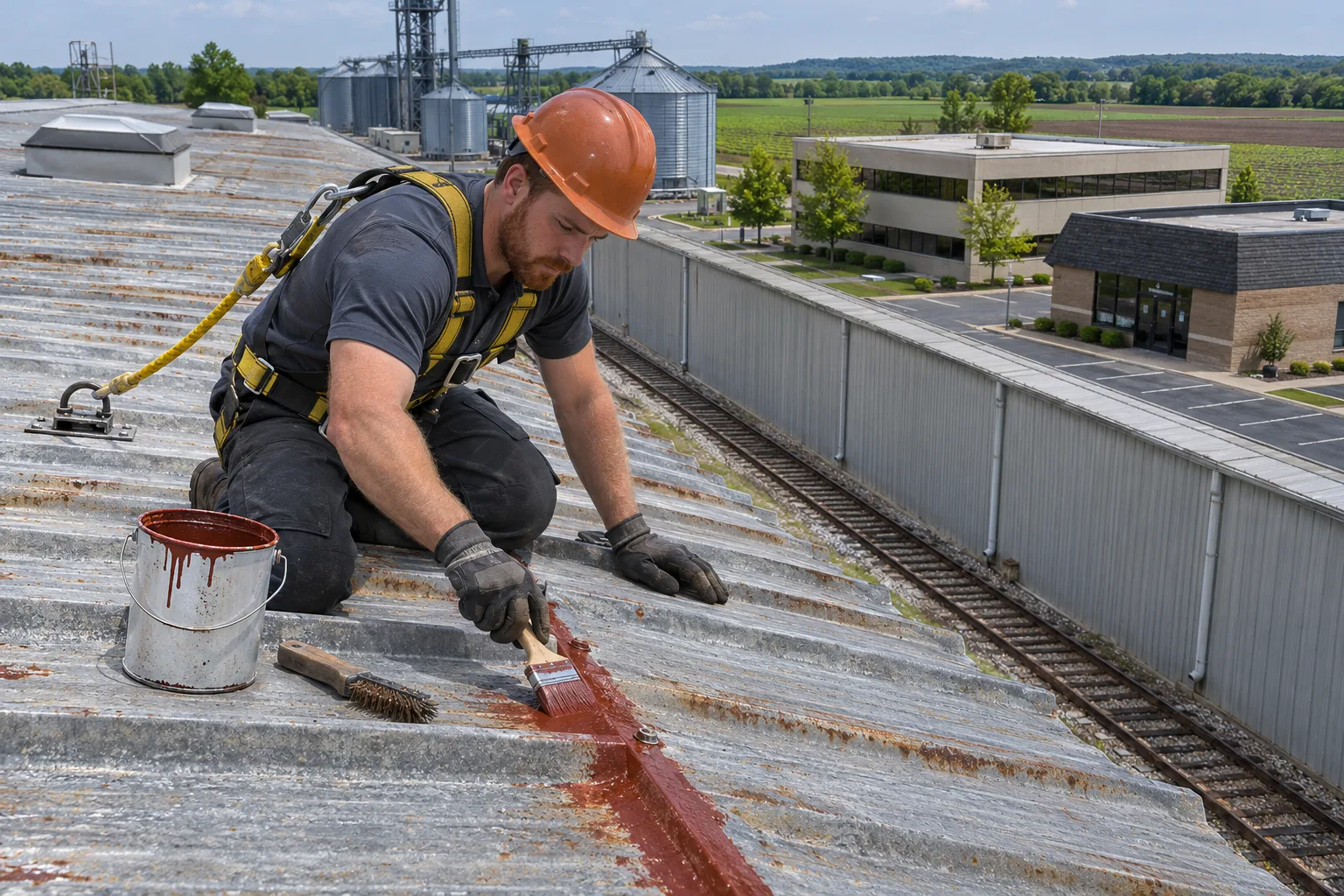
As a Lafayette commercial metal roof coating contractor, we repair laps and screws, prime rust, and coat exposed-fastener roofs on plants and warehouses.
Lafayette commercial metal roof coating fits most exposed-fastener roofs that still carry weight. Find your roof below.
Washers have dried out and water is starting to rust the holes.
The lap sealant is gone and water sits between the panels.
The finish under the dust is chalky and starting to pit.
Panels have thinned or holed across several bays.
These are the details that decide how much prep a metal roof needs before the coat.
Rubber washers shrink and split after years of sun. Each screw is retightened, upsized, or capped with sealant before the field coat covers it.
Long panel runs grow and shrink with the seasons and pull laps apart. Stitch screws close the gap, and the lap gets fabric and a base coat.
Snow and meltwater sit longest at the eave, so rust starts there. Wire brushing removes the scale and a rust primer seals the steel.
Water at a rooftop unit lands on whatever sits below it. The curb flashing is rebuilt with matching metal and sealed before coating.
Old plastic skylights crack and leak at their laps. They are replaced or sealed at the edges so the coating can lap onto them cleanly.
Each option fits a different part of a metal roof. Most Lafayette jobs use two or three of them together.
A two-color acrylic system over primed steel suits pitched roofs that drain fast and get full sun.
Silicone handles the low spots and gutters where water sits after a thaw, joined to acrylic on the slopes.
Primer on every rust spot and sealant at every lap is the base layer under any topcoat we apply.
When most laps leak at once, spray foam covers the whole field and gets its own topcoat.
Each person tied to the building gains something different when the panels are repaired and coated.
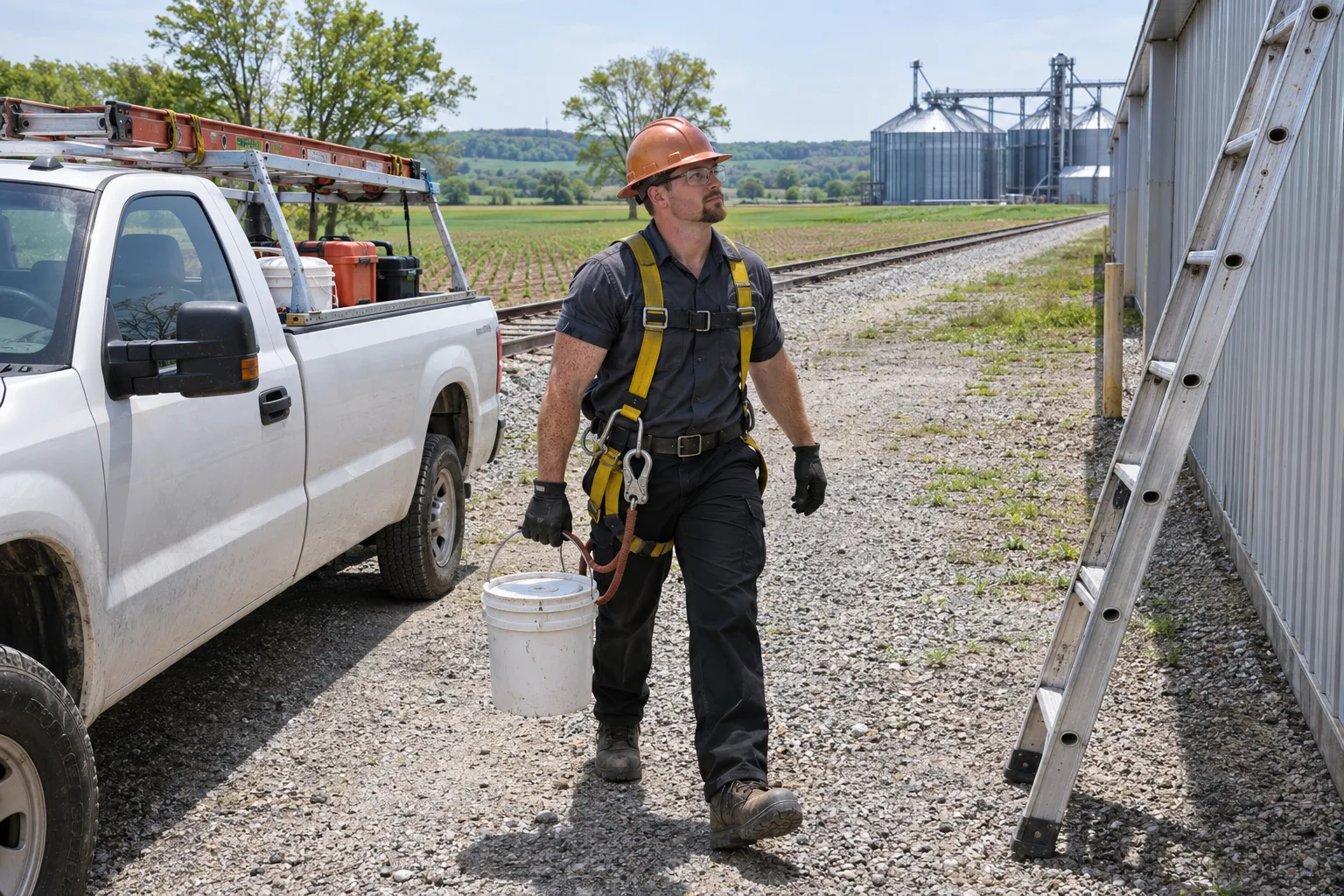
Get a ballpark range for coating next to replacement in a few minutes, then let us walk the roof and confirm it.
Prep takes most of the time on a metal roof. The coat itself goes on last.
We walk every bay, probe rusted areas, check screws and laps, and take moisture readings near curbs before writing the repair list.
Holed panels are swapped, loose screws upsized, and open end laps stitched shut so the roof stops moving at those joints.
Pressure washing removes chalk, grain dust, and oil. Rust is brushed back and primed before the end of each shift so it cannot flash again.
Air intakes are covered while we spray nearby, and each day covers set roof sections agreed with your facility team.
Laps, screw rows, and curbs get fabric and a base coat, then the field coat. Wet-film readings and photos go into your closeout file.
Many metal roofs end up with more than one system. These are the ones that pair with it.
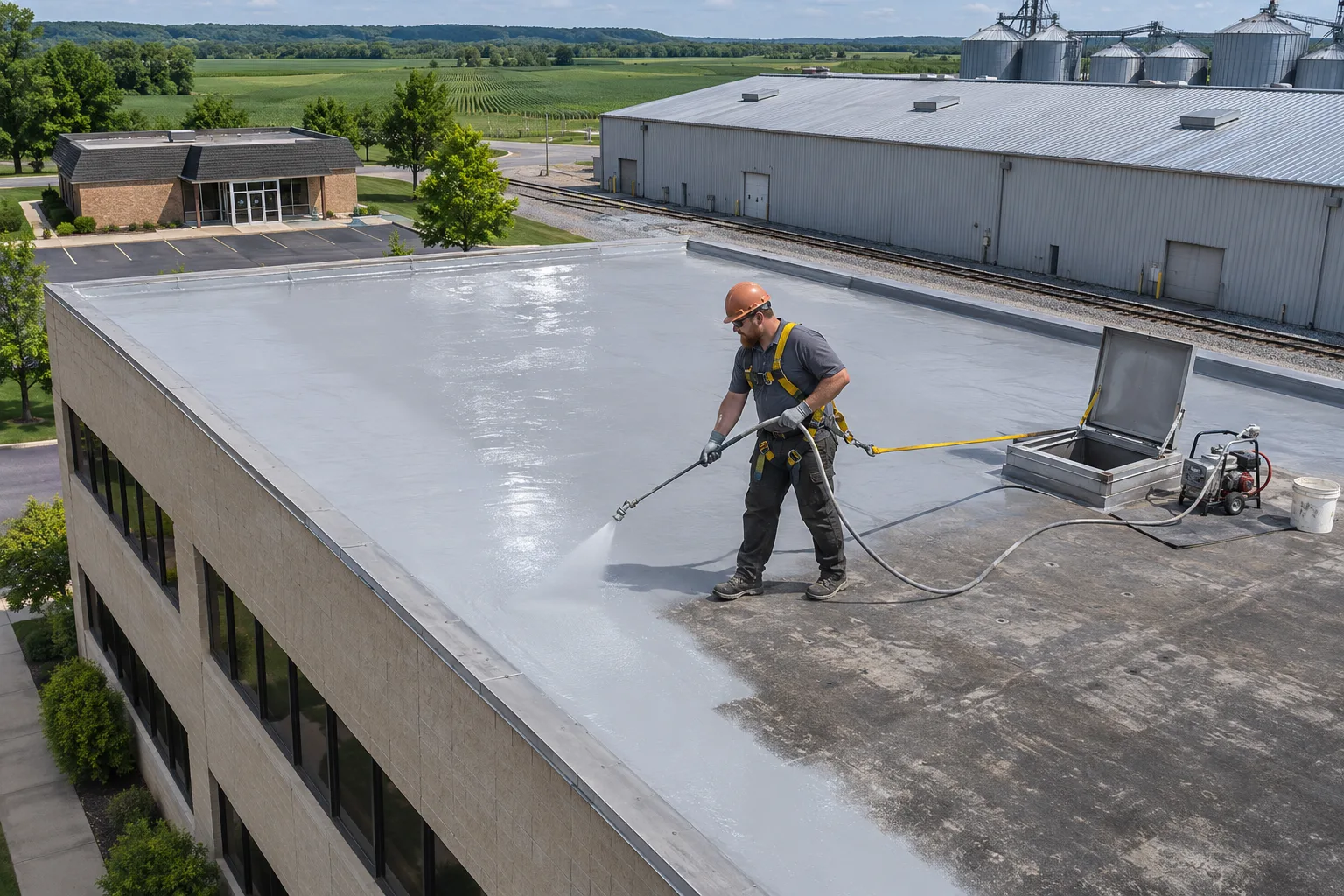
Silicone covers the low bays and gutter lines that stay wet, so the main coating on the slopes never sits in water.
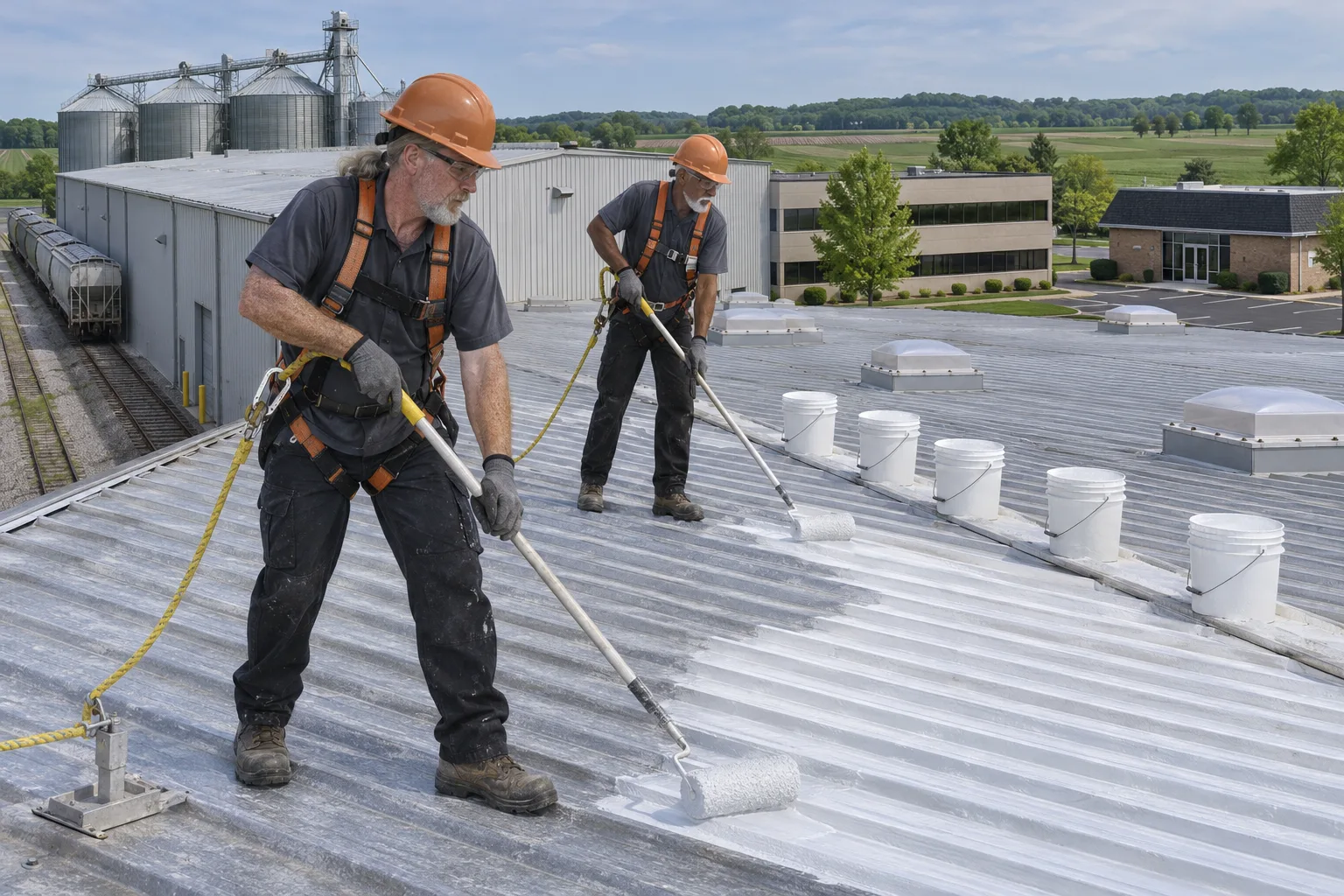
Acrylic is often the field coat over primed panels, rolled in two colors so full coverage is easy to see.
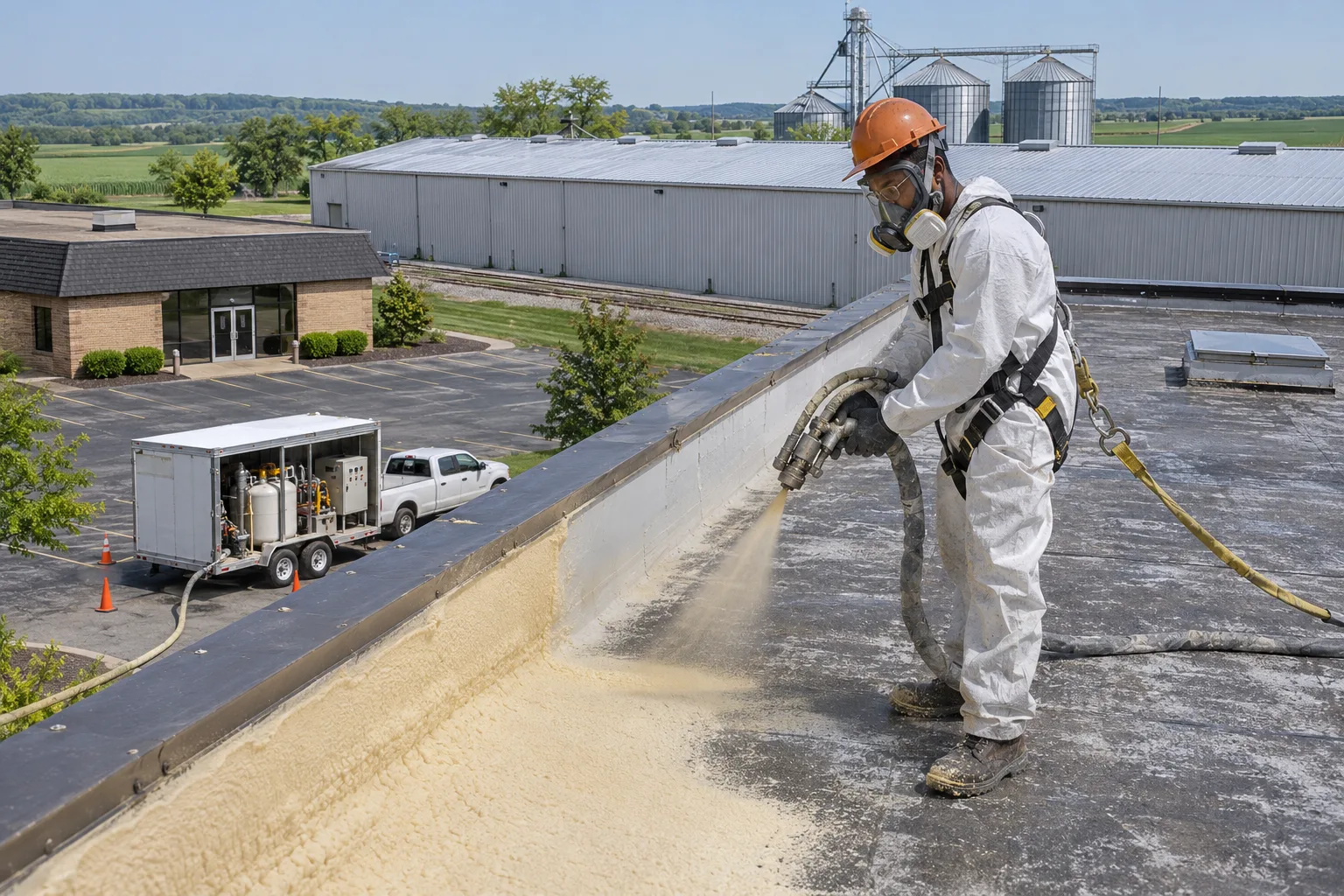
Spray foam takes over when nearly every lap leaks, sealing the whole panel field in one pass.
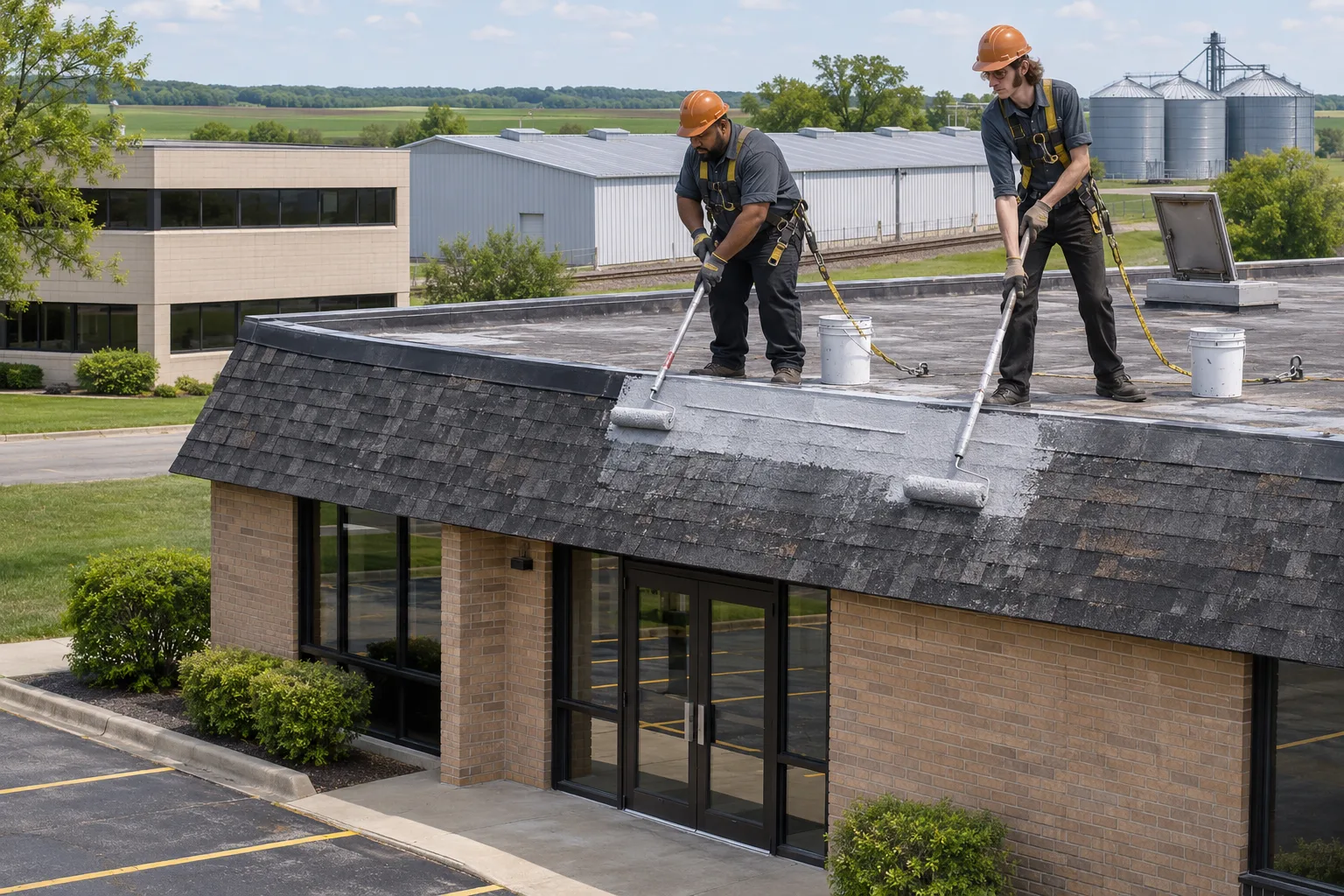
Shingle coating handles the mansard or office wing of a plant that has asphalt shingles instead of steel.
Answers about rust, restoration steps, and which coating lasts longest.
Rust treatment starts with a pressure wash to remove dirt, chalky paint, and loose scale. Heavier rust is wire brushed or ground, and every bare spot gets a rust-inhibiting primer before the shift ends. Near intakes and sensitive equipment we schedule the work with your facility team, and any panel rusted through is replaced first.
We inspect and probe suspect areas, wash the roof, replace damaged panels and failed screws, prime rust, and seal laps, seams, and curbs with reinforced detail coats. The field coat then goes on to the specified thickness, checked as we work. The goal is a leaking but solid roof brought back to watertight service.
It depends on how the roof drains. Silicone handles areas where water ponds or snowmelt sits, and acrylic suits pitched panels that shed water fast and need easy recoats. We pick after checking slope, ponding, rust, foot traffic, and an adhesion test on your panels.
Thickness and prep matter more than brand. Silicone applied at higher thickness often reaches the top of its service range and can be recoated with silicone later. A thick acrylic system on a well-drained roof also lasts well when rust is primed, screws are sealed, and drains stay clear.
When old plastic skylights are cracked or brittle, yes. They are swapped or sealed at their laps before the field coat, so the coating laps onto a solid edge instead of a cracked one.
Indiana commercial buildings fall under the Indiana Building Code, 675 IAC 13. The state rules page lists the 2014 edition, based on the 2012 International Building Code, as in effect. Local officials enforce it and can confirm what applies to your building.
Yes. The work happens on the roof with no tear-off, so offices and labs below keep running. Intakes and rooftop units are covered or scheduled around, the roof is done in sections, and low-odor water-based products are used near sensitive spaces after we review the ventilation layout.
Book a roof walk and get a written repair list before any coating price.