If Your Roof
Leaks at many laps and screw rows at once
Spot repairs no longer keep up with the drips inside.
Start WithSpray Foam Roofing
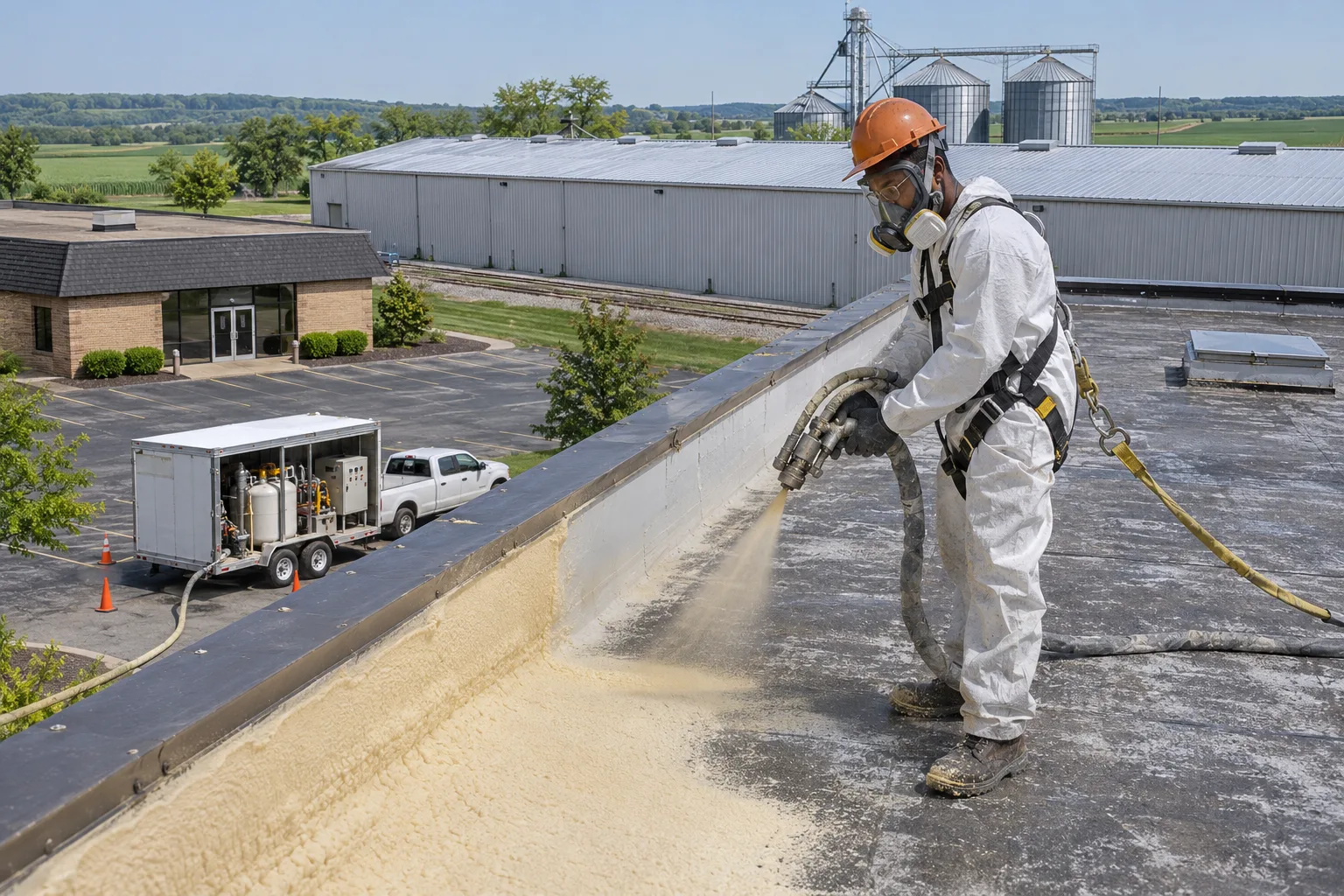
As a Lafayette spray foam roofing contractor, we spray foam over leaking metal and flat roofs, then topcoat it to keep sunlight off the foam.
Lafayette spray foam roofing works best on open roofs with widespread leaks. See which line matches your building.
Spot repairs no longer keep up with the drips inside.
The space under the panels has little or no insulation.
The foam is dry and firm, but the coating is thin.
Equipment covers much of the roof surface.
Foam solves some problems well and needs care around others.
When every few feet of lap leaks, foam covers them all in one layer instead of sealing each one by hand. That is where foam saves the most labor.
Uninsulated metal over a shop or warehouse loses heat all winter and drips condensation on cold mornings. Foam adds insulation as it seals.
Foam can be built thicker toward drains so water moves off the roof instead of sitting against laps and curbs.
Punctures let water into the foam, where it spreads and soaks the cells. Damaged foam is cut out, refilled, and recoated.
Roof overspray travels a long way on windy days and settles on cars and windows. Spray work waits for calm weather, and screens go up near parking lots.
Spray foam comes in a few setups depending on the roof under it.
Foam fills the panel ribs and covers every lap and screw, then gets a silicone or acrylic topcoat.
A dry, firm flat roof can take foam directly after loose material and wet areas are removed.
Extra foam depth at high points sends water toward drains on roofs that pond.
A worn topcoat is washed off, damaged foam repaired, and a new coat applied over the whole roof.
A foam roof brings different gains to each person tied to the building.
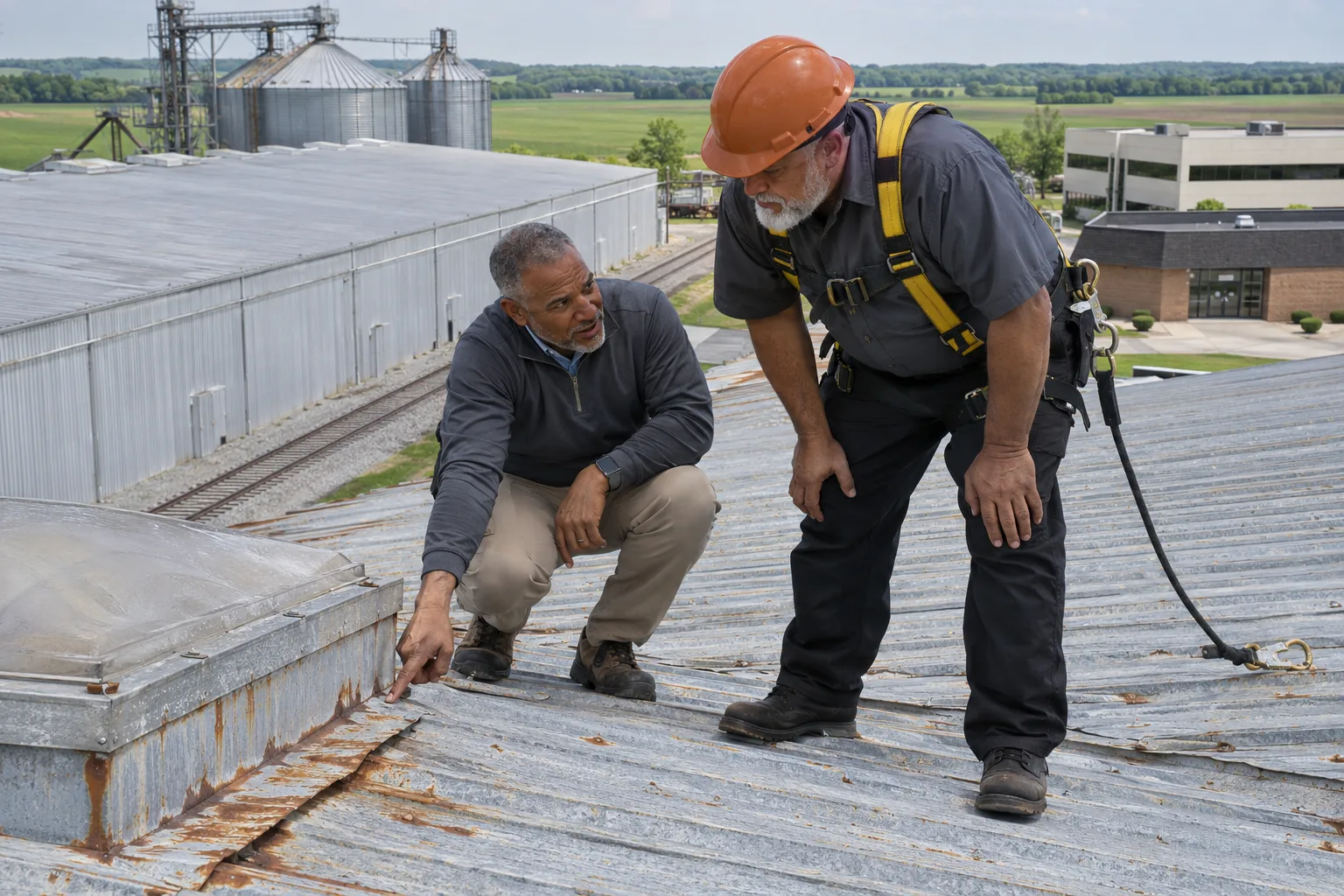
Get a ballpark range for coating next to replacement, then let us check whether foam fits your roof.
Foam needs dry surfaces and calm air. The steps below happen in this order.
We check for wet insulation, loose panels, and equipment layout, and confirm the roof can take foam evenly.
Vehicles are moved, screens set up, and intakes and units covered before any spraying begins.
Loose material is removed, wet areas cut out, metal primed where needed, and the surface left clean and dry.
Foam goes on in passes to the planned depth, and probes check thickness across the roof.
A silicone or acrylic topcoat covers the foam within the window the product allows, and readings go into your file.
Foam is one option among several. These systems cover the roofs it does not suit.
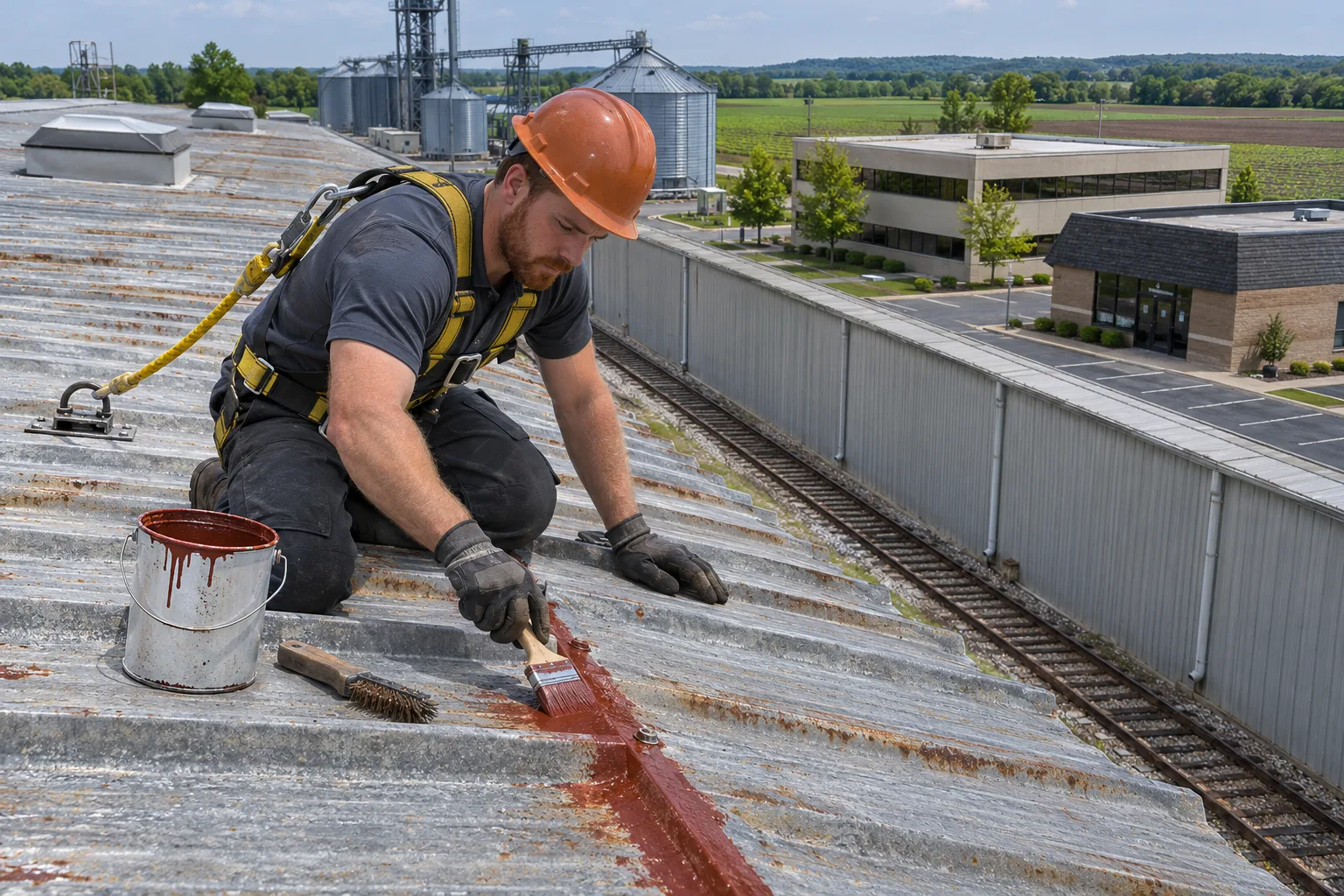
Metal roof coating fits panel roofs with fewer leaks, where sealing laps and screws by hand is enough.
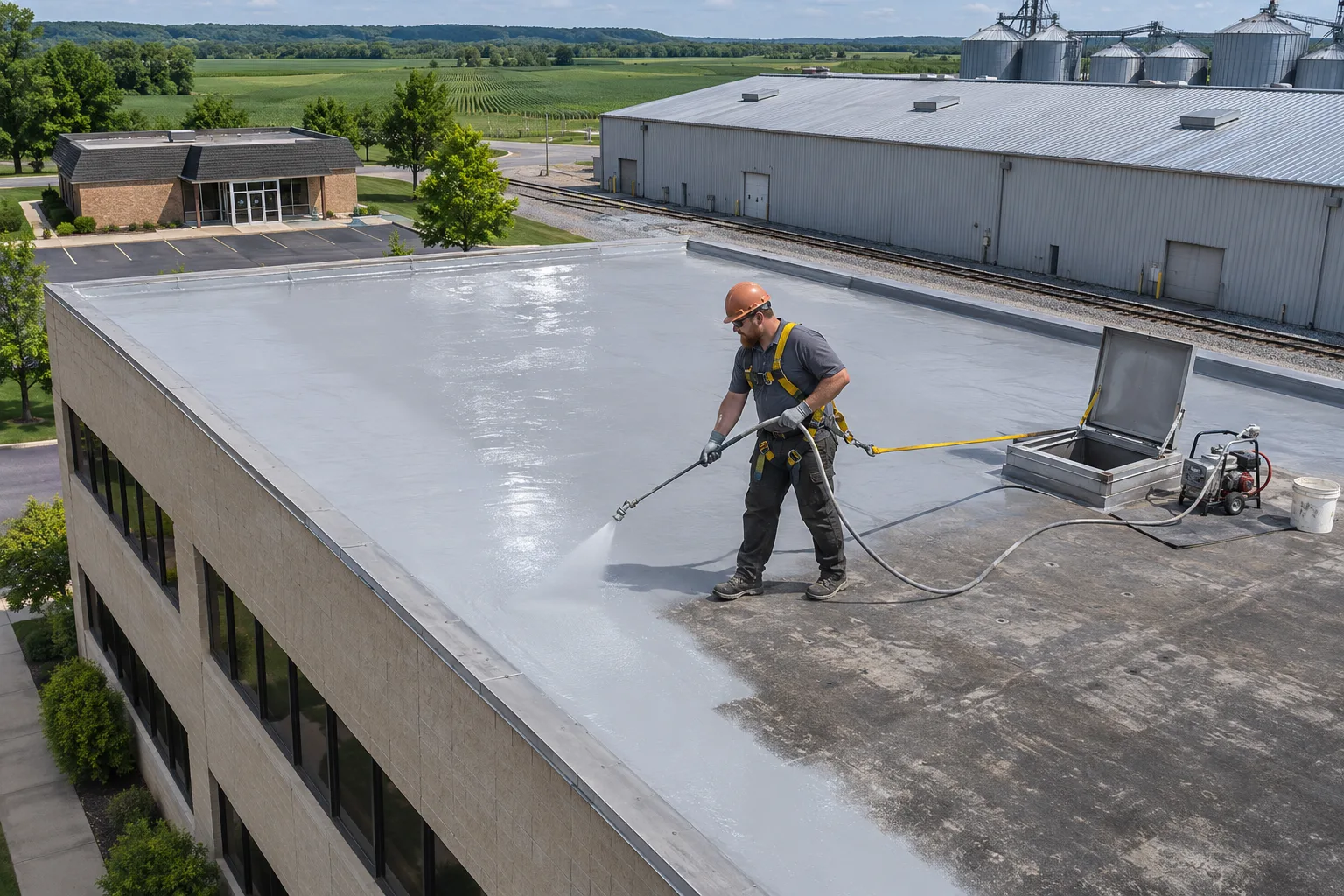
Silicone is a common topcoat over foam and the main choice for flat roofs that pond.
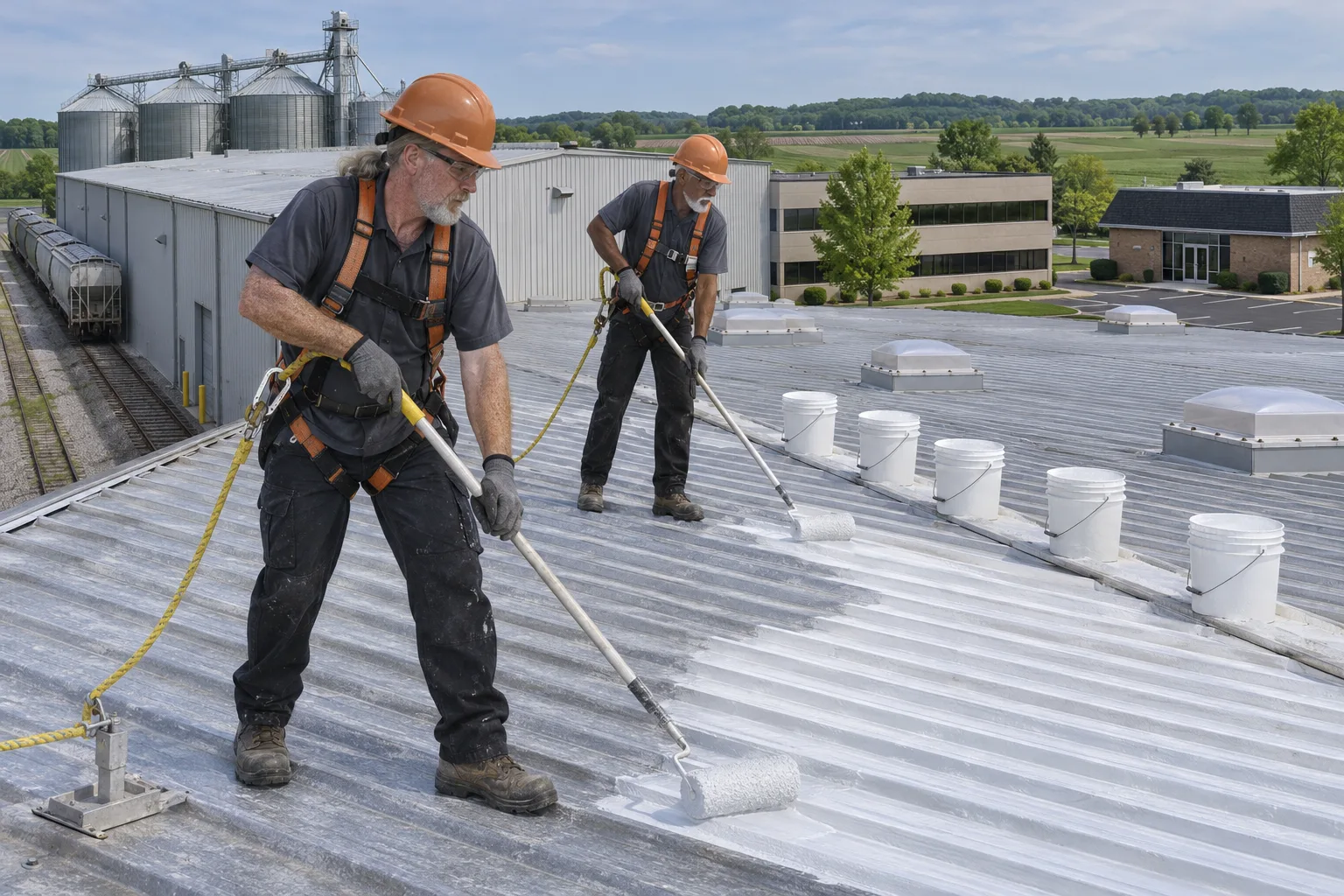
Acrylic is the other topcoat option for foam on roofs that drain well.
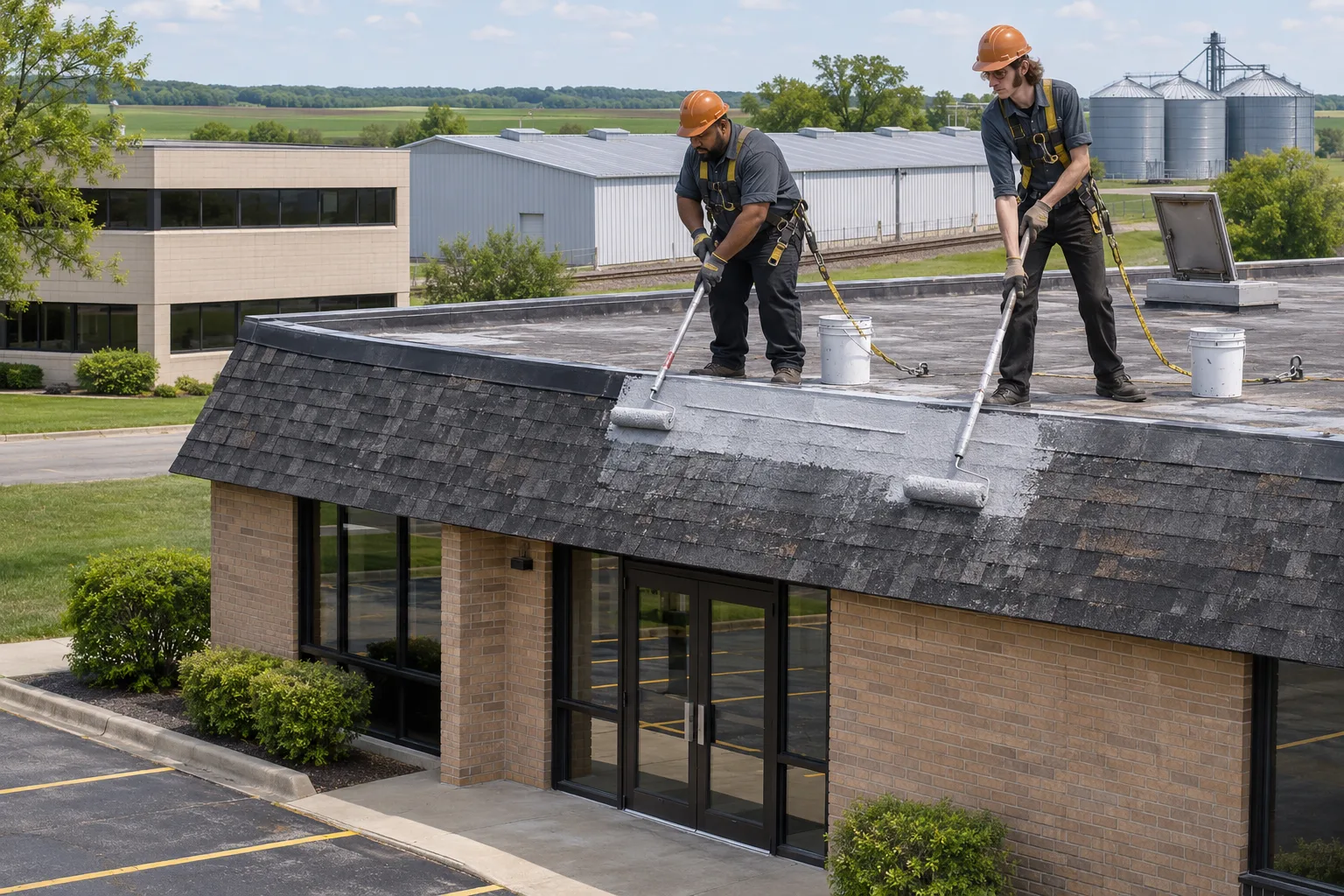
Shingle coating covers asphalt shingle sections that foam cannot go over.
What owners ask about lifespan, recoating, and the downsides of foam.
Often 20 years or more, and the topcoat makes that possible. Exposed foam breaks down in sunlight, so the condition of the coat and regular recoats set the real lifespan. Foam depth, hail, and foot traffic around equipment matter too, and inspections catch worn spots early.
We pressure wash the roof and look for blisters, hail marks, and bare foam. Damaged foam is cut out and refilled, wet foam removed, primer applied where the product calls for it, and a new topcoat sprayed to thickness. There is no tear-off, so the building stays in use.
Foam forms one continuous layer with no laps or exposed screws, adds insulation, weighs little, and can steer water to drains. It also needs careful weather windows, overspray control near vehicles, a topcoat renewed over time, and repairs after hail or punctures. Open, uncluttered roofs suit it best.
Foam can only go on dry surfaces in mild, low-wind weather, so the Indiana season is shorter. Birds sometimes peck at exposed foam, and hail can puncture a worn coat. Quality depends on the applicator controlling mix and depth, and roofs crowded with equipment are harder to foam evenly.
Very little. Foam is light compared with a second layer of panels or a new membrane system, which is one reason it suits older metal buildings. We still check the framing on the roof walk.
Look for dented panels, chipped coating, punctured foam, and damaged skylights, vents, and gutters. Dents in steel are often cosmetic, but any break in the coat lets water reach metal or foam. An inspection with dated photos shows what needs a spot repair and gives you a record for an insurance claim.
Let us check your roof for moisture and equipment layout before recommending foam.