If Your Roof
Has steep panels that drain within minutes
Water runs straight off and nothing sits on the roof after a storm.
Start WithAcrylic Roof Coating
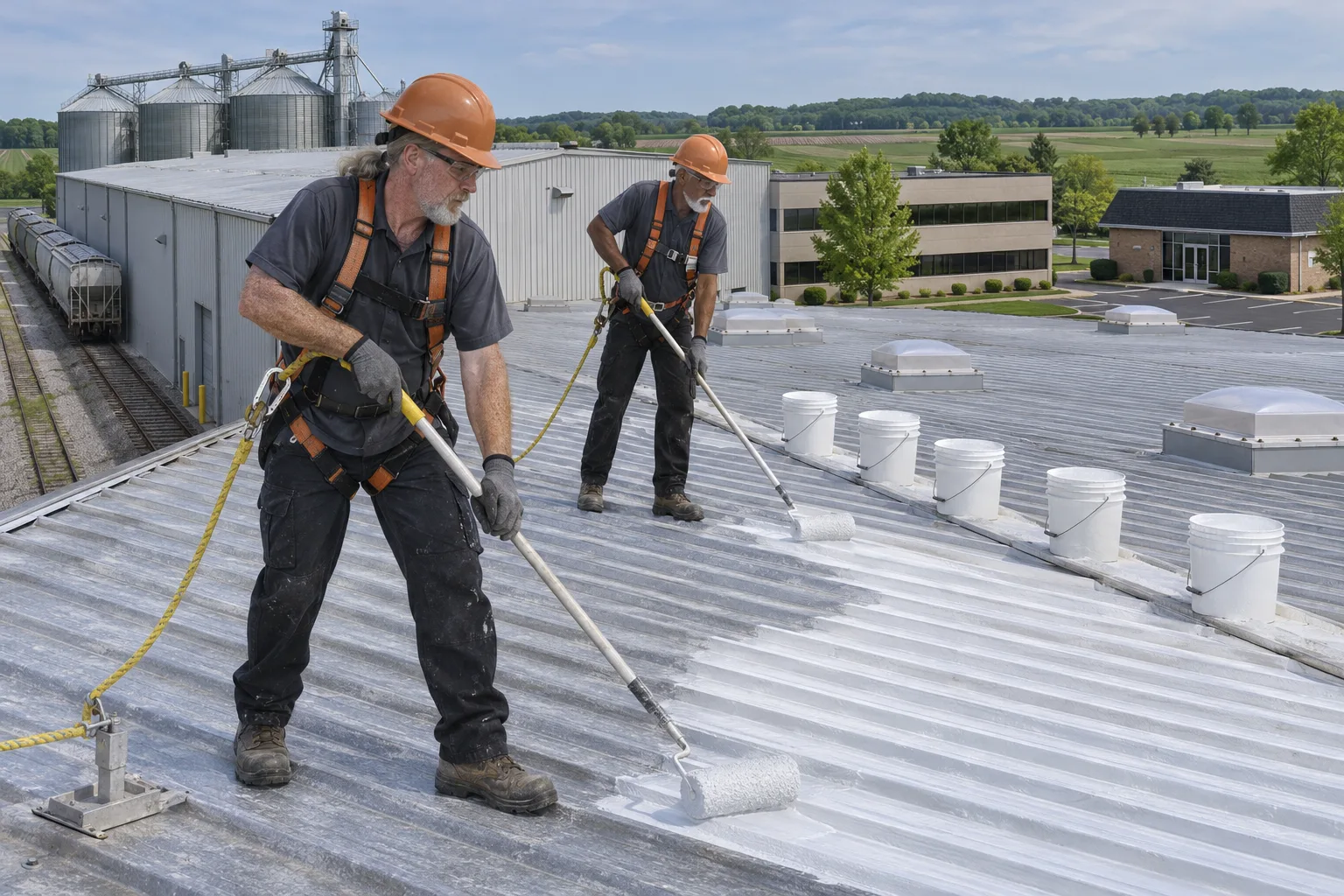
As a Lafayette acrylic roof coating contractor, we roll and spray acrylic over primed metal panels on pitched roofs that shed water quickly.
Lafayette acrylic roof coating works best on roofs that drain. The lines below help sort that out.
Water runs straight off and nothing sits on the roof after a storm.
The finish rubs off on a glove and rust shows at a few screws.
Air handlers pull from just above the panels.
A low bay or gutter line stays wet after rain.
These are the conditions that decide where acrylic goes and what gets fixed first.
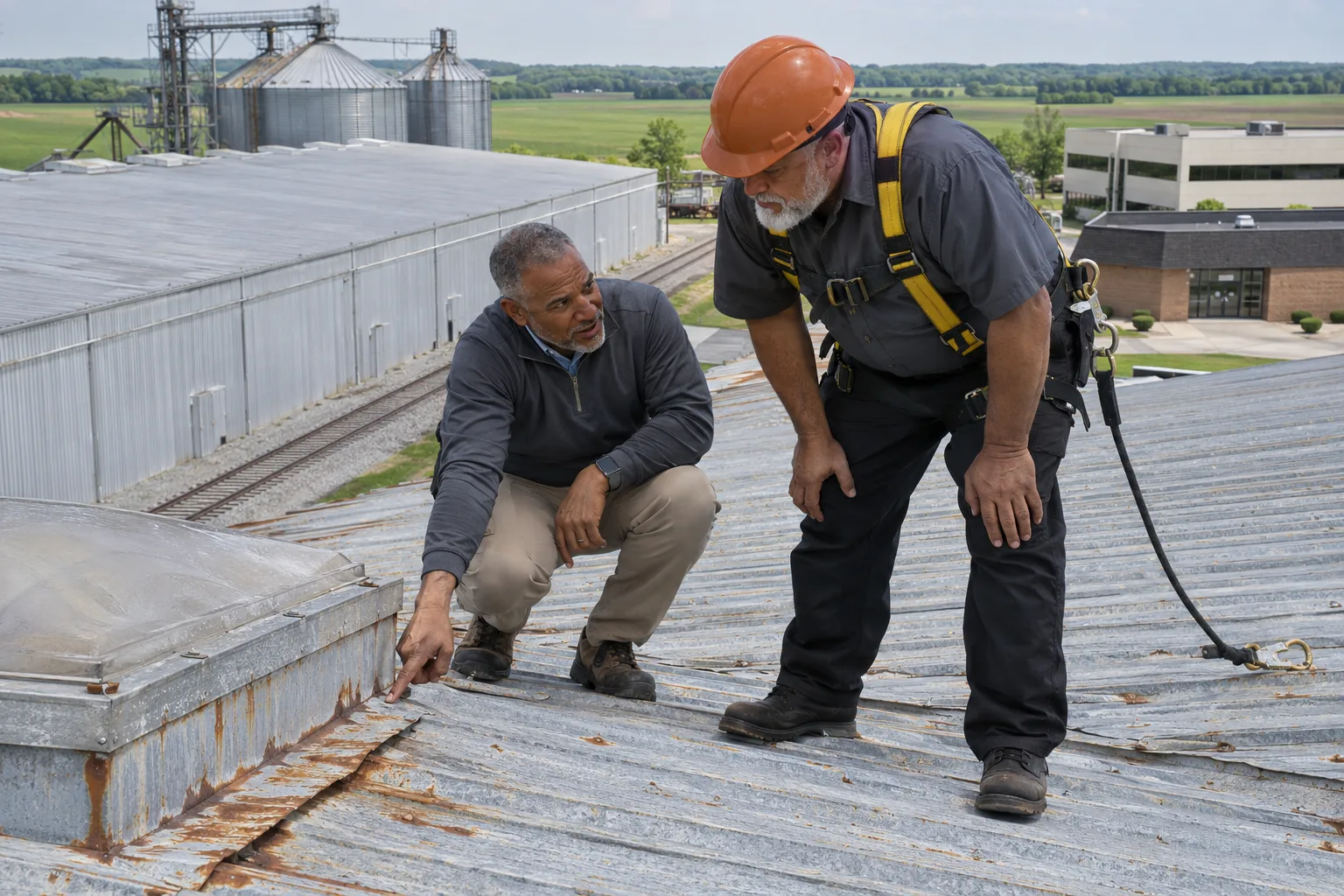
Years of sun strip the paint down to primer on the south-facing slopes. Washing and a rust primer give acrylic a clean base to bond to.
A sagging purlin or blocked gutter leaves water sitting on part of the roof. That spot is corrected first or gets silicone instead of acrylic.
Panels move every day in summer heat. Loose screws are tightened or upsized, then sealed under the acrylic.
Spring hail can chip paint and old coating. Bare spots are primed quickly so rust never gets a start.
Acrylic needs warmth and a dry roof surface to cure. Jobs are planned for days with no dew, frost, or rain in the forecast, and late starts wait for dew to burn off.
Acrylic is flexible in how it goes on. These are the common setups on Lafayette roofs.
A first coat in one color and a second in another makes thin spots easy to see and fix.
Large slopes are sprayed while laps and screw rows get a brushed, reinforced coat first.
Acrylic on the panels and silicone in the gutters, joined after adhesion tests.
An older acrylic roof is washed, spot-primed, and given a fresh acrylic coat.
An acrylic coat on a well-drained metal roof pays off in different ways for each person tied to it.
Check a ballpark range for acrylic coating next to replacement, then book a roof walk to confirm it.
Acrylic depends on weather and prep. Each step below happens in this order.
We check slope, drainage, rust, and screws across every panel run, and do a small adhesion test on the old finish.
Acrylic goes on a roof in warm, dry stretches. We watch the forecast for dew, frost, and rain before setting the dates.
Chalk and grime are washed off, loose screws fixed, laps sealed, and every rust spot primed.
Laps, screw rows, and penetrations get fabric and a brushed detail coat, then the first color goes on the field.
The second color covers the first, and thickness readings across the roof confirm the spec before we wrap up.
Acrylic covers the slopes. These systems handle what it cannot.
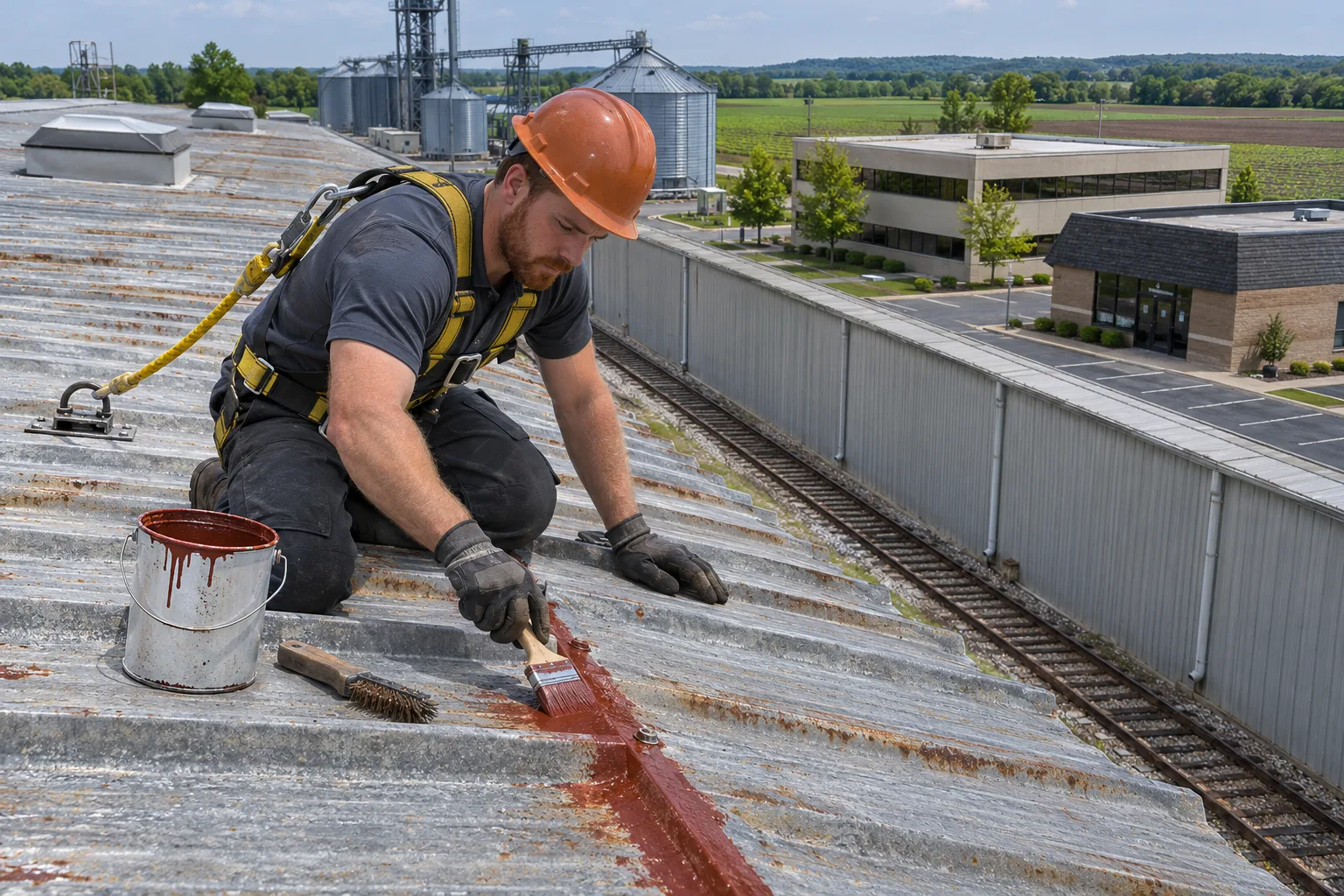
Metal roof coating covers the repairs and primers that every acrylic job on steel panels depends on.
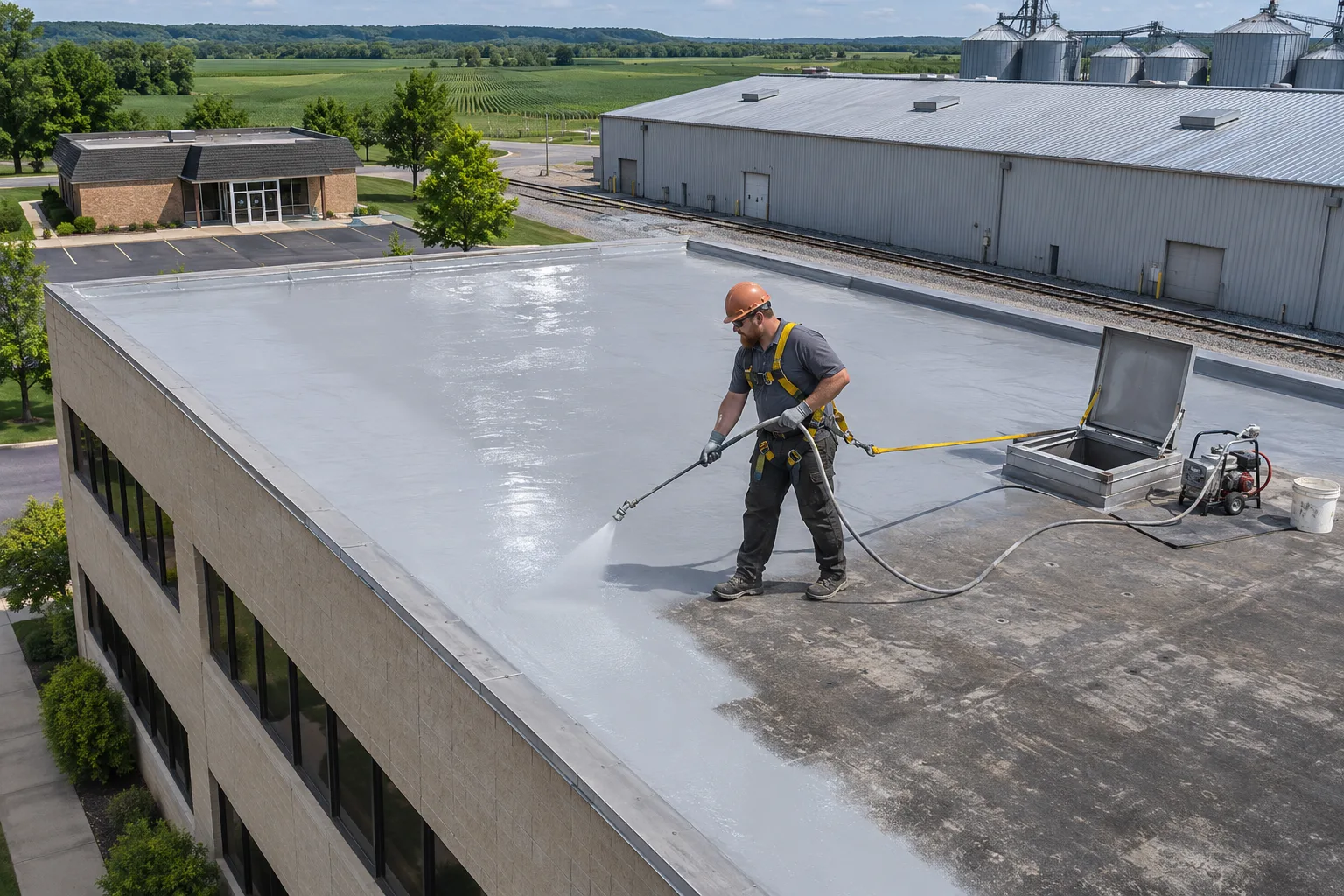
Silicone takes over in gutters, valleys, and flat bays where water stays after storms.
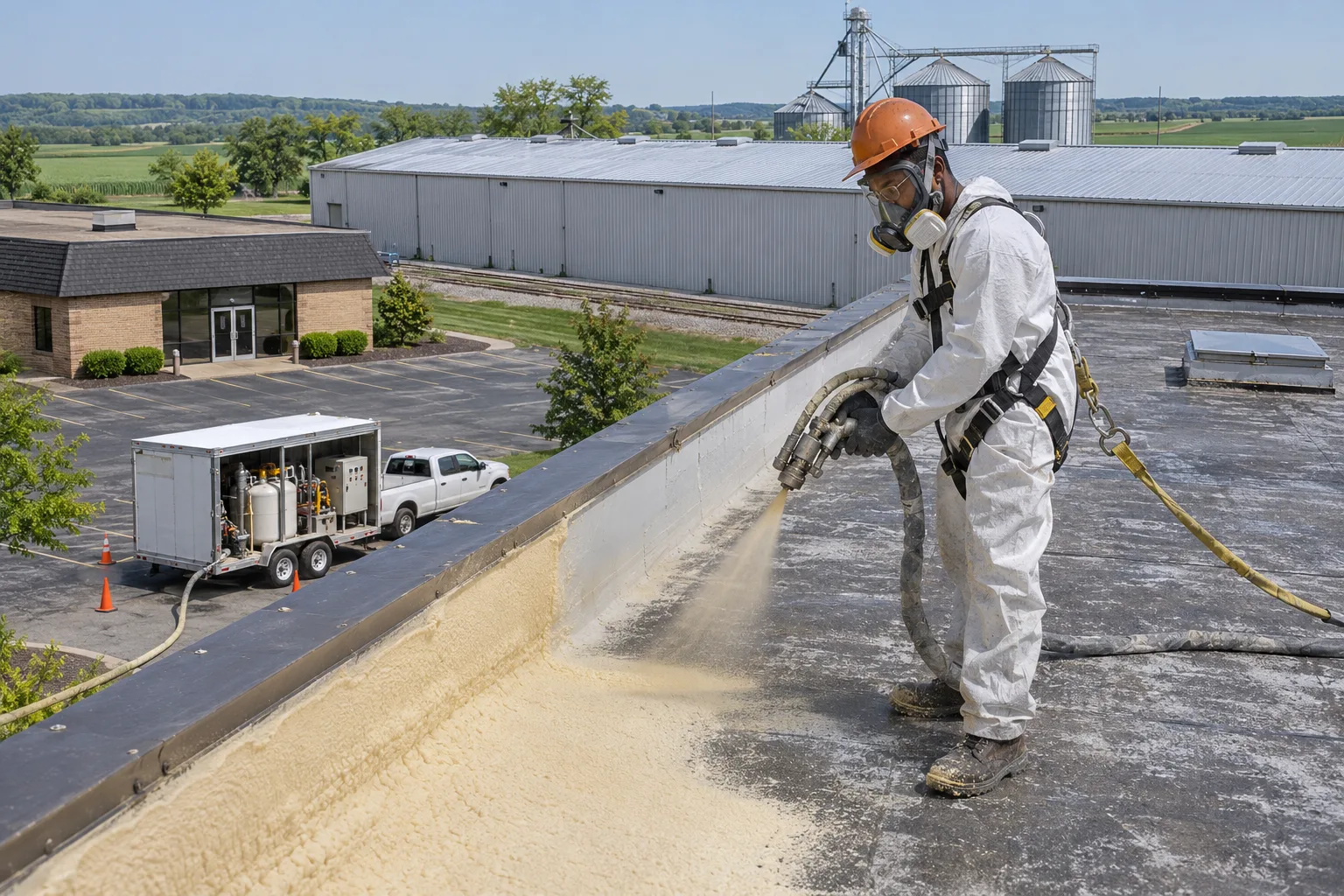
Spray foam suits roofs with leaks at nearly every lap, with acrylic as one topcoat option.
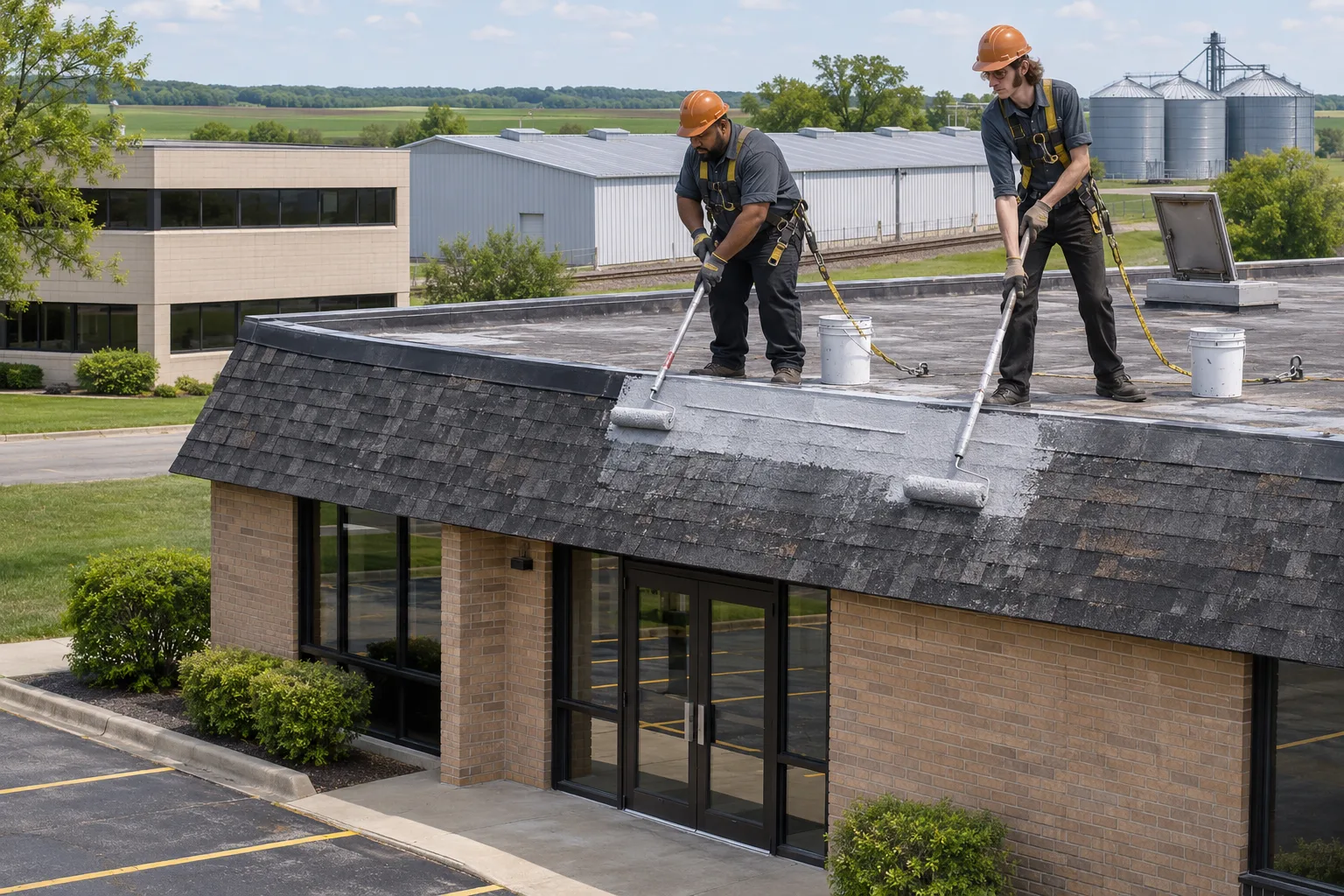
Shingle coating is the asphalt-compatible choice for shingled wings and mansards nearby.
Answers about lifespan, coats, and Indiana weather.
Often 10 to 15 years on metal buildings that drain well. Thickness and prep quality decide where a roof lands, and wet areas wear first. Freezing nights and hot afternoons flex the coat, so a spring check with spot repairs helps it reach the upper end of that range.
It does on roofs that shed water. Acrylic stays flexible through freeze-thaw cycles and summer heat and reflects sun off the panels. Standing water softens it over time, so ponded areas get drainage fixes or silicone, and a touch-up coat repairs hail scuffs.
Two is the usual count, often in two colors so full coverage shows on the second pass. The real target is the total dry thickness on the spec. Each coat needs dry weather to cure, and rain, dew, or frost before it sets ruins it, so spring and fall dates take planning.
Yes. Acrylic is water-based and low-odor, which matters when intakes sit close to the work. It bonds to primed panels, flexes as steel moves, and leaves a bright finish. Any low areas with ponding get silicone while acrylic covers the slopes.
Acrylic rarely bonds to silicone, so a silicone roof is recoated with silicone. If the old coat type is unknown, we test a patch first to see what will hold.
Sun heats bare or dark panels well above the air temperature, which loosens screws as panels move each day and pushes heat into the building. A reflective coat keeps the surface cooler and cuts that movement. How much it helps inside depends on insulation and ventilation.
Book a roof walk and we will check slope, drainage, and rust before naming the acrylic build.